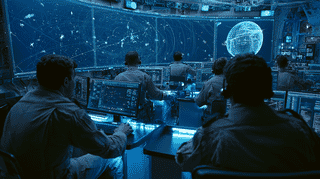
On June 26, 2026, Japan's Diet passed a law renaming the Air Self-Defense Force as the Aerospace Self-Defense Force, the first rename of an SDF branch since 1954. A new 880-strong Space Operations Command will track satellites and threats in orbit. Here is what changes, and why now.
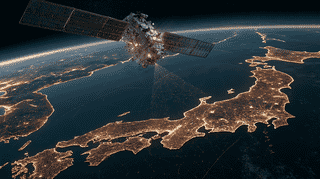
JAXA will launch the Michibiki No. 7 satellite on H3 Rocket No. 9 on August 7. A look at Japan's GPS-independent seven-satellite plan, the ASNAV system that aims to take phone accuracy from 5-10 meters to 1, how it compares with GPS, Galileo and BeiDou, and the satellite Japan just lost.
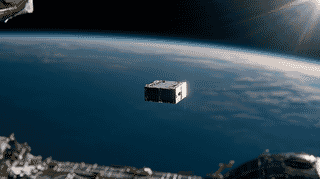
HOKUSHIN-1, a cubesat from three Japanese universities, was deployed from the ISS on June 19. Why it proves deep-space tech in low orbit first, where failure is cheap.
Since 2016, a Japan-led ALMA team kept breaking distance records for oxygen in the early universe. In 2026 they finally caught the cold neutral gas itself: [O I] 145μm in four galaxies ~13 billion years back. The decade-long quest, and how it complements the Webb-led race.
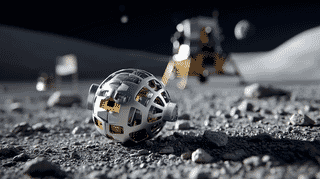
New image analysis confirms Japan's 228-gram transformable robot SORA-Q (LEV-2) moved about 0.13m and turned 180 degrees on the Moon entirely on its own, earning a Science Robotics cover. Built with help from a toy maker, the palm-sized machine opens a new path for small-scale exploration aimed at caves, steep slopes and, eventually, Mars.
Mitsubishi Electric is building an orbital transfer vehicle under Japan's Space Strategy Fund. We map the race: America's speed-and-price game led by Impulse Space, China's dual-use Shijian maneuvers, and Japan's unconventional bet on the docking skills it honed resupplying the ISS.
A Tohoku University team grew rice to the heading stage in soil mimicking the Moon's surface, using fertilizer made from nothing but air and electricity via plasma. The unlikely inspiration? Gundam's beam saber. As NASA pushes toward a lunar base, it could become foundational tech for growing food in space.
Kyoto and Hiroshima University researchers found that grains Hayabusa2 brought back from asteroid Ryugu begin altering within weeks on Earth. Here is how the decay starts with an iron sulfide, what it means for Bennu and Phobos samples, and how Japan is reacting.
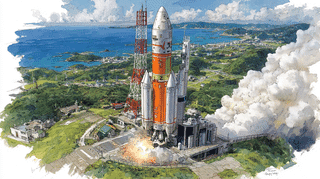
JAXA's H3 rocket No. 6 reached orbit on June 12, 2026, debuting the booster-less, lowest-cost Type 30 and resuming flights after a six-month grounding. But an object seen falling near the engines is now under investigation.
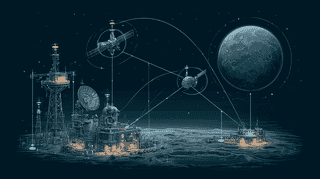
When Artemis II passed behind the Moon, the crew went 40 minutes without a signal. A sustained lunar presence needs always-on infrastructure, not one-shot mission links. We trace what KDDI, the carrier that once relayed Japan's international calls, is building with laser comms and multi-hop relays, and ask how close it really is.
On July 5, 2026, at 6:30 p.m. Japan time, JAXA's Hayabusa2 passed asteroid Torifune at roughly 5.3 km per second, crossing the 500-meter body in about 0.1 seconds. Here's why this ultra-fast flyby was so hard, how a body-fixed camera caught it, and why it matters for planetary defense after NASA's DART.
Japan's H3 Rocket No. 6 was postponed over poor weather and flew successfully on June 12, 2026. The booster-less test flight carried six small satellites: deorbit sails, a 1 km space tether, a day-and-night telescope, and a French sat that hunts ships gone dark. Here is what each one does.
Tohoku University spinoff Space Quarters has demonstrated its DAIQ orbital assembly robot system on a ground model, showing three kinds of small robots cooperating to pick, place, and weld building panels into a larger structure. We look at how it compares to NASA's cancelled OSAM-1 and DARPA's NOM4D, and what makes Japan's robotics approach distinct.
Japan's new cargo ship HTV-X1 reentered the atmosphere on the night of May 26, 2026, completing a roughly seven-month mission (JAXA announced it the next day). In its final three months it gathered on-orbit data on next-gen space solar cells, including a domestic perovskite made by Ricoh, and received a radio signal from the ground. Here's why perovskite in space is a different story from perovskite on rooftops.
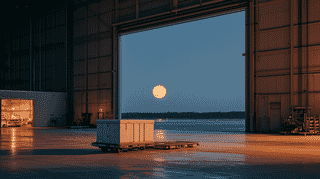
JAL, JALUX and ispace have unveiled ARGO PROJECT, the first lunar transport service run by an airline. A box called Möbius Ark will carry cultural items to the Moon on ispace's Mission 3 in 2028. Here is why a 75-year-old airline is moving into space logistics.
Japanese Unreal Engine studio Historia has unveiled REAL MOON Studio, a lunar digital twin recreating a 240km by 240km stretch of the Moon's south pole. Built on joint research with JAXA, it lets engineers rehearse rover routes, preview camera shots, and plan lunar bases - a look at how game-engine technology is quietly joining the global Moon race.
On April 13, 2029, the 450m asteroid Apophis will pass just 32,000 km above Earth. Japan and Europe are joining forces on RAMSES, the next planetary defense mission after NASA's DART. JAXA provides the infrared imager, solar panels, and H3 rocket launch as a rideshare with DESTINY+, stepping up as US budget cuts threaten its own Apophis mission.
A Japanese team led by NAOJ has detected an atmosphere on a small trans-Neptunian object beyond Pluto for the first time, using a stellar occultation observed simultaneously from three sites across Japan. Here is how the pro-amateur collaboration worked, and why it rewrites textbooks on the outer solar system.
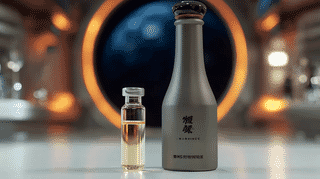
Yamaguchi's premium sake brand Dassai and Japanese engineering giant Mitsubishi Heavy Industries brewed sake in space for the first time in human history. The result was a single 100ml bottle, priced at about $700,000, and it sold. Inside the Dassai MOON Project, the long-term plan to build a brewery on the Moon, plus practical brewery-tour information for visitors to Iwakuni, Yamaguchi.
JAXA confirms H3 No.8 failure was caused by satellite adapter delamination. On June 12, the minimum 'Type 30' configuration without boosters launched successfully for the first time. Japan's environmental satellites vs China's Daqi-2.