🌙 When four astronauts swung behind the Moon on Artemis II on April 6, mission control lost contact with them for about 40 minutes. That blackout is a tiny preview of a much bigger problem: if humans are going to live and work on the Moon, they will need it wired the way Earth is, always on, high speed, never dropping out. One of the companies building toward that is KDDI, the Japanese carrier whose predecessor once relayed the news of John F. Kennedy's assassination across the Pacific by satellite. Here's where lunar communications actually stand, and how close the "Moon internet" really is.
The Moon suddenly needs an always-on signal
For most of the space age, talking to the Moon was an occasional event: a few crewed visits, a handful of robotic landers. You pointed a big dish, you got your data, you went home.
That assumption is now breaking. In April 2026, NASA's Artemis II carried a crew around the Moon's far side and back for the first time in over half a century, and the program's goal is a sustained human presence, not a flag-planting visit. JAXA's longer-range planning sketches out something even more demanding: roughly 40 people living on the Moon at any given time in the 2040s, and as many as 1,000 by the 2050s.
A thousand people don't run on the occasional radio link. They need what a small city needs: remote-controlled rovers streaming video, science instruments dumping data, crews making calls, machines coordinating with machines. As KDDI researcher Takashi Kan frames it in a recent technical note, the shift is from "point-to-point mission communication" to "an infrastructure that supports continuous activity." Those are very different engineering problems.
Why radio runs into a wall
The default tool for space communication is radio, and radio has a stubborn physical limitation: the beam spreads out as it travels. Over the roughly 380,000 kilometers between Earth and the Moon, that spreading thins the signal until barely anything reaches the receiver, which caps how fast you can move data.
That's why a lot of attention has shifted to laser, or optical communication. A laser beam can be made far narrower than a radio beam, so more of its energy actually lands on the receiver, which translates into much higher speeds.
This isn't theory anymore. Artemis II carried an optical system called O2O (the Artemis II Optical Communications System) that carried up to 260 megabits per second on the downlink from the Orion capsule, and 20 on the uplink, fast enough to stream real-time 4K video from lunar distance. For comparison, Apollo's link in 1969 managed about 51 kilobits per second. The jump is enormous.
"Mission comms" and "infrastructure" are not the same thing
O2O proved laser works at lunar range. But as the backbone for a permanent presence, a direct line like that has two problems.
The first is availability. A direct beam only works when sender and receiver can see each other. The moment the spacecraft slips behind the Moon, the link dies, which is exactly what happened to the Artemis II crew during that 40-minute blackout. For a sustained outpost, you can't have the network vanish every time geometry gets awkward; you need something close to 24/7.
The second is speed. O2O squeezes its sensitivity out of a clever, power-efficient scheme, but that same design is hard to push much faster. For a thousand-person settlement's worth of traffic, you'd want gigabit-class throughput, well beyond what a single mission link is built for.
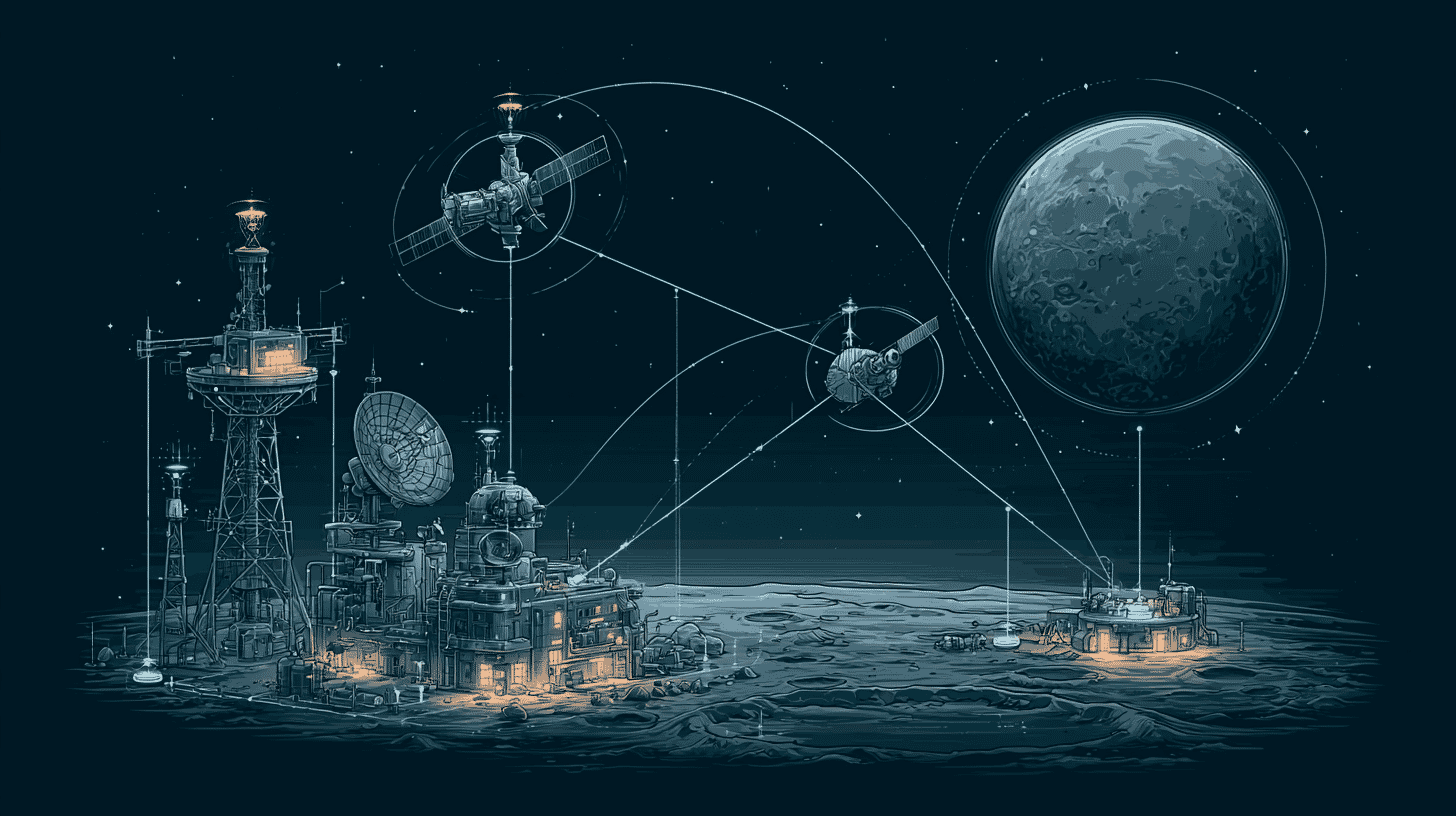
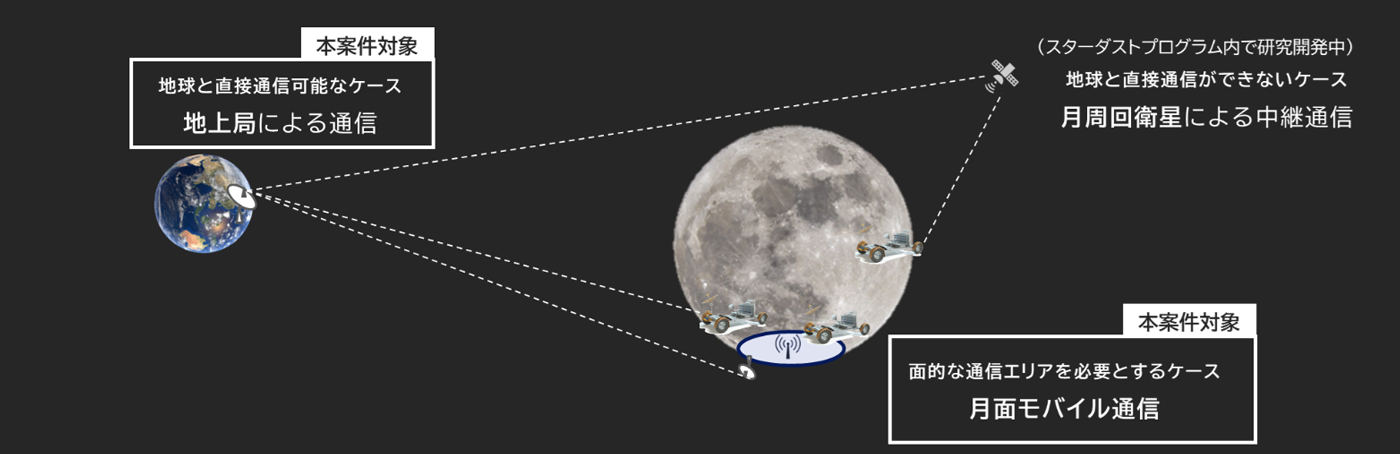
The fix that engineers are converging on is a relay network: ground station, then a satellite orbiting Earth, then a satellite orbiting the Moon, then the lunar surface, with the orbiting nodes positioned so that someone can always see someone. Hand the signal along the chain and the dead zones largely disappear. Layer on "digital coherent" transmission (the same family of techniques that carries heavy traffic on Earth's optical networks), and gigabit-class links to the Moon come into view. That's the architecture being studied, drawing on JAXA's planning.
The company that carried the world's phone calls, now aiming for the Moon
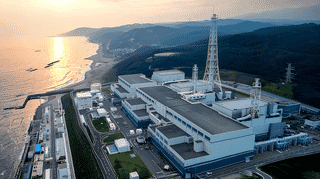
There's a neat symmetry in KDDI taking this on. Its predecessor, the old international carrier KDD, opened Japan's first satellite earth station in Ibaraki in 1963. Days later it pulled off the first transpacific satellite TV relay, and the footage that arrived was the news of Kennedy's assassination. The Cassegrain antenna Japan developed there went on to become a world standard, and the site earned an IEEE Milestone for that 1963 feat. Connecting distant points has been this company's business for sixty years; the Moon is just a much farther point.
Source: KDDI News Room
Concretely, KDDI was picked in November 2024 to lead a feasibility study under Japan's Space Strategy Fund, titled "Moon-Earth communication system development and demonstration," running for a year from February 2025. It coordinated a consortium of Japanese firms, including Kyocera, NEC and Mitsubishi Electric, around two questions: how to design long-range, high-capacity ground stations using X-band and Ka-band radio frequencies, and how to design mobile coverage on the lunar surface itself, down to where you'd plant the base-station masts and how the system would be operated.
The hands-on experiments are just as telling. In 2024, working with the robotics firm GITAI, KDDI demonstrated a robot installing a base-station antenna in a ground test, because on the Moon there's no crew of technicians to bolt up a tower. The company is also developing a specialized "photonic crystal laser" for space optical links, and it's the Moon-Earth laser work that has produced the most human story so far. To keep a laser locked onto a target 380,000 km away, you need extraordinarily precise tracking of an extremely faint signal. When the team tested this in the lab, Kan recounts, the signal they needed kept getting buried under 50-hertz noise from the room's LED lighting, and wrestling that interference down turned out to be a serious slog. The glamour of Moon communications, it turns out, runs through a lot of unglamorous noise-hunting.
So how close is any of this, really?
This is where it pays to separate what's proven from what's still on paper.
Proven: laser links from lunar distance work (O2O, 260 Mbps). A cellular network can switch on at the lunar surface, too. Nokia powered up a shoebox-sized 4G base station on Intuitive Machines' lander in March 2025, though it ran for only about 25 minutes before the lander lost power. China's Queqiao-2 relay has been serving the Moon's far side since 2024. The building blocks exist.
Still ahead: the persistent, always-on relay network is largely at the feasibility and design stage, KDDI's piece included. The stage is moving, though. The third round of Japan's Space Strategy Fund, announced in February 2026, includes a theme for developing and demonstrating the ground stations that Moon-Earth links will need, the step after the feasibility study. The shared rulebook, NASA's LunaNet framework (co-developed with ESA and JAXA), only reached spec version 5 in early 2025. ESA's Moonlight constellation targets initial service around 2028 and full operation by 2030; ESA's Lunar Pathfinder relay is slated to launch later in 2026; Intuitive Machines is building a commercial relay network under a multi-billion-dollar NASA contract. Full multi-satellite lunar networking is generally pegged to the 2029-2030 window.
And the sharpest rivalry may be at home. NTT, KDDI's perennial domestic competitor, is pushing into space optical communication through its IOWN all-photonics framework and through Space Compass, its joint venture with SKY Perfect JSAT. Tellingly, both companies are betting on the same photonic-crystal technology. For now their centers of gravity differ: NTT's near-term space business leans toward Earth-orbit optical data relays, high-altitude platforms and "space data centers," while KDDI's push here sits more squarely in the lunar segment. But in the longer race to wire cislunar space with light, Japan's two telecom giants are heading for the same ground.
What's new here isn't a single gadget; it's the attempt to turn one-off mission links into a standing utility that international systems can actually plug into. KDDI's bets are real and funded. Close enough to be more than a daydream; far enough that the hard parts are still being solved one 50-hertz hum at a time.
The thread runs from a satellite dish in Ibaraki to a laser pointed at the Moon: the unglamorous work of connecting distant points, pushed one step farther. Is a company from your country working on the wiring of space, and would you want your tax money or your phone bill anywhere near it?
References
- KDDI Tech note: "Toward realizing lunar communication infrastructure (Space × Optical Communication)": https://tech-note.kddi.com/n/n8e016a2fafea
- KDDI News Room: "Starting technical study toward high-capacity Moon-Earth and lunar-surface communications": https://newsroom.kddi.com/news/detail/kddi_nr-415_3688.html
- NASA: Artemis II mission: https://www.nasa.gov/mission/artemis-ii/
- NASA: Artemis II Optical Communications System (O2O): https://www.nasa.gov/goddard/esc/o2o/
- JAXA Space Strategy Fund: https://fund.jaxa.jp/






Global Discussion
4 comments