KDDI's Buffmee and SoftBank's GaranAI launched in July 2026 on the same premise: use only licensed material, meter how much gets used, and pay publishers back. One sells to readers, the other to AI developers.
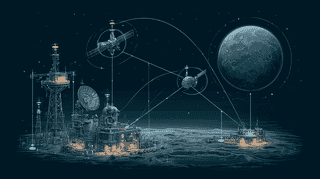
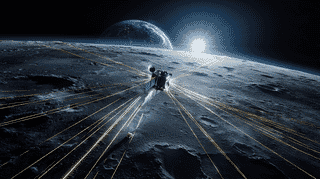
When Artemis II passed behind the Moon, the crew went 40 minutes without a signal. A sustained lunar presence needs always-on infrastructure, not one-shot mission links. We trace what KDDI, the carrier that once relayed Japan's international calls, is building with laser comms and multi-hop relays, and ask how close it really is.
Japanese crypto exchange Coincheck has partnered with telecom giant KDDI to launch au Coincheck Digital Assets, a joint venture offering a non-custodial wallet inside the au PAY mini-app to 39.7 million users. KDDI is investing roughly $65 million in Coincheck's parent company. How this differs from US (Coinbase, Robinhood) and Korean (SK Telecom T Wallet) models — and what it signals for the stablecoin era.
Japanese lunar startup ispace has unveiled 'Lunar Connect,' a communication and positioning service using lunar orbiting satellites. Partnering with KDDI for ground stations and planning 5 satellites by 2030, ispace is pivoting from a transport company to a space infrastructure provider. The new unified ULTRA lander marks another strategic shift.
Two employees at a KDDI subsidiary ran ¥246.1 billion (about $1.6 billion) in fictitious transactions for 7 years undetected. How did Japan's third-largest telecom fail to catch fraud where 99.7% of a business unit's revenue was fake? An analysis of structural governance failures in Japanese corporations.