An Osaka-led Japan-US team tells left- and right-handed amino acids apart one molecule at a time. Soai's Nobel shows a tilt can grow from chance, and asteroids Ryugu and Bennu show none, so detectors must read both.
A Japanese team found ammonium, nitriles and sodium nitrate clustered around the salt veins in Hayabusa2's Ryugu grains, which reframes the 75-fold gap between Bennu's water-extractable ammonia and Ryugu's.
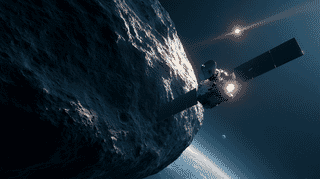
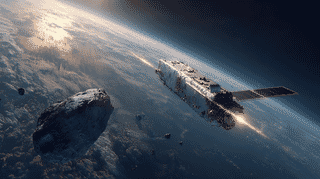
On July 5, Hayabusa2 passed 800 meters from asteroid Torifune at 5 km/s, its first major win since 2020. A look at why Japan keeps flying a retired probe, the road to 1998 KY26, and how it compares to NASA's OSIRIS-APEX.
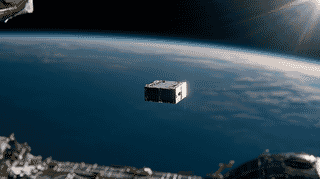
HOKUSHIN-1, a cubesat from three Japanese universities, was deployed from the ISS on June 19. Why it proves deep-space tech in low orbit first, where failure is cheap.
Since 2016, a Japan-led ALMA team kept breaking distance records for oxygen in the early universe. In 2026 they finally caught the cold neutral gas itself: [O I] 145μm in four galaxies ~13 billion years back. The decade-long quest, and how it complements the Webb-led race.
A Tohoku University team grew rice to the heading stage in soil mimicking the Moon's surface, using fertilizer made from nothing but air and electricity via plasma. The unlikely inspiration? Gundam's beam saber. As NASA pushes toward a lunar base, it could become foundational tech for growing food in space.
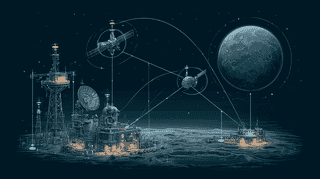
When Artemis II passed behind the Moon, the crew went 40 minutes without a signal. A sustained lunar presence needs always-on infrastructure, not one-shot mission links. We trace what KDDI, the carrier that once relayed Japan's international calls, is building with laser comms and multi-hop relays, and ask how close it really is.
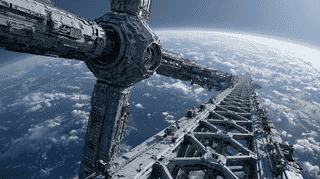
Tohoku University spinoff Space Quarters has demonstrated its DAIQ orbital assembly robot system on a ground model, showing three kinds of small robots cooperating to pick, place, and weld building panels into a larger structure. We look at how it compares to NASA's cancelled OSAM-1 and DARPA's NOM4D, and what makes Japan's robotics approach distinct.
On April 13, 2029, the 450m asteroid Apophis will pass just 32,000 km above Earth. Japan and Europe are joining forces on RAMSES, the next planetary defense mission after NASA's DART. JAXA provides the infrared imager, solar panels, and H3 rocket launch as a rideshare with DESTINY+, stepping up as US budget cuts threaten its own Apophis mission.
Renesas Electronics' Intersil-brand radiation-hardened ICs are aboard NASA's Artemis 2 crewed lunar mission, powering critical subsystems in the Orion spacecraft and SLS rocket. Discover the 60+ year heritage behind these space-grade chips and what Japan's role in the $1.8 billion rad-hard semiconductor market means for the future of space exploration.
With Artemis II home safely, we look at Japan's contributions to lunar exploration: Toyota's Lunar Cruiser, MHI's regenerative fuel cells, Bridgestone's lunar tires, and the rest of the hardware keeping crews alive on the Moon.
Tohoku University spinoff Space Quarters has successfully demonstrated electron beam welding in simulated zero-gravity and lunar gravity environments aboard an aircraft. The company achieved a world-first by welding sintered lunar regolith — the sandy material covering the Moon's surface. With its ultra-compact 7 kg welding system and JAXA partnership, this breakthrough brings humanity one step closer to building infrastructure in space.
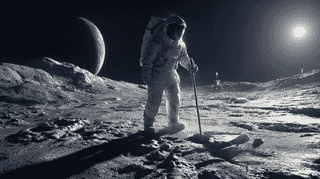
PASS (Portable Active Seismic Source), a compact seismic device developed by the University of Tokyo, has been selected for NASA's Artemis IV mission. Astronauts will use this staff-like tool to generate vibrations and map the Moon's subsurface structure. Learn how this Japanese innovation will support water resource exploration, mineral surveys, and foundation assessments for future lunar bases.
University of Arizona researchers plan to use samples from asteroid Bennu, returned by NASA's OSIRIS-REx, to test the idea that consciousness existed before life. It is a minority view that mainstream science does not support. Here is what the hypothesis says, where panpsychism and astrobiology meet, and the criticism it faces.
NASA officially denies viral claim that Earth will lose gravity for 7 seconds on August 12, 2026. The alleged "Project Anchor" secret document is confirmed as complete fiction. Learn why gravity loss is scientifically impossible.