
On April 27, 2026, NTT Docomo launched "docomo Starlink Direct," a service that connects ordinary smartphones directly to SpaceX's Starlink satellites orbiting roughly 200 miles above Earth. No specialized antenna, no satellite phone, just the phone already in your pocket. By July 9, about two months in, Docomo said more than 5 million users had connected through it.
The service is available to all Docomo subscribers, including those on the budget plan "ahamo," covering roughly 22 million users. It is free for the foreseeable future, with no sign-up required. SMS sent over satellite carries no charge for now, and satellite data does not count toward monthly caps.
Eighty-four models were supported at launch: iPhone (13 and later), Google Pixel (9 and later), plus Samsung Galaxy, Sharp AQUOS, Sony Xperia, and Arrows devices. iPhones and Pixels work regardless of where they were purchased. The Pixel 9a and some Android handsets are messaging-only, with no app data. Users need a satellite-capable software update and a compatible Docomo UIM card or eSIM.
How Direct-to-Cell Actually Works
Satellite communication used to require a bulky dedicated antenna or a special handset costing hundreds of dollars. Starlink's Direct-to-Cell technology, now marketed as Starlink Mobile, removes both.
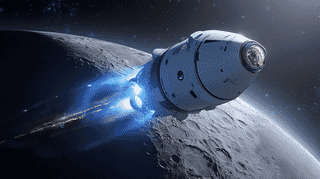
A constellation of 650 specially equipped Starlink satellites functions as cell towers in space. Each carries phased array antennas and custom silicon chips built to solve a hard set of problems: compensating for Doppler shift as the satellite races overhead at 17,000 mph, working with the weak antenna gain and transmit power of an ordinary phone, and managing latency across hundreds of miles of empty space.
The satellites talk to each other over laser links, forming a mesh that can route data to ground stations anywhere on Earth. When a phone loses terrestrial coverage, it connects to a passing satellite on its own, with no manual switching.
With docomo Starlink Direct, users can:
- Send and receive text messages (SMS, RCS, iMessage)
- Share their real-time location
- Send files via RCS or iMessage
- Use Google's Gemini AI for research (Android only)
- Access select apps including X (Twitter), weather apps, Google Maps, and hiking apps YAMAP and Yamareco
- Receive emergency alerts for earthquakes, tsunamis, and national protection warnings
- Use Docomo's mobile payment "d-Barai" (with some limitations) and disaster safety toolkit
KDDI Got There First: How Do They Compare?
Docomo was not first. KDDI launched "au Starlink Direct" in April 2025, a full year ahead. The two services run on the same Starlink technology but differ in strategy.
User access is the clearest divide. KDDI opened its service to non-subscribers through a dedicated plan at ¥1,650 a month (about $11), with discounts for UQ mobile users. Docomo serves only its own subscribers, but offers it free across every plan.
Technical maturity favors KDDI. The company claimed several world firsts: satellite app data in August 2025, and international roaming through a T-Mobile partnership in March 2026. KDDI has also pushed maritime coverage out to 24 nautical miles (about 44 km), double Docomo's 12 nautical miles at launch.
Ecosystem integration is where Docomo differentiates. Its d-Barai mobile payments work over satellite, which makes cashless transactions possible in mountain areas and on islands that had no connectivity at all. The disaster safety toolkit handles safety check-ins during emergencies, which matters in a country this seismic.
SoftBank announced its own Starlink plans on April 2, the same day as Docomo, then launched "SoftBank Starlink Direct" on April 10, beating Docomo to market by more than two weeks. SoftBank and some Y!mobile plans include it at no extra cost; other Y!mobile plans and LINEMO require a ¥1,650 monthly option from July 2026. Rakuten Mobile is taking a separate path with AST SpaceMobile. All four Japanese carriers are now in, a competitive lineup few countries can match.
How Does Japan Compare to T-Mobile in the U.S.?
T-Mobile launched its Starlink-powered "T-Satellite" service commercially in July 2025, after a beta that drew 1.8 million registrants and carried over a million messages. It covers the continental U.S., Hawaii, Puerto Rico, and parts of Alaska.
The pricing reveals different instincts. T-Satellite is free only with T-Mobile's top "Experience Beyond" plan; other subscribers, and AT&T and Verizon customers, can add it for $10 a month. Docomo bundles it into every plan, including the cheapest ones.
Both services support messaging, location sharing, and a curated list of satellite-optimized apps. Neither delivers the broadband people expect from a terrestrial network. SpaceX says its next-generation V2 satellites, due to launch on Starship in mid-2027, will carry roughly 100 times the data density of the current V1 fleet and deliver 5G-class speeds from orbit.
T-Satellite showed what it could do during Hurricanes Helene and Milton, when SpaceX switched it on ahead of commercial launch to carry emergency traffic in devastated areas. In Japan, where residents feel well over a thousand earthquakes a year, that resilience is the main argument for the whole category.
Why Japan Needs This More Than Most
Japan's geography creates unique connectivity challenges that make satellite-to-phone communication particularly valuable.
Roughly 70% of Japan's land is forested mountain. The Japanese Alps, topping 3,000 meters, create vast stretches where building and maintaining cell towers is prohibitively expensive. More than 6,800 islands dot the coastline, many with populations too small to justify the infrastructure. And offshore activity, from fishing to shipping to leisure, routinely takes people past the reach of coastal towers.
The 2024 Noto Peninsula earthquake was a stark reminder of how fragile terrestrial communication is. Towers collapsed, power failed, and people in the affected region were cut off from emergency services and family for days. KDDI trucked in Starlink ground terminals to help. Direct-to-Cell removes even that step: a phone and a clear view of the sky is the whole requirement.
Mountain rescue is the other case. Japan records over 3,000 mountaineering accidents a year, and the ability to share GPS coordinates and send a distress message from a previously unreachable ridge changes the odds. That the hiking apps YAMAP and Yamareco were satellite-compatible at launch is no coincidence.
For fishing communities and island residents, coverage at sea changes daily operations. Checking weather, sharing position, and calling for help used to require an expensive satellite phone. Now the everyday handset does it.
The Race for the Sky
Starlink's satellite-to-phone network partners with more than 12 carriers globally, including T-Mobile (USA), KDDI (Japan), Telstra and Optus (Australia), Rogers (Canada), One NZ (New Zealand), Salt (Switzerland), and Entel (Chile and Peru). At Mobile World Congress in March 2026, SpaceX said the service had passed 10 million users.
SpaceX's stated goal is eliminating every mobile dead zone on Earth. The V2 generation, launching on Starship in mid-2027 at 50-plus satellites per flight, aims to put 1,200 satellites up and reach global contiguous coverage within six months. That would move the service from a messaging safety net to something closer to broadband from space.
Docomo has placed the service under NTT's space business brand "NTT C89" (NTT CONSTELLATION 89 PROJECT), which signals that satellites are meant to be an extension of the network rather than a bolt-on feature.
Does your country's carrier offer satellite-to-phone connectivity? Have you ever been in a situation where satellite communication could have made a difference? We would like to hear how different countries are tackling the dead zone problem.





Global Discussion
14 comments