Japan's earthquake alert announced a magnitude 9.9 for Hokkaido to central Japan. The real quake was an M6.9 near Kamchatka, a safeguard added in 2020 wasn't working, and Docomo phones never got the alert at all.
Nikkei says NTT Data is in final talks on an Osaka data centre for Anthropic of up to 500 MW. Neither company has commented. Grid power will likely be slow, and a local site would not by itself keep data in Japan.
Toyota, NTT and Tokyu are among roughly 1,600 Japanese employers paying for an AI dating app for single staff. The workplace is trying to buy back a matchmaking role it lost over fifty years.
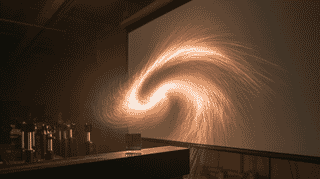
The hat, found in 2023, tiles the plane forever without repeating. A Japanese team etched 372,100 of its points into a silicon nitride film, fired a laser, and got back a pinwheel of light with no mirror image.
A team led by Japan's QST has shown, for the first time, a magnetic memory that writes with a laser pulse instead of current, and made it work on CoFeB, the alloy already inside commercial chips. Here's how, and why it matters for data-center power.
In 1998, Akira Furusawa achieved the world's first unconditional quantum teleportation at Caltech. For two decades, no one knew what it was for. By 2024, that same trick was running an optical quantum computer on the cloud. From the teleportation misconception to the reframe that turned it into a processor, and the startup OptQC's push for a homegrown machine.
What is NTT, one of Japan's largest telecom conglomerates, really building behind a decade of re-consolidation and its coming split of Docomo? We lay out the facts, then predict the 'final form' that emerges and the backbone it plans to earn from, comparing it with AT&T's failed media bet, SoftBank's reinvention, and India's Reliance playbook to find the real key to whether it works.
Light travels faster through air than glass. By hollowing out the core, OKI, Lightera and Keio University demonstrated a world-first wideband single-fiber bidirectional link. Commercialized, it could cut network power by up to 90 percent. We unpack the race, where Microsoft is already in via its Lumenisity buy, as AI devours electricity.
NTT unveiled a world-first technique that uses just a smartphone camera to create illusions of softness and stickiness. How does this 'pseudo-haptics' approach differ from mainstream vibration motors and force feedback, and what problems does it solve?
Japanese telecom giant NTT runs a land-based shrimp farm in Iwata, producing 180 tons/year and capturing the largest domestic share. A deep dive into the 10-year plan to free Japan from its 90% shrimp import dependence, plus how it stacks up against Norway and Singapore.
GPU-to-GPU optical interconnects were forecast to arrive around 2033. NVIDIA just pulled them in by five years, putting co-packaged optics into the NVLink switch of its 2028 Feynman generation, and locking in supply with $2 billion investments in each of Lumentum and Coherent. Furukawa Electric is spending 38 billion yen to more than quintuple DFB laser chip capacity; Sumitomo Electric supplies core components for NVIDIA's Quantum-X Photonics switches but was left out of the funding round. Where Japan's optical suppliers stand, and how NTT's IOWN runs on a different clock.
On March 25, 2026, five partners, NYK Line, NTT Facilities, Eurus Energy, MUFG Bank, and the City of Yokohama, launched a world-first floating data center powered entirely by solar panels and batteries at Yokohama Port. How does this off-grid demonstration differ from the MOL-Hitachi used-ship concept, and what does it say about Japan's answer to the AI power crisis?
6G's high-frequency waves can't penetrate walls, so NTT invented a 3.5-micrometer liquid-crystal sheet you stick on windows that electrically bends radio waves to kill indoor dead zones. At one-tenth the thickness of conventional designs, it can be mass-produced on existing LCD factory lines. Japan just pulled ahead in the global RIS race where Nokia and Samsung are also sprinting.
NTT and JAXA have completed the world's first orbital demonstration of satellite MIMO communication and IoT sensing technology aboard a low-Earth orbit satellite. By applying MIMO, the same technology that speeds up your smartphone, to space, they aim to double satellite data transmission capacity. The breakthrough could bring IoT connectivity to mountains, oceans, and remote islands where no cell towers exist.
Japan's QST and NTT achieved a world-first: real-time communication under 100 microseconds for fusion plasma control. Learn how this JT-60SA breakthrough connects to IOWN and ITER.
Matsumoto, a 93-year-old Japanese printing company, announces Japan's first shareholder perks program using Solana (SOL). Learn how Japan's unique kabunushi yutai gift-giving culture is merging with blockchain technology to create new forms of shareholder engagement.
NTT Docomo launches 'docomo Starlink Direct' on April 27, 2026, offering free satellite-to-smartphone communication for 22 million subscribers. Using SpaceX's Starlink constellation of 650+ satellites as cell towers in space, the service covers mountains, remote islands, and seas across Japan. We compare it with KDDI's pioneering au service and T-Mobile's U.S. rollout.
Asia's largest satellite operator SKY Perfect JSAT has unveiled plans to build a 100-satellite constellation combining Earth observation and communications. With a $230M investment in Planet Labs' Pelican satellites and expanded partnerships with QPS Institute, the company is positioning itself as a 'space solutions provider', taking a fundamentally different approach from SpaceX's Starlink and Amazon's Leo broadband networks.
ONE OK ROCK's 'Wherever you are' has charted for 228 weeks on the Billboard JAPAN Hot 100 — roughly 4.5 years. Originally a deep cut from their 2010 album, the ballad became Japan's most beloved wedding song after a TV commercial boosted its popularity. With 400M+ streams and 536 consecutive weeks in the streaming top 300, it's an extraordinary long-hit story. What's your favorite ONE OK ROCK song?
NTT has developed multi-core optical fiber technology that quadruples submarine cable capacity without changing cable structure. Achieving 192 cores (48 fibers × 4 cores) with deployment targeted for 2029, this Japanese innovation addresses the explosive data demands of the AI era. We explore the technology alongside Big Tech's submarine cable investment race.