🔭 A spectrograph called NINJA goes on sky at Maunakea this summer. Its job is to catch cosmic explosions during the few days before they fade, and to read the wavelengths where the making of gold and platinum can be traced.
The light that vanishes in days
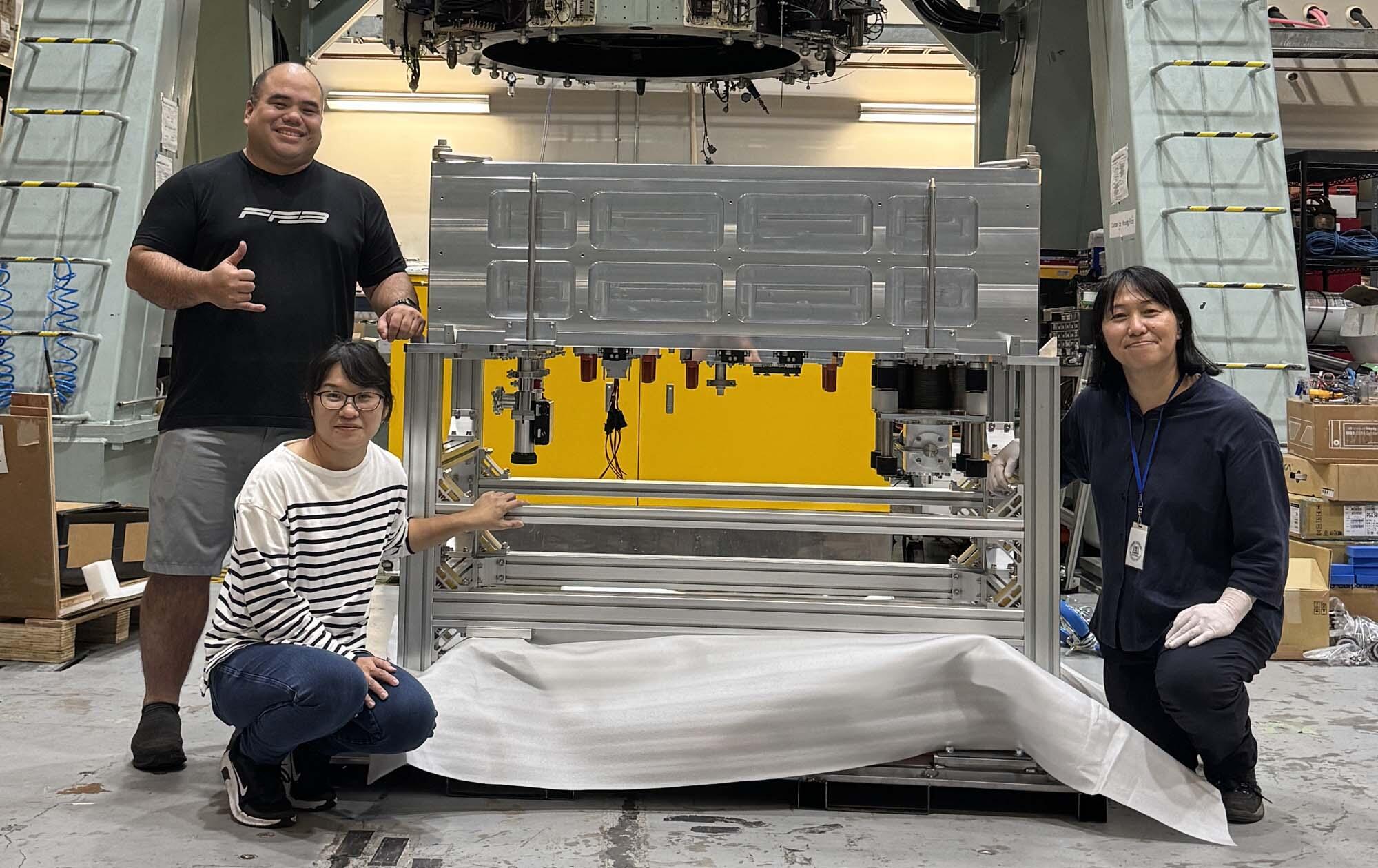
This summer the 8.2-meter Subaru Telescope gets a near-infrared spectrograph called NINJA. The National Astronomical Observatory of Japan (NAOJ) made the plan public on July 13, 2026. It will be the instrument's first run pointed at the sky.
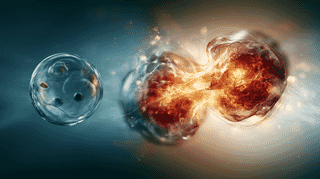
Its target is a class of object that only became an observational problem once gravitational waves could be detected directly. When two neutron stars spiral together and merge, the debris they throw off glows for a short while. Astronomers call that glow a kilonova, and it is thought to be one of the places where elements heavier than iron, gold and platinum among them, are forged. The problem is timing. The emission changes dramatically within days of discovery and then fades. Getting a spectrum, meaning the breakdown of the light by wavelength, as early as possible is what turns a dot on an image into physics.
Near-infrared matters here for a specific reason. In August 2017, when the first neutron star merger with a visible counterpart was tracked by observatories around the world, the object dimmed and reddened at the same time, growing relatively brighter in the near-infrared as its optical light drained away. Models attribute that behavior to freshly minted heavy elements that are extremely opaque to visible light. The optical window on a kilonova closes first; the infrared one stays open a little longer.
What NINJA does differently
NAOJ describes three strengths, and every one of them is aimed at the clock.
Rapid response. NINJA sits at the Nasmyth focus and stays there. When word of a transient arrives, nobody has to swap hardware first.
High efficiency. One exposure gets everything from 0.85 to 2.5 micrometers, a span no other Subaru spectrograph can take in at once.
High sensitivity. The telescope's adaptive optics cancels much of the smearing that Earth's atmosphere imposes, and running NINJA behind it extends the instrument's reach to fainter objects.
Credit: NAOJ
The acronym, for the record, unpacks as Near-INfrared and optical Joint spectrograph with Adaptive optics. The pun was clearly not an accident.
NAOJ expects the same three qualities to pay off beyond transients, in spectroscopy of distant galaxies in the early universe, where the light worth studying has been stretched into the infrared by the expansion of space.
Discovery got cheap. Spectra did not.
On June 30, 2026, the NSF–DOE Vera C. Rubin Observatory in Chile formally began the Legacy Survey of Space and Time, a ten-year sweep of the southern sky with a 3,200-megapixel camera. Rubin's first public alerts went out on the night of February 24, 2026: 800,000 of them in a single night. At full stride the observatory is expected to issue up to seven million alerts a night.
An alert tells you that something in the sky moved, brightened, or dimmed. It does not tell you what that something is. Only a spectrum does that, and spectra are collected one object at a time, on telescopes booked years in advance. The gap between what the surveys find and what anyone can actually follow up has become the field's central practical problem.
The gravitational-wave side is in a lull that happens to line up neatly. The LIGO-Virgo-KAGRA network closed its fourth observing run, O4, on November 18, 2025, having flagged roughly 250 candidate signals in real time, more than 60 percent of the roughly 390 recorded in the entire history of the field. The detectors are being upgraded now. According to the collaboration's plan as of July 15, 2026, the next campaign, a six-month run designated IR1, should begin between late October and mid-November 2026.
Which places NINJA's engineering observations this summer in the narrow window before the alerts start again.
Where NINJA fits among the world's responders
NAOJ's wording is careful, and worth reading closely: NINJA is the first instrument at Subaru to cover 0.85 to 2.5 micrometers in one shot, not the first anywhere.
Europe has been at this for years. X-shooter, on ESO's Very Large Telescope, records 300 to 2,500 nanometers in a single exposure and took the spectra of the 2017 kilonova that researchers are still arguing over. More recently SOXS, an instrument built specifically for transients, achieved first light on ESO's New Technology Telescope at La Silla, announced in early 2026. Its advantage is not size but availability, a smaller telescope that can drop what it is doing and point.
Subaru's contribution is a different pairing. An 8.2-meter aperture and adaptive optics working on the same target is a combination few facilities can offer for time-critical work, and it aims squarely at the faint end: events too distant, or too far along in their fade, for anyone else to characterize.
Japan also has a record of showing up. In 2017 the Japanese collaboration J-GEM followed that first neutron star merger using Subaru together with, among other facilities, IRSF, an infrared telescope in South Africa run jointly by Nagoya University and the South African Astronomical Observatory, taking advantage of the fact that its telescopes are spread across longitudes. In April 2024 the same group pointed Subaru's MOIRCS camera at a gravitational-wave candidate, starting 7.8 hours after the alert and covering 206 nearby galaxies over two nights. The signal was later reclassified as probably terrestrial noise. The campaign still produced something worth having: a hard measurement of what near-infrared searches can and cannot do under real conditions.
Built in Mitaka, carried to Hilo
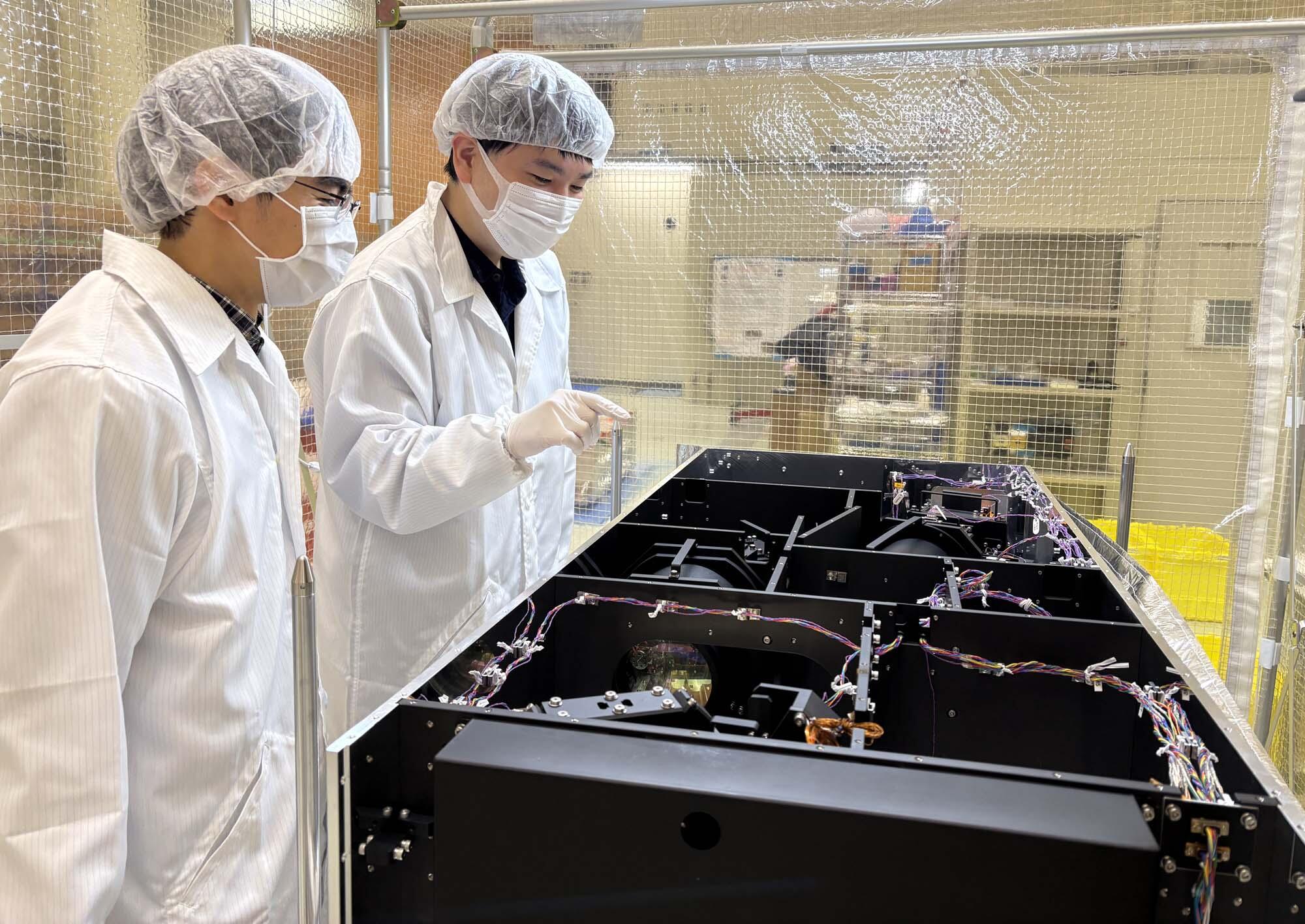
NINJA was assembled at NAOJ's Advanced Technology Center in Mitaka, on the western edge of Tokyo. Two universities supplied the core of the team: three doctoral students, from Waseda and from the University of Tokyo. Their assignments are the kind that decide whether an instrument works at all: steering the target's light precisely into the spectrograph, controlling optics and mechanics at cryogenic temperatures, and pulling extremely faint signals off the infrared detector without adding noise.
The instrument shipped to Hawai'i in February 2026 fully assembled, optics and detector and wiring included, which made the arrival inspection a genuine test rather than a formality. Riku Sato, a doctoral student at Waseda, ran that inspection at the Hilo base facility in March. He has since been writing the software that lets the telescope operate the spectrograph, the link that has to exist before any of the rest matters. NAOJ says he is looking forward to turning NINJA on distant galaxies.
Credit: NAOJ
The work is supported by a Japanese government research grant, JSPS KAKENHI JP21H04997, for studying heavy-element synthesis in gravitational-wave sources through wide-band near-infrared spectroscopy. NAOJ's announcement closes on what the mountain means, culturally and spiritually, to Native Hawaiian and local communities, and on a pledge to work there with respect for its environment and its history.
Facing an era of seven million alerts a night, Japan chose not to build another survey. The verdict on that starts arriving the next time a neutron star merger lights up somewhere within reach.
Most countries with a serious astronomy program end up facing some version of this choice: fund the machine that finds things, or the one that explains them. Which way has yours leaned?
References
- https://subarutelescope.org/jp/news/topics/2026/07/13/3739.html
- https://subarutelescope.org/en/news/topics/2026/07/13/3740.html
- https://sorae.info/astronomy/20260723-subaru-ninja.html
- https://rubinobservatory.org/news/action-rubin-lsst-begins
- https://observing.docs.ligo.org/plan/
- https://www.ligo.caltech.edu/news/ligo20251118
- https://subarutelescope.org/en/results/2017/10/16/2253.html
- https://www.virgo-gw.eu/news/ligo-virgo-and-kagra-complete-the-richest-observation-run-to-date/
- https://www.eso.org/sci/facilities/paranal/instruments/xshooter/overview.html
- https://www.physics.ox.ac.uk/news/first-light-achieved-new-soxs-spectrograph
- https://arxiv.org/abs/2510.15534




Global Discussion
0 comments