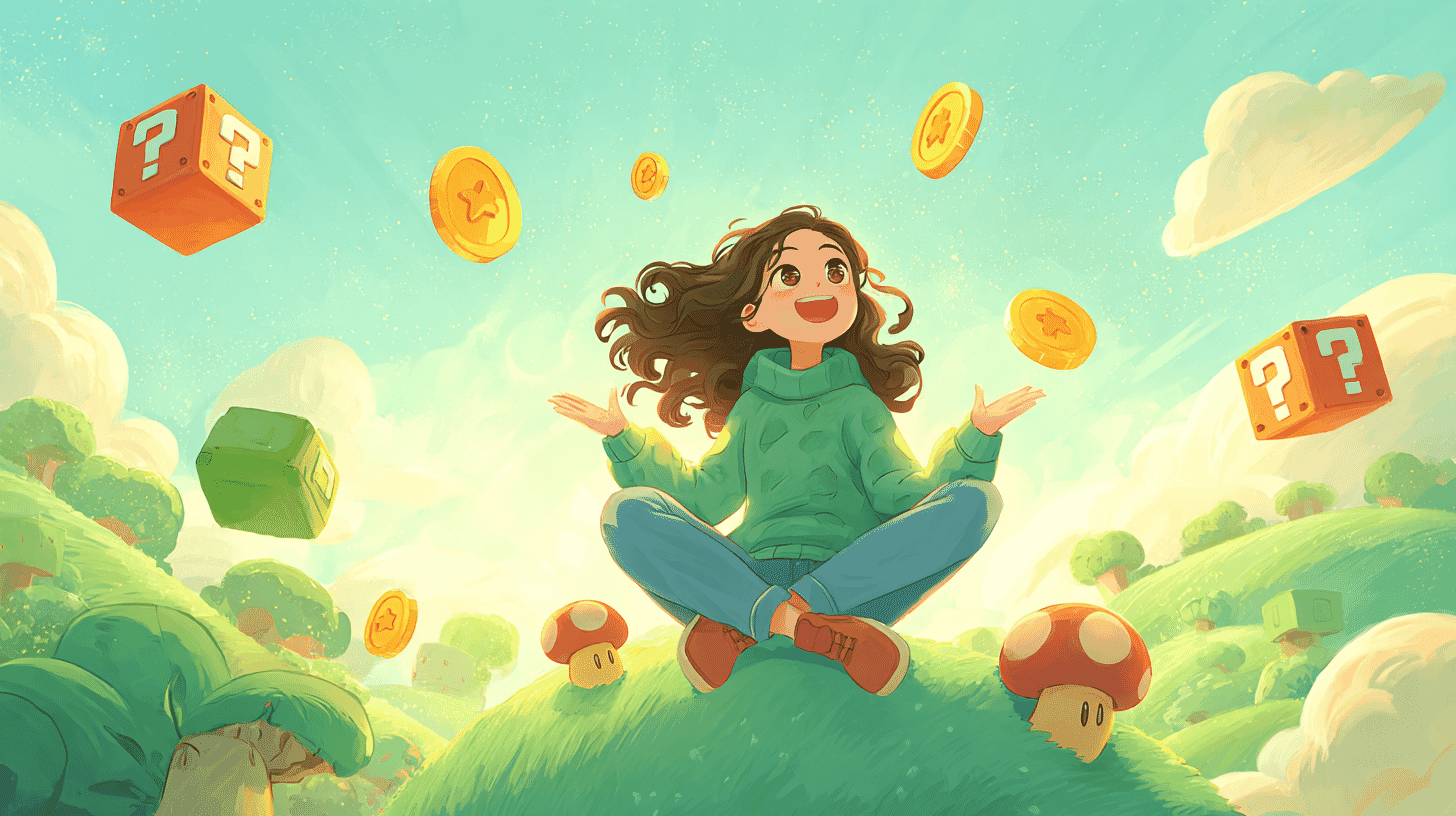
Today's young adults face an unprecedented constellation of pressures. Smartphones deliver a constant stream of notifications, social media showcases others' curated successes, and the unspoken expectation to be "always productive" leaves little room for genuine rest. This "always-on" culture has pushed many young people toward the brink of burnout, a state characterized by emotional exhaustion, cynicism, and a reduced sense of accomplishment.
Against this backdrop, researchers from Imperial College London (UK) and Kyushu Sangyo University (Japan) have scientifically demonstrated an unexpected yet nostalgic remedy. It's neither meditation nor expensive therapy, but rather playing Nintendo's Super Mario Bros. and Yoshi games.
Study Overview: A Rigorous Mixed-Methods Approach
Published on December 19, 2025, in the peer-reviewed journal JMIR Serious Games, the study was carried out by Winze Tam and Professor Andreas Benedikt Eisingerich of Imperial College Business School, with Congcong Hou of Kyushu Sangyo University's Faculty of Commerce in Fukuoka.
The research team employed a mixed-methods approach with two phases of investigation.
Qualitative Study (Interviews)
- Participants: 41 university students with experience playing Super Mario Bros. or Yoshi games
- Demographics: 19 women (46.3%), 21 men (51.2%), 1 preferred not to disclose (2.4%)
- Average age: 22.51 years
- Interview duration: 25-40 minutes
Quantitative Study (Survey)
- Participants: 336 university students with similar gaming experience
- Measured: Burnout risk, happiness, and "childlike wonder" experienced during gameplay
The Key Concept: "Childlike Wonder"
The study's most significant contribution lies in identifying "childlike wonder" as a crucial emotional pathway. This concept differs from mere nostalgia: it refers to a state of openness, curiosity, and delight in response to both new and ordinary experiences.
Here's what study participants shared in their interviews:
"Playing Yoshi transports me back in time. It's a bit like time travel. I see myself as this kid again, wondering about the possibilities and beauty of this world. It's a bit like a fresh new start."
"Super Mario Bros. Wonder is crazy. I love how the clouds are all animated and full of life. I hardly see the sky these days. Living in a big city it's hard to get a sense of nature... Super Mario Bros. Wonder is like a breath of fresh air with trees, clouds, water and fun everywhere."
Statistical Evidence: Clear and Measurable Effects
The quantitative survey results statistically validated the experiences described in interviews.
Key Findings
-
Childlike Wonder → Increased Happiness
- Participants who experienced stronger childlike wonder during gameplay reported significantly higher overall happiness
- Statistical results: b=0.30, SE=0.04, t=6.80, p<.001
-
Happiness → Reduced Burnout Risk
- Players with higher happiness showed significantly lower burnout risk
- Statistical results: b=–0.48, SE=0.05, t=–9.55, p<.001
-
Full Mediation Effect
- The effect of childlike wonder on reducing burnout risk was fully mediated by happiness
- This means games don't directly prevent burnout; instead, they first boost happiness, which in turn reduces burnout risk through a chain reaction
Why Mario and Yoshi Specifically?
The research team pointed to design choices specific to these titles. Vibrant colors, cheerful music, a sunny outlook. Failure carries almost no consequence, hitting a block reliably produces a coin, practice reliably produces improvement, and a mistake costs a few seconds rather than an hour. Effort and outcome stay legibly connected.
The Yoshi series goes further. Yoshi's Crafted World and Yoshi's Woolly World build their worlds from what looks like yarn, cardboard, and craft-table leftovers, a handmade warmth that recalls childhood art projects. Nothing in that world reads as a threat.
An "Antidote" to Burnout
Burnout has three core components: emotional exhaustion, cynicism (detachment or negativity), and reduced efficacy. The researchers argue Mario and Yoshi push back on each.
Against exhaustion, the attention gameplay demands interrupts rumination about work, and the flow states and positive affect it induces dampen chronic stress responses. Against cynicism, a colorful and unmalicious world offers exposure to a worldview that isn't defensive, rebuilding the assumption that effort leads to reward. Against reduced efficacy, collecting coins, uncovering secrets, and finishing levels make the link between action and outcome visible again, and achievement under low pressure restores a sense of competence and agency.
Study Limitations and Future Directions
The research team acknowledged several important limitations.
- Benefits are likely contingent on moderate, voluntary play for enjoyment; compulsive gaming or escapism solely to avoid problems may be counterproductive
- The study examined self-reported burnout risk; longitudinal research on actual burnout is needed
- While games can help mitigate individual burnout experiences, they cannot address systemic causes like excessive workload or unfair workplace practices
One more point sits in the paper's own title: this is a cross-sectional study. Wonder, happiness and burnout risk were measured at a single point in time and the relationships among them examined; nothing was tracked as it changed. The design therefore cannot separate games raising happiness from happier people feeling more wonder while playing. Demonstrating statistical mediation is not the same as demonstrating cause.
The Importance of "Reclaiming Joy"
Professor Eisingerich commented:
"This study suggests that the path to combating burnout in young adults may lie not just in traditional wellness but also in reclaiming joy. Games like Super Mario Bros. and Yoshi may offer a potent antidote to the cynicism and fatigue characteristic of burnout."
Mario and Yoshi decline the high-stakes, high-stress model many modern games run on, prioritizing safety, curiosity, and joy instead. For someone whose days are governed by deadlines and a sense of lost control, the researchers suggest, that can amount to a place to practice being curious again.
In Japan, video games are sometimes criticized as "a waste of time," yet this research suggests potential mental health benefits from moderate gameplay. What are the prevailing views on the relationship between gaming and mental health in your country? We'd love to hear your thoughts.
References
- https://games.jmir.org/2025/1/e84219/
- https://phys.org/news/2025-12-super-mario-bros-burnout-links.html
- https://www.psypost.org/playing-super-mario-bros-and-yoshi-games-may-reduce-burnout-risk-in-young-adults-stud-finds/
- https://studyfinds.org/super-mario-yoshi-games-lower-burnout-rekindling-childlike-wonder/
- https://www.tomshardware.com/video-games/study-shows-playing-super-mario-bros-and-yoshi-games-fights-burnout-and-can-enhance-happiness-in-life-popular-titles-are-proven-to-instill-childlike-wonder-among-young-adults









Global Discussion
15 comments