🎨 A 1,000-year-old National Treasure, now viewable on your smartphone.
The National Treasure "Illustrated Biography of Prince Shotoku" was once only viewable for one month per year at the Tokyo National Museum. Now, it's available for free viewing from anywhere in the world, captured in an astonishing 3.6 billion pixels.
With support for 4 languages and interactive quizzes about Prince Shotoku's "superhuman legends"— here's a look at Japan's cutting-edge approach to digitizing cultural heritage.
What is the "Illustrated Biography of Prince Shotoku"?
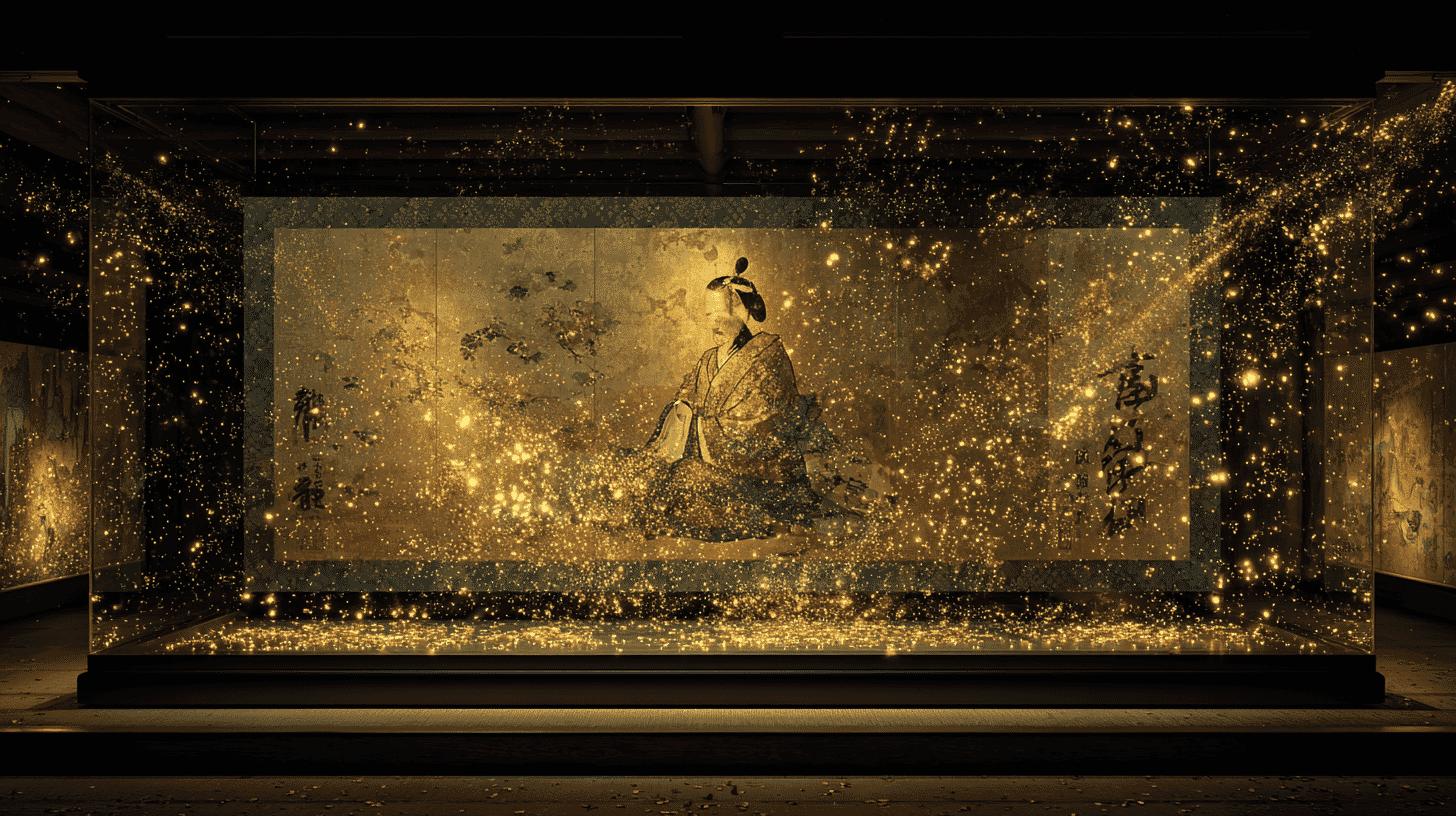
The Shotoku Taishi Eden (Illustrated Biography of Prince Shotoku) is a collection of painted sliding door panels (shoji-e) created in 1069 CE by the artist Hata no Chitei during Japan's Heian period. Consisting of 10 panels, each measuring approximately 1.9 meters tall and 1.5 meters wide, this monumental work depicts 60 episodes from Prince Shotoku's life, from birth to death. It's the oldest surviving example of the "Shotoku Taishi Eden" genre and is highly regarded as a masterpiece of early Yamato-e (Japanese-style painting).
Originally displayed on the inner walls of the E-den (Picture Hall) at Horyuji Temple in Nara, the panels were donated to the Imperial Household in 1878 and are now housed at the Tokyo National Museum.
However, after approximately 1,000 years, the painted surfaces have deteriorated significantly, making detailed observation with the naked eye nearly impossible. Additionally, to protect the artwork, physical exhibitions have been limited to roughly one month per year.
The Digitization Journey
To make this precious National Treasure accessible to more people, the National Center for the Promotion of Cultural Properties (nicknamed "Bunkatsu") launched a digitization project in 2018.
Development of the 8K Art Viewer (2018)
In collaboration with NHK Educational, each panel was photographed in 28 sections. The resulting ultra-high-definition image data contains approximately 1.8 billion pixels per panel, or 3.6 billion pixels for two panels combined. This was displayed on large 8K monitors, allowing visitors to zoom in and explore the artwork through an interactive application at the Gallery of Horyuji Treasures.
Integration with 5G and AR Technology (around 2020)
A joint project with KDDI combined 5G communication technology and AR (Augmented Reality) to create new viewing experiences. Visitors could use "Magic Glasses" to watch animated versions of the biography's episodes through AR glasses.
Web Version Launch (January 2026)
In January 2026, the content that was previously only available at the museum was finally released as a web application.
Features of the Digital Art Viewer
The newly released "Digital Art Viewer: National Treasure Illustrated Biography of Prince Shotoku — The Prince's Life and Superhuman Legends" offers several remarkable features:
3.6 Billion Pixel Ultra-High-Definition Images
The web version uses the same ultra-high-definition data as the museum display. You can zoom in to levels impossible to see with the naked eye. For instance, in the scene depicting the 11-year-old prince levitating, zooming in reveals his "smiling expression."
Full Support for 4 Languages
All explanations are available in Japanese, English, Chinese, and Korean. This makes it an invaluable learning resource for fans of Japanese culture worldwide.
Interactive Learning Experience
From 60 episodes, 12 "superhuman legends" have been selected and presented with illustrations for easy understanding. Stories like "listening to 36 children speak at once and remembering everything" and "flying to Mount Fuji on a magical black horse" can be enjoyed while learning about the prince's legendary abilities.
Quiz features are also included, allowing users to deepen their understanding of the artwork in a game-like format.
Access Anytime, Anywhere
The viewer is accessible via PC or smartphone, regardless of time or location. Whether at home, in a classroom, or from overseas, you can experience this National Treasure.
The Significance of Digitizing Cultural Heritage
In 2023, Japan enacted a revised Museum Act that officially designated digital archive creation and publication as part of museum operations—the first major revision in approximately 70 years.
The National Center for the Promotion of Cultural Properties operates under the vision: "To preserve cultural properties for 1,000 or even 2,000 years into the future, we will create a society where everyone thinks about and participates in their preservation."
By utilizing digital technology, they are addressing the previously difficult challenge of balancing artwork protection with expanded viewing opportunities.
The web release of the Prince Shotoku Illustrated Biography exemplifies this vision in action.
Experience It Yourself
The Digital Art Viewer is available for free at the following URL:
URL: https://edu-cpcp.nich.go.jp/eden/
Recommended viewing environment: screen size of 10 inches or larger, resolution of 1366×768 pixels or higher, with touch panel or mouse functionality.
Japan has a long tradition of "etoki" (picture explanation), where the contents of picture scrolls and illustrated biographies were narrated to audiences. In a sense, digital technology has revived this tradition for the modern age.
Does your country have initiatives to digitally publish ancient artworks and cultural properties? How do you balance the preservation and utilization of cultural heritage? We'd love to hear your thoughts!

References
- https://www.atpress.ne.jp/news/567801
- https://edu-cpcp.nich.go.jp/eden/
- https://cpcp.nich.go.jp/
- https://colbase.nich.go.jp/collection_items/tnm/N-1?locale=ja🎨 A 1,000-year-old National Treasure, now viewable on your smartphone.
The National Treasure "Illustrated Biography of Prince Shotoku" was once only viewable for one month per year at the Tokyo National Museum. Now, it's available for free viewing from anywhere in the world, captured in an astonishing 3.6 billion pixels.
With support for 4 languages and interactive quizzes about Prince Shotoku's "superhuman legends"— here's a look at Japan's cutting-edge approach to digitizing cultural heritage.
What is the "Illustrated Biography of Prince Shotoku"?
The Shotoku Taishi Eden (Illustrated Biography of Prince Shotoku) is a collection of painted sliding door panels (shoji-e) created in 1069 CE by the artist Hata no Chitei during Japan's Heian period. Consisting of 10 panels, each measuring approximately 1.9 meters tall and 1.5 meters wide, this monumental work depicts 60 episodes from Prince Shotoku's life, from birth to death. It's the oldest surviving example of the "Shotoku Taishi Eden" genre and is highly regarded as a masterpiece of early Yamato-e (Japanese-style painting).
Originally displayed on the inner walls of the E-den (Picture Hall) at Horyuji Temple in Nara, the panels were donated to the Imperial Household in 1878 and are now housed at the Tokyo National Museum.
However, after approximately 1,000 years, the painted surfaces have deteriorated significantly, making detailed observation with the naked eye nearly impossible. Additionally, to protect the artwork, physical exhibitions have been limited to roughly one month per year.
The Digitization Journey
To make this precious National Treasure accessible to more people, the National Center for the Promotion of Cultural Properties (nicknamed "Bunkatsu") launched a digitization project in 2018.
Development of the 8K Art Viewer (2018)
In collaboration with NHK Educational, each panel was photographed in 28 sections. The resulting ultra-high-definition image data contains approximately 1.8 billion pixels per panel, or 3.6 billion pixels for two panels combined. This was displayed on large 8K monitors, allowing visitors to zoom in and explore the artwork through an interactive application at the Gallery of Horyuji Treasures.
Integration with 5G and AR Technology (around 2020)
A joint project with KDDI combined 5G communication technology and AR (Augmented Reality) to create new viewing experiences. Visitors could use "Magic Glasses" to watch animated versions of the biography's episodes through AR glasses.
Web Version Launch (January 2026)
In January 2026, the content that was previously only available at the museum was finally released as a web application.
Features of the Digital Art Viewer
The newly released "Digital Art Viewer: National Treasure Illustrated Biography of Prince Shotoku — The Prince's Life and Superhuman Legends" offers several remarkable features:
3.6 Billion Pixel Ultra-High-Definition Images
The web version uses the same ultra-high-definition data as the museum display. You can zoom in to levels impossible to see with the naked eye. For instance, in the scene depicting the 11-year-old prince levitating, zooming in reveals his "smiling expression."
Full Support for 4 Languages
All explanations are available in Japanese, English, Chinese, and Korean. This makes it an invaluable learning resource for fans of Japanese culture worldwide.
Interactive Learning Experience
From 60 episodes, 12 "superhuman legends" have been selected and presented with illustrations for easy understanding. Stories like "listening to 36 children speak at once and remembering everything" and "flying to Mount Fuji on a magical black horse" can be enjoyed while learning about the prince's legendary abilities.
Quiz features are also included, allowing users to deepen their understanding of the artwork in a game-like format.
Access Anytime, Anywhere
The viewer is accessible via PC or smartphone, regardless of time or location. Whether at home, in a classroom, or from overseas, you can experience this National Treasure.
The Significance of Digitizing Cultural Heritage
In 2023, Japan enacted a revised Museum Act that officially designated digital archive creation and publication as part of museum operations—the first major revision in approximately 70 years.
The National Center for the Promotion of Cultural Properties operates under the vision: "To preserve cultural properties for 1,000 or even 2,000 years into the future, we will create a society where everyone thinks about and participates in their preservation."
By utilizing digital technology, they are addressing the previously difficult challenge of balancing artwork protection with expanded viewing opportunities.
The web release of the Prince Shotoku Illustrated Biography exemplifies this vision in action.
Experience It Yourself
The Digital Art Viewer is available for free at the following URL:
URL: https://edu-cpcp.nich.go.jp/eden/
Recommended viewing environment: screen size of 10 inches or larger, resolution of 1366×768 pixels or higher, with touch panel or mouse functionality.
Japan has a long tradition of "etoki" (picture explanation), where the contents of picture scrolls and illustrated biographies were narrated to audiences. In a sense, digital technology has revived this tradition for the modern age.
Does your country have initiatives to digitally publish ancient artworks and cultural properties? How do you balance the preservation and utilization of cultural heritage? We'd love to hear your thoughts!

References
Reactions in Japan
I always wanted to see the Prince Shotoku Illustrated Biography but couldn't travel to Tokyo... I'm moved that I can now view it on my smartphone. 3.6 billion pixels—isn't that clearer than a photo?
Tried the quizzes with my kid! We laughed at stories like 'listening to 36 people speak at once'—Prince Shotoku was incredible. Great for learning history.
I'm an art student. Being able to see brushwork from 1069 this clearly is truly invaluable. Could be useful for restoration research too.
Happy about the 4-language support. Showed it to my Korean friend who said 'The stories are interesting even though the paintings are so old.'
Honestly, I preferred seeing the real thing over digital, but if you can zoom in this much, that changes things. There are details you'd never see in person.
I hope Bunkatsu expands this to other National Treasures. Would love to see Tale of Genji scrolls or Choju-giga at this quality!
Living in the countryside, I can't easily visit Tokyo museums, so web releases like this really help. No transportation costs either.
Only noticed Prince Shotoku smiling in the levitation scene after zooming in... Amazing that the artist 1,000 years ago drew such fine details.
As a history nerd, this is amazing content. Though the UI feels a bit heavy? Loading took a while on my smartphone.
I'm a teacher. Will definitely use this in class! Showing students a real National Treasure has high educational value.
The scene of creating the Seventeen-Article Constitution looked quite different from the textbook image of Prince Shotoku. Fresh perspective—this is how Heian-era people imagined him.
I saw the original at Horyuji Temple but honestly couldn't understand much... If this digital version existed back then, I could have studied beforehand and enjoyed it more.
Amazing that it's free. Even though it's publicly funded, I'm grateful they made such quality content accessible to everyone.
I remember hearing the story about flying to Mount Fuji on a black horse as a child. Seeing it actually depicted in the painting is deeply moving.
Digitization is good, but I think it can't match the experience of seeing the real thing. Maybe having both options is what matters.
Thank you for including Chinese! Prince Shotoku is known in China as someone who spread Buddhism. Amazing to see 1,000-year-old Japanese paintings this clearly.
American museums should do more digitization like this. Japan has an excellent balance between preserving cultural artifacts and making them accessible.
Happy to read this in Korean. Prince Shotoku's era saw active exchanges between Japan and the Korean Peninsula. This is a great opportunity to learn about both countries' history.
The Louvre in France has similar projects, but Japan's resolution is extraordinary. I've never heard of 3.6 billion pixels before.
I'm a graduate student in history. Having online access to primary sources like this is revolutionary for research.
Prince Shotoku is famous for the 'Letter from the Land of the Rising Sun.' It's fascinating to see his life depicted in paintings.
Many German museums advanced digitization after COVID, but few are this interactive. The quiz feature is a brilliant idea.
Viewing from Australia. What a wonderful era to be able to appreciate Japan's National Treasures without worrying about time zones.
I wish Spain's cultural properties were digitally preserved like this. It's important to keep records before they're lost to earthquakes or fires.
Digital viewing is nice, but I'd love to see the real thing at Tokyo National Museum someday. This motivates me to travel.
Surprised by the quality of the English translation. Many museum websites feel machine-translated, but this is actually readable.
I'm an art teacher. This is perfect material for introducing Japanese classical art to students. Bookmarked!
Italy has many old religious paintings too, but few are digitized to this extent. I can feel Japan's technological prowess.
I research Buddhist art. Prince Shotoku is considered the father of Japanese Buddhism. Publishing materials like this advances research.
Loading is a bit slow on smartphone, but understandable given the pixel count. I recommend viewing with WiFi.