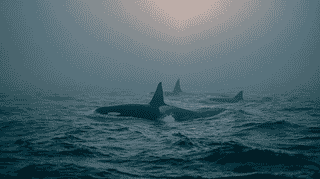
A white male orca first seen off Rausu in 2019 returned in thick fog in June 2026. About 1 in 1,000 orcas in the western North Pacific is white, and genetics hint at why.
A University of Tokyo-led team finds Ryugu's sodium in clay and about 90% of its chlorine in serpentine, implying water a hundred times less salty than the sea. A Kyoto-led team had read a brine.
A butterfly wing kept in a 100-yen insect fossil museum in Hyogo is the oldest known fossil of a living species. It is not the oldest butterfly, and the same room has yielded three finds in about 18 months.
A Moon clock gains about 56 microseconds a day on Earth clocks, about 17 km of navigation error per day if uncorrected. The CGPM's lunar time draft seeks one reference scale and never mentions optical clocks.
An Osaka-led Japan-US team tells left- and right-handed amino acids apart one molecule at a time. Soai's Nobel shows a tilt can grow from chance, and asteroids Ryugu and Bennu show none, so detectors must read both.
Sukunaarchaeum has the smallest archaeal genome yet found: about 238,000 base pairs and 189 genes, with almost no metabolism. Smaller bacterial genomes exist, and the peer-reviewed abstract drops the cell-or-virus label.
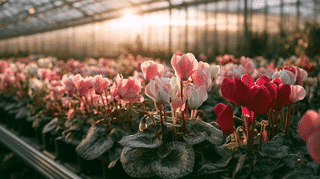
Japanese researchers have read the genome of the potted cyclamen's wild ancestor: 1.48 billion base pairs, 83% of them repeats. Breeding scent back into the flower once took Saitama 21 years.
Zavacephale, now on show in Japan, pushed the pachycephalosaur dome record back at least 14 million years. It's billed as a head-butting dinosaur, but whether its kind fought that way has been argued since at least 1998.
About 30% of people with ADHD get limited benefit from methylphenidate. A Fukui mouse study found adding a D2 drug helped mice missing the protein NSF, but the same combo made normal mice more impulsive.
Cryo-electron microscopes flash-freeze proteins and build 3D models from millions of molecular images. What they see, what they do and what they cost, as a Kyoto university teaches undergraduates to use the data.
A 26-site, two-year double-blind trial in Japan found high-absorption curcumin did not cut colon polyp recurrence overall (risk ratio 0.98), but large adenomas were about 44% lower. Not proof of cancer prevention.
Divers in Shiretoko have long called it Ikuone. Now Clione ikuoi is the sixth sea angel species, and the third from Japanese waters in 10 years. A misread set of feeding arms had kept it in the wrong genus.
The 47th Honda Prize goes to Graeme Clark and Ingeborg Hochmair for the multichannel cochlear implant, now fitted in more than one million people. Why did a carmaker founder's foundation pick it?
On October 2, 2026, a Sapporo hospital gave the first commercial dose of Akuugo to a man paralyzed in a traffic accident. Why it took over two years, and what the trial evidence shows.
Tohoku University-led researchers built a DNA switch: blue light makes mRNA inside cell-sized capsules, UV stops and cuts it. Why the brake matters, and why pinpoint therapy is still far off.
High-speed cameras trade detail for duration. A University of Tokyo team packs frames tightly at first and spreads them out later, linking roughly 5 orders of magnitude in time with 11 frames in a single shot.
Some AI GPUs are now far weaker at the FP64 math science needs. A Shibaura Institute of Technology method rebuilds it from low-precision units; NVIDIA lists up to 175 TFLOPS on a B200. How it works, and its limits.
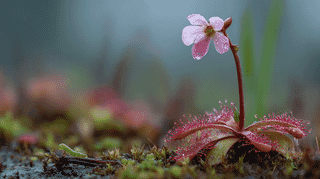
Spoon-leaved sundews with cut leaves closed their flowers more tightly when touched, in an indoor test of 15 and 17 plants. What carries that 'memory' is still unknown.
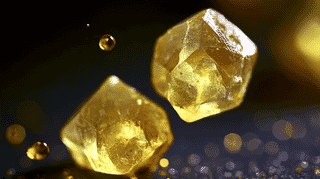
Cyclo-octasulfur, the yellow sulfur of volcanoes, is made and stored in fat droplets in mouse and human cells. It won't dissolve in water and breaks apart when measured; a chemistry capsule caught it.
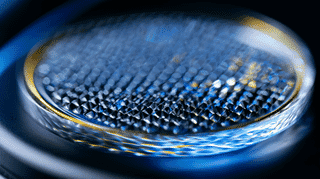
Kanazawa University and AIST report the first vertical diamond MOSFET with an inversion-layer channel. Diamond transistors that switch off this way existed by 2016; what is new is building one vertically.