Researchers at Kyoto University used Japan's near-total medical insurance database to trace esotropia (inward-turning eyes) cases from 2014 to 2019, the years smartphones swept the country. Incidence rose from 32.26 to 36.61 per 100,000 person-years; surgeries climbed from 3,061 to 3,743. The link with smartphone penetration is strong, the absolute rise is small.
After a stroke, the brain repairs itself for about two months, then stops. A team from Science Tokyo, TMIMS, Kyushu University and Freiburg University has identified the protein responsible, ZFP384, and developed an antisense drug that keeps the repair window open in mice. Published in Nature, the discovery could redraw what is possible for stroke survivors and other brain injuries.
The SI second hasn't changed since 1967. By 2030 it likely will. From Earth's rotation to atomic vibrations to optical transitions: this is the history of how we've defined the second, and a field guide to the candidate atoms and national labs racing to define it next.
PM Sanae Takaichi pledged to effectively double research funding and build a 'new technological nation' targeting AI, semiconductors and quantum, and the Japan Growth Strategy carrying those measures was adopted by cabinet on July 21, 2026. We look at the 17 strategic fields and 62 priority technologies against the reality of Japan's 3.44% R&D-to-GDP ratio and its falling PhD numbers.
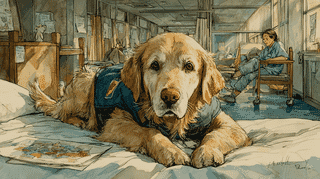
Hospital Facility Dogs, canine 'medical staff' that report to the same Japanese pediatric hospital five days a week, will grow to seven teams nationwide by fiscal 2027. From Shizuoka to Hyogo and Tsukuba, we look at how Shine On! Kids built this uniquely structured program, why each dog costs roughly ¥12 million (about $76,000) a year to operate, and how donations and corporate partnerships are filling the gap.
Tohoku University researchers have proven for the first time that microscopic surface roughness can reduce air drag by up to 43.6%, overturning an 80-year-old fluid mechanics consensus dating back to the 1940s. Here is what this discovery could enable for aircraft, cars, ships, bullet trains, and drones, and how it differs from riblets and golf ball dimples.
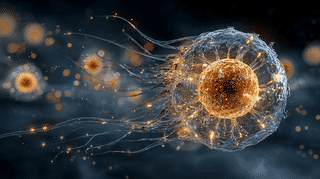
A Japanese research team led by Gakushuin University has discovered Mitorubin, a plant-derived compound that simultaneously increases mitochondrial quantity and function. The compound improved heart function in aged mice and extended median lifespan by about 40% in obese mice on a high-fat diet — a distinct approach from US longevity biotech, NAD supplements, and senolytics.
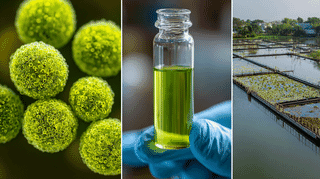
In 2012, the Sankei Shimbun reported a biofuel revolution centered on Enomoto algae, a hyper-growth Botryococcus bred by Kobe University spin-off G> under Professor Taira Enomoto. Heavy-industry giant IHI joined biotech venture Neo-Morgan Laboratory to commercialize it, with then-CEO Tomohiro Fujita declaring he wanted to cut the price to one-tenth within ten years. Fourteen years later, the joint venture has dissolved, but the algae fueled the world's first flight on SAF meeting ASTM D7566 Annex 7, and a Japanese-led 5-hectare facility in Malaysia is now the largest of its kind on Earth. Did the promise come true, or is the dream over?
Japan's next-gen supercomputer Fugaku NEXT bets against the cooling consensus: warming water above 30°C to cool AI servers and cutting cooling power by 20%. It may also adopt 'ZAM,' a new memory developed by SoftBank and Intel that stands DRAM chips on edge with magnetic-field coupling. Why Japan is choosing efficiency over the gigawatt-scale arms race that defines US Frontier and El Capitan.
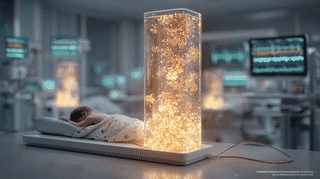
A Japanese team led by Prof. Takanori Takebe (Osaka & Science Tokyo) and Dr. Mureo Kasahara (National Center for Child Health and Development) plans the world's first pediatric clinical trial of UTOpiA, a bioartificial liver that perfuses blood through iPS-derived liver organoids. Animal trials showed 90% survival. How it compares with King's College London's HELP trial and Beijing's CiPS-BAL.
A Japanese team led by NAOJ has detected an atmosphere on a small trans-Neptunian object beyond Pluto for the first time, using a stellar occultation observed simultaneously from three sites across Japan. Here is how the pro-amateur collaboration worked, and why it rewrites textbooks on the outer solar system.
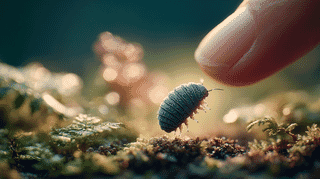
Researchers at the University of Tsukuba have discovered that pill bugs (Armadillidium vulgare) don't just incorporate the calcium carbonate they eat; they rebuild it from scratch inside their bodies, always producing calcite even when fed aragonite. The unexpected polymorph control reveals a deeper biomineralization mystery and may inspire next-generation biomimetic materials.
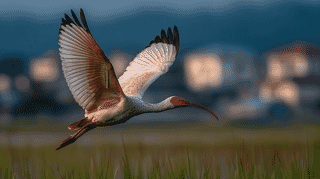
On May 31, 2026, Crested Ibises were released in Hakui City, Ishikawa, the first wild release on Honshu in 56 years. Crown Prince Akishino and Princess Kiko attended, returning to a milestone they witnessed in 2008 on Sado Island. The release is also a symbol of recovery from the 2024 Noto Peninsula earthquake. We compare this revival story with the California Condor and Korean Oriental Stork programs.
Kenichi Sugino, who designed the Game Boy Color, Advance, DS and 3DS over 37 years at Nintendo, and Goro Abe, who directed all 12 WarioWare titles, have joined Osaka Electro-Communication University as professors. We explore Japan's distinctive game education model, how it compares to DigiPen and USC, and the wave of generational change at Nintendo.
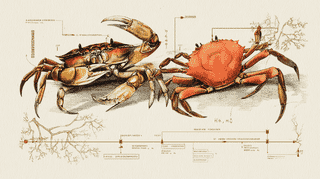
When did crabs start walking sideways? A Japan-US-Taiwan team led by Nagasaki University filmed 50 species and mapped them onto a phylogenetic tree, finding that sideways walking evolved just once around 200 million years ago, published in eLife.
In central and southern Nagano, the dwarf bamboo Suzutake has begun a mass flowering said to occur roughly once every 120 years. The last record in northern Kamiina was 1906. The interval comes from old documents that logged "bamboo rice" harvests during famines, though the prefectural forestry centre says the exact cycle is still unknown and another mass flowering was recorded in 2017. Predator satiation, the risk that nothing regenerates afterwards, and how this compares with India's Mautam famine.
Researcher Yohei Kawai and Professor Shin Kaneko at Kyoto University's CiRA have established a way to induce helper T cells, the conductors of the immune system, from human iPS cells without mouse feeder cells. The paper ran in Molecular Therapy on January 20, 2026. Why this matters against the three structural limits of CAR-T therapy, and where Japan stands against Fate Therapeutics in the US and China's sheer trial volume.
Emergency transports for teen overdose in Tokyo have roughly tripled in five years, driven by over-the-counter medicines rather than illegal drugs. Japan's revised pharmaceutical law took effect on May 1, 2026, turning sales rules into binding obligations, but the isolation underneath remains unaddressed. Compared with the US fentanyl crisis and UK harm reduction.
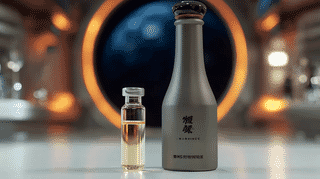
Yamaguchi's premium sake brand Dassai and Japanese engineering giant Mitsubishi Heavy Industries brewed sake in space for the first time in human history. The result was a single 100ml bottle, priced at about $700,000, and it sold. Inside the Dassai MOON Project, the long-term plan to build a brewery on the Moon, plus practical brewery-tour information for visitors to Iwakuni, Yamaguchi.
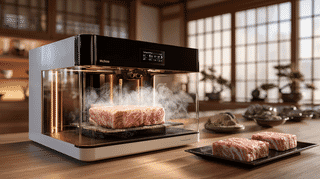
TOPPAN, a 120-year-old Japanese printing company, is applying the thin-film layering know-how it built in semiconductors to 3D-printed cultured meat, targeting revenue from 2031. The plan: a countertop 'Meat Maker' that prints marbled wagyu from data and a recipe. We cover the NEDO consortium with Shimadzu and Itoham Yonekyu, Integriculture's rival cellular agriculture platform, where cultivated meat is legal today, and the cost wall still in the way.