In the American South, kudzu is a notorious invasive weed. In Japan, its flower yields tectorigenin, a supplement compound. A RIKEN team has now decoded how the flower makes it and brewed it in yeast, with no kudzu required.
A team led by the Nagoya Institute of Technology has found that water vapor can accelerate bond exchange in vitrimers, a third class of plastic that could finally make 'unrecyclable' thermosets repairable and reusable.
Tokai University is chasing a world-first: land-based, full-cycle aquaculture of the common octopus, long considered one of the hardest animals to farm. We unpack the cannibalism and escape problems, the clever 'octopus apartment,' the global octopus shortage behind it, and the ethical fight that has already produced farming bans abroad.
When typhoons soak Mount Fuji, its summit rises a few centimeters and its base sinks. Hokkaido University researchers found this in satellite-positioning data, and it changes how Japan reads the volcano's eruption warning signs.
Waseda University and Fujitsu used quantum circuit learning (QCL) to predict the hardness of high-entropy alloys from only about 100 data points. We explain how a quantum approach tackles the small-data extrapolation problem that defeats conventional machine learning, where it sits against IBM and Google quantum efforts, and what it could mean for industrial materials discovery.
INSOMNIA, an esports club in Tokyo's Sumida ward, has launched INS×LAB, a joint research project with the University of Tokyo and other institutions. It pairs gaze-tracking cognitive science with sleep-log and acupuncture-based conditioning to make winning scientifically repeatable.
A meniscus regeneration technology developed at Japan's Institute of Science Tokyo has been approved as Seibiscus, the country's first regenerative medicine product for meniscus injury. We explain how it uses a patient's own stem cells to repair the knee, what the Phase III trial showed, and how it compares with regenerative medicine ventures in South Korea and the US.
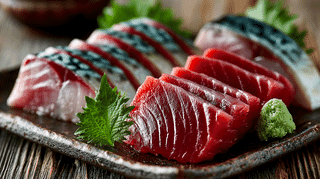
Kumamoto University has built a world-first device that kills anisakis parasites in raw fish using a 30,000-volt pulse lasting one-millionth of a second, without freezing or cooking. A look at the food-safety tech behind Japan's sashimi culture.
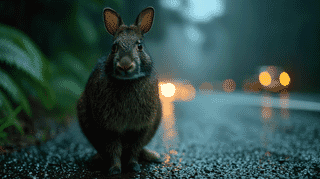
Roadkill of the Amami black rabbit, a 'living fossil' found only on two southern Japanese islands, hit a record 185 in 2025. The grim milestone is a side effect of Japan's celebrated invasive-species eradication programs, including a 24-year mongoose campaign declared complete in 2024.
NHK STRL and Institute of Science Tokyo have built the world's first transparent hologram that floats full-color 3D images in front of clear glass. A new amplitude-aware design cracks the two old walls of surface-relief holography in one move.
A Japanese research team from the University of Tokyo, JAMSTEC, and the National Institute of Polar Research has produced the first direct observational evidence that warm-water microbes carried into the Arctic Ocean are altering its nitrogen and phosphorus cycles. Aboard the R/V Mirai between 2015 and 2020, they tracked how UCYN-A2, a nitrogen-fixing organism normally associated with subtropical seas, surged into the Arctic basin during the early ice-melt year of 2017, and why that matters for the world's most rapidly warming ocean.
Yokohama National University spinoff LQUOM has closed a 1.23 billion yen ($7.7M) Series B to build quantum repeaters, the missing piece of the quantum internet. Here is what that means, and how it stacks up against Aliro in the US, USTC in China, and Japan's planned Tokyo-Osaka quantum backbone.
An Osaka University team has shrunk a key step in magnetic tunnel junction fabrication from hours to about 1.7 seconds using flash-lamp annealing—up to thousands of times faster than conventional methods, with implications for MRAM mass production and flexible sensors.
Kyoto University spinout Toregem Biopharma will begin Phase 2 trials of TRG035, the world's first tooth-regeneration drug, in summer 2026, dosing 24 children with congenital tooth agenesis. A pre-Series C round of ¥850 million brings cumulative funding, grants included, past ¥4.6 billion. A look at how Japan's university-biotech funding stack works, and why a super-aged society may produce this kind of innovation first.
For forty years a black clay layer in a remote Hokkaido stream was East Asia's only K-Pg boundary. In May 2026, a Tohoku University-led team reported it isn't the boundary at all, and that the real record lies about four kilometers northeast.
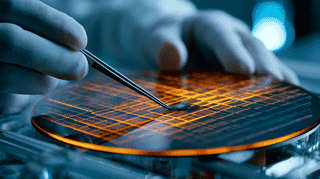
Kyoto University associate professor Mitsuaki Kaneko is commercializing SiC-based mixed-signal LSIs that work where silicon fails. His complementary JFET approach targets ADC samples in 2028-2029, opening a niche the big five SiC power players have largely ignored.
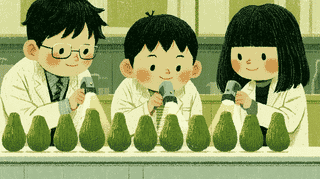
Akita Prefectural University students nicknamed the 'Avocado Squad' published a method that predicts avocado ripeness from skin reflectance and storage temperature, with no slicing required. The work is patent pending and the team is seeking commercial partners.
A black, sponge-like slab that floats with just lamp light has racked up 1.8 million views in a week. Developed at Nagoya University by Tomonaga Ueno, the carbon-nanotube aerogel is lighter than air and could quietly reshape EVs, eVTOL aircraft, drones and spacecraft. Here's how it actually works, and why the startup Sora Material thinks it's an industrial workhorse, not just a viral trick.
Free iOS collection ONE-DOT GAMES, built on the minimalist concept Kenji Eno (D, Enemy Zero) left behind in 2009, launched on May 17, 2026. University students who never knew him are now carrying the torch.
Japan's Environment Ministry confirmed PFAS contamination above national limits at 629 sites across 26 prefectures in fiscal 2024, including locations near U.S. military bases, factories, and Self-Defense Force facilities. A UN special rapporteur has voiced 'most serious concern,' while Japan's standards lag far behind those of the U.S. and EU.