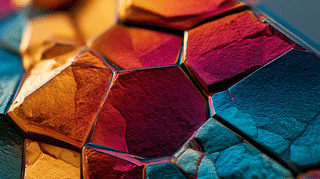
Crystalline OLED: Lining Up Molecules Raised Current 1,000-Fold
University of Toyama researchers crystallized an OLED's emitting layer inside a practical thin-film stack: up to 1,000 times the current density at 1 volt, and turn-on at 1.33 V.
University of Toyama researchers crystallized an OLED's emitting layer inside a practical thin-film stack: up to 1,000 times the current density at 1 volt, and turn-on at 1.33 V.
A team at the Institute of Science Tokyo found resistance genes running harder inside hospital drain biofilm than in the wastewater itself. Why new pipes can backfire.

Chemists at Nagoya University cut a bond inside a flat carbon molecule and rebuilt it, producing figure-eight, bathtub and double-helix nanocarbons that emit spiraling light and trap carbon dioxide. Published in Nature Communications.
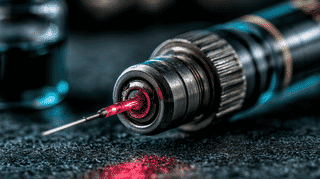
Tohoku University and Air Water went after the two bottlenecks that have kept photothermal cancer therapy in the lab for twenty years. IDP1, an artificial protein designed with AlphaFold, kept nanoparticles circulating for 150.5 minutes against 17.8 for PEG, and a 0.5 mm endoscope that fits inside a 16-gauge needle fired an 808 nm laser from inside the tumor at 28 percent less power. In mice, the tumors were gone within 14 days. How that compares with US trials already running in humans.
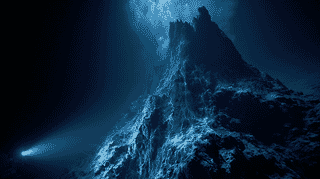
A bacterium at Okinawa's deep-sea vents grows on electric current alone, building itself from CO2. JAMSTEC has caught electrosynthesis happening in the wild.

Rubbing a sore spot really does help. Kyushu University researchers have identified the touch neurons behind it in mice, a subpopulation called Npy2r-Cre that dampens pain signals in the spinal cord. The PNAS study puts specific cells behind the 1965 gate control theory.

NAOJ puts NINJA on the Subaru Telescope this summer, a spectrograph that grabs 0.85 to 2.5 micrometers in one exposure. Why Japan bet on follow-up, not discovery.
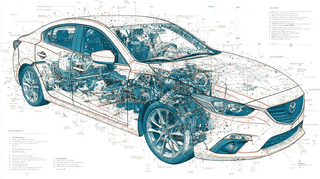
Tier IV, the company behind open-source self-driving stack Autoware, listed in Tokyo on July 22, 2026 and opened 7% below its offer price. How do you monetize software you give away?
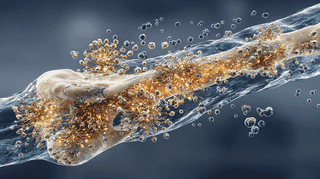
Why does osteosarcoma cluster in the knees of growing teenagers? A University of Tokyo team, working from an accidental clue in aging research, has pieced together how the cancer starts: an accelerator gene (c-Myc), a brake gene (p53), and a signal from the bone's growth plate. It could reshape drug discovery for a rare cancer.

Toho University stroked infants on the head, back and belly. Only the back calmed them, at about 10.5 cm/s. In mouse pups raised without a mother, the response never appeared at all.
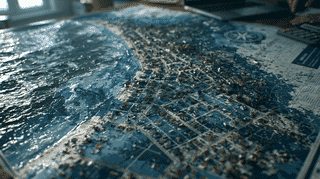
NEC and New York University estimate that flood defenses on the Rockaway Peninsula could avoid up to $800 million in losses, pricing everything from transit disruption to residents' mental health in a bid to pull private money into climate adaptation.
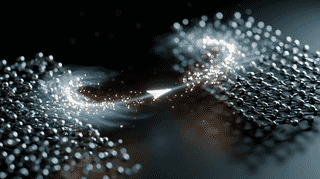
Altermagnetism, the third type of magnet that stunned physics in 2024, had one flaw: no one could steer it. A Tokyo-KEK team aligned its domains in MnTe with a tiny millitesla field and watched them flip with polarized neutrons, with a stray field 10,000 times smaller than a ferromagnet's.
An Osaka University startup, Endoluminal Solutions, has built a 4mm single-use endoscope aimed at replacing barium gastric-cancer screening. A look at the miniaturization behind it and where it fits in an endoscope industry Japan's Olympus dominates.
Waseda University and NTU Singapore gave a live cockroach a tiny diving suit that lets it work underwater for up to three hours. A genuine rescue breakthrough wrapped in the least reassuring messenger imaginable.
Nagasaki University and Shionogi have found FPSA, a compound that targets plasmepsin X, the enzyme malaria parasites use to burst out of red blood cells. As artemisinin resistance spreads across Africa, a fresh mechanism of action matters. A look at Japan's global-health drug discovery and where this actually stands.
Some upright-eared Scottish Folds secretly carry the fold gene, a Japanese study finds. What this means for a painful cartilage disease and the global push to restrict fold-cat breeding.
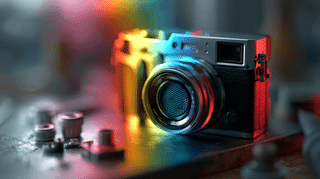
Photo blur is usually a mistake to avoid. But a University of Osaka team uses the shape of that blur to read how far away objects are, recovering depth from a single camera with help from a physics-guided AI. Errors stay within about a centimeter at four meters, with uses in robotics and inspection.
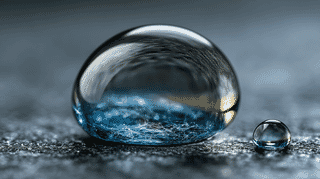
A Hirosaki University team made a hydrogel that is 70% water yet bounces like a superball. Swapping one end group from methoxy to hydroxyl raised its stiffness about twentyfold, pointing toward artificial cartilage and underwater cushioning.

Two nearly identical proteins, one sees red and one sees green, separated by just 30 nanometers. A Japan-led international team determined the dark-state atomic structures of the red and green cone pigments for the first time, revealing that three amino acids decide how we tell red from green. The story behind a long-standing mystery in color vision.

The Super-Kamiokande collaboration has caught the first-ever evidence of the diffuse supernova neutrino background, the combined glow of every massive star that has died since the universe began. Here is what it could reveal, and the spoonful of gadolinium that made it possible.