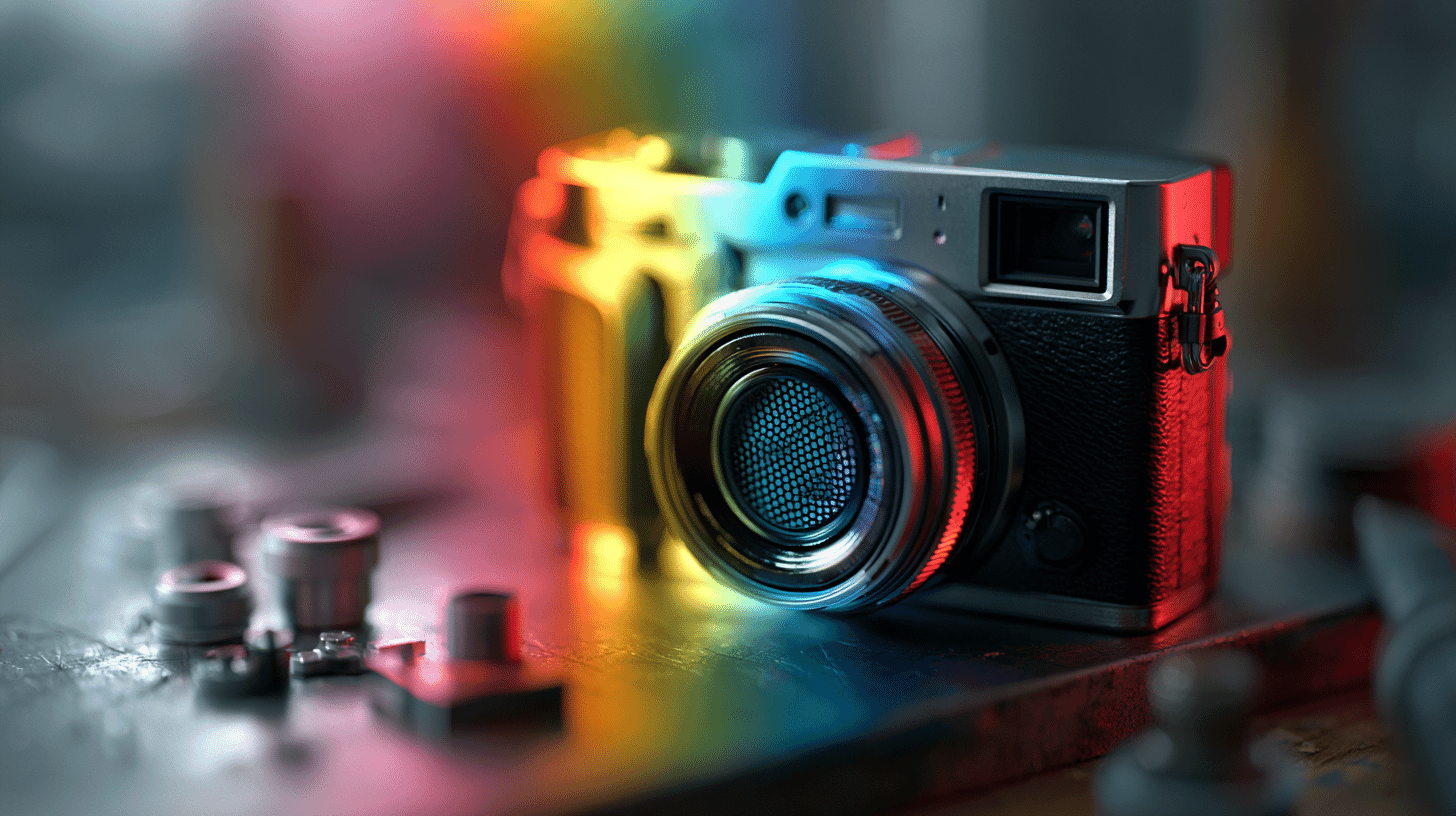
📷 Blur is the thing everyone tries to get rid of in a photo. The ruined group shot, the "ugh, it's out of focus" moment. But the way an image goes soft is full of information, and one piece of it is how far away things are. A team at the University of Osaka has turned that nuisance into a measuring tool: with a single ordinary camera and a bit of AI kept honest by physics, they can read distance straight out of the blur, with errors as small as about a centimeter.
Measuring distance is harder than it looks
Machines that need to know how far away things are, like robot arms, self-driving cars, and warehouse pickers, usually get that information one of two ways. Some use two cameras set slightly apart and compare the views, much as your two eyes give you a sense of depth. Others fire out laser pulses and time the bounce, which is roughly how LiDAR works. Both are accurate, but each adds hardware, size, and cost. As the Yomiuri Shimbun reported, the long-running goal has been to do the same job with something cheaper and smaller. A single plain camera would be ideal, if only one flat image carried enough information to recover depth.
The clue hiding in the blur
It does, and the clue is the blur itself. Objects sitting at different distances from a lens blur by different amounts. That is exactly why, when you focus on a friend's face, the background melts into soft color. Pulling depth out of that softness is an old idea in computer vision known as depth from defocus. The trouble is that ordinary blur is ambiguous: many different scenes can leave the same fuzzy smear, so the math returns no single answer.
So the Osaka group started by making the blur carry more information. They placed a specially patterned filter, known as a coded aperture, over the lens opening. Instead of a plain round blur, the filter stamps every out-of-focus point with a distinctive shape that shifts depending on the object's distance. The blur stops being a meaningless smear and becomes something closer to a distance signature.
AI that isn't allowed to make things up
Even with that trick, decoding the blur is messy. Today's AI is good at filling in missing detail, but it carries a now-familiar risk: hallucination, where a model invents something that looks convincing but was never there. The Osaka team used a diffusion model, the same family of generative AI behind popular image generators, and then fenced it in.
Lead author Hodaka Kawachi noted that older reconstruction methods tend to break down on plain, textureless surfaces, where AI can help steady the result. The danger, senior author Tomoya Nakamura of Osaka University's Graduate School of Engineering Science explained, is that deep-learning systems start guessing when a scene looks different from their training data, and conjure up structures that don't exist. Their answer was to keep the AI tied to reality. At every step, the reconstruction has to stay "consistent with the observed image," as Nakamura put it, so the physics of the recorded blur sets the limits and the AI only fills in within them. That tether, the team says, suppresses many of the hallucinations that trip up other methods.
From the lab to the factory floor
To test the idea, the researchers built a prototype camera with the coded aperture and ran it on both simulated and real scenes. According to the Osaka announcement, it stayed accurate across a wide range of conditions where competing methods stumbled, producing clean images and reliable depth maps at once. The Yomiuri put a number on it: for objects within roughly four meters, captured with a small camera, the error stayed inside about one centimeter.
A single small camera that is cheap to build and still this precise is what makes the work appealing outside the lab. Nakamura said the group wants to run field trials with partner companies and is aiming for real-world deployment. The natural early users are industrial robots that must judge how far away a part is before grabbing it, and inspection systems watching a production line. Hiroyuki Kubo, an image-processing researcher at Chiba University who was not part of the study, told the Yomiuri that the appeal lies in starting from the physics of the blur and using AI only as support, which could make it useful in areas like product inspection and medicine where precision counts.
Why the idea sticks
Your phone's portrait mode already plays in this space, faking a shallow-focus look on purpose. This work runs the same optics in reverse, reading the blur as hard distance data. It is a tidy reversal: the thing we pay lenses and autofocus to erase was carrying a measurement all along, for anyone who knew how to read it.
In Japan, this research is pointed at factories and clinics. Where would something like it be most useful where you live? And have you ever wished a blurry, ruined photo could turn out to be good for something after all?





Global Discussion
0 comments