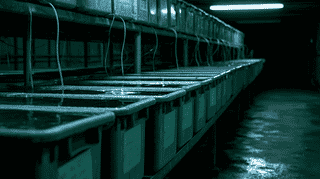
A Shizuoka lab has closed the breeding loop on the douman crab. Individual boxes are standard practice in Southeast Asia; what took eight years was larval die-offs and timing the female's molt.
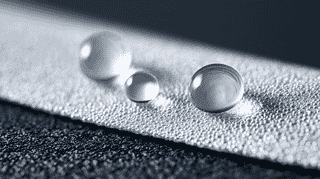
Kyoto University's deep foam photolithography makes white out of air instead of titanium dioxide, prints it at about 20,000 dpi and repels water without PFAS. Why the timing is European, and what Japan tried before.
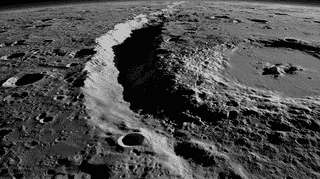
A Hokkaido University-led study says rough terrain hides Mercury's own tectonic wrinkles, and that past estimates missed up to 30 percent of the contraction. BepiColombo arrives to test it on November 21.
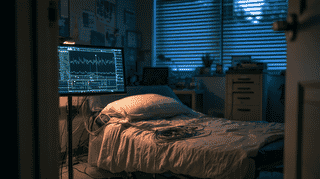
The 2026 Lasker Basic Medical Research Award went to Masashi Yanagisawa and Emmanuel Mignot for orexin. It explained narcolepsy, but the industry built sleeping pills first. The narcolepsy drug arrived 28 years later.
An experiment at Japan's SPring-8 finds davemaoite holds 0.08 wt% water at most, a tenth of past estimates, and points Earth's deep water to subducted crust instead.
A Japanese team found ammonium, nitriles and sodium nitrate clustered around the salt veins in Hayabusa2's Ryugu grains, which reframes the 75-fold gap between Bennu's water-extractable ammonia and Ryugu's.
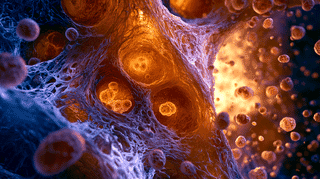
Yamanashi and Riken researchers cut out the whole Y chromosome to make female clones of male mice. Read next to the same university's finding that cloning dies at 58 generations, and Osaka's eggs from male cells.
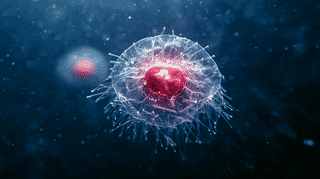
A 10 mm jellyfish rewound itself ten times in two years. A genome paper on about 1,000 genes cast it as nature's Yamanaka reprogramming; a US researcher attacked that premise with Japanese data it never cited.
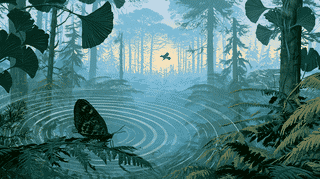
A PNAS study rebuilt the songs of 9 extinct species from 20 fossils in Inner Mongolia. The 5 to 7 kHz result lands in the same band as Japan's 4.5 kHz bell cricket, listened to for 1,000 years.
A team from Osaka, Okayama and Tokyo has found why IgG antibodies outlast IgM. After mRNA vaccination, spike-specific cells were 0.14% of the long-lived bone marrow compartment, against 7.3% for influenza.
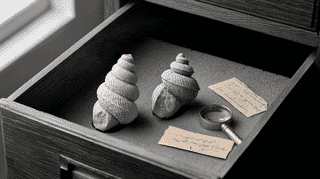
Three fossils, two of them picked up by amateurs more than twenty years ago, sat in a Hokkaido museum drawer until a CT scan added ten million years to a family of ammonites long thought extinct.
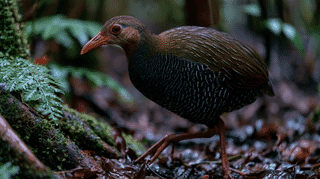
Japan's NIES has made iPS cells from four endangered birds. The flightless Okinawa rail has lost one of the two genes birds use to spot a virus. Inside the minus-160°C cell bank and the brain organoids grown from it.
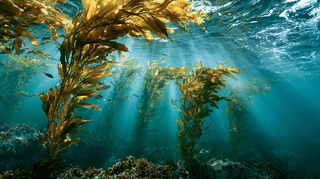
Rausu, Rishiri, hosome, ma-kombu: four kelps sold under four names and four price tiers. A Hokkaido University team read the DNA of 475 plants and found no genetic line between them.
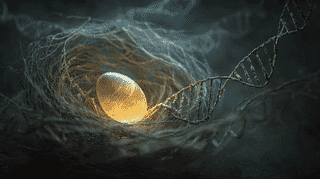
A University of Tokyo and Arc Institute team has shown how the IS621 jumping gene cuts itself out of an E. coli genome, resolving a chicken-and-egg puzzle that had stood since 2024.
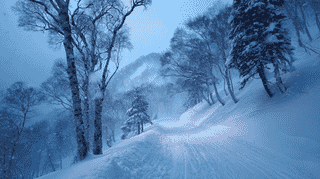
Hokkaido University and Japan's forestry institute modelled all 349 ski areas in the country. At 4°C of warming, only seven stay open 100 days a year on natural snow. At 2°C, 53 do.
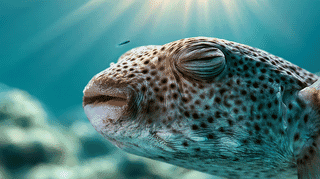
Fish have no eyelids, yet pufferfish close their eyes. Shimonoseki's Kaikyokan aquarium dissected 51 species and traced the eye-closing muscle to the one that deflates a puffed-up puffer.
Desalination makes about 35 trillion liters of fresh water a year and discards roughly 50 trillion liters of brine. A Tokyo lab drips it onto molten tin and recovers magnesium oxide, 280 times concentrated.
Japan has begun selling Telomelysin, a rewired cold virus that multiplies only inside cancer cells and goes into esophageal tumors by endoscope. Three doses list at 9.3 million yen; the trial behind it had 37 patients.
A kawakawa hybrid made bluefin tuna sperm at eight months, and rainbow trout now spawn Chinook salmon yearly. Inside Japan's 20-year surrogate broodstock effort and Kindai's 32-year tuna project.
Kobe University isolated seven bacterial strains from PFAS-polluted river sediment in Osaka. Three cut PFOS by up to 17.8%; one removed up to 97% of PFHxS in real landfill leachate. Degradation or adsorption? Unsettled.