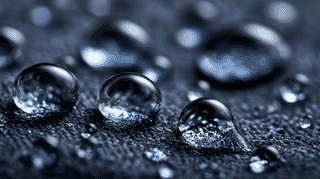
Water beads up and rolls off a raincoat, so surely it slips along surfaces that repel it? A Kyushu University and University of Illinois team built a measurement 159 times more sensitive than before and found the opposite: water barely slips at all, regardless of wettability. Here's what that means for desalination and cooling tech.
Cold has killed living things since long before humans had fire. But what pulls the trigger inside the cell stayed murky. A Japanese team studying nematodes points to an unlikely suspect: copper.
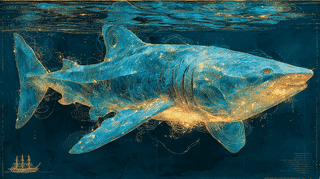
A University of Tokyo-led team has produced the first high-precision genome of the Greenland shark, the longest-lived vertebrate. Changes in a linker histone and the ferritin gene offer the first real clues to its ~400-year lifespan, and to human aging.
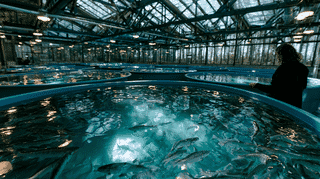
With water that is neither sea nor fresh, Okayama University of Science is trying to farm salmon through its entire life cycle on land. If it works, the university calls it a world first. We unpack the technology behind it, why salmon is the hardest fish to farm this way, a 250-year-old salmon town's role, and the global scramble for farmed salmon.
Terahertz promises jaw-dropping 6G speeds, yet a passing body can kill the link. NICT just demonstrated the world's first system that auto-switches between millimeter and terahertz waves. The real breakthrough isn't a speed record but knowing when to give up on speed.
In 2004, virologist Yoshihiro Kawaoka titled a dialogue A Pandemic Will Definitely Come. COVID proved him right 16 years later, and the bird flu he truly feared, H5N1, is now spreading in cattle and people. A 20-year reckoning.
The world's first factory built to mass-produce diamond semiconductors has opened in Okuma, the Fukushima town that hosts the wrecked Daiichi nuclear plant. How a material researchers chased for 40 years found its purpose in the place that needed it most.
Researchers at Yokohama National University built a photocurable resin that hardens with light and melts back to liquid with heat. Using anthracene photodimerization, it recycles 10-plus times with no initiators or additives.
Akita Prefecture has adopted environmental DNA surveys that estimate whether bears passed within 1km upstream in the past 24 hours from a single glass of river water. We explain how it works, its limits, and how it compares with grizzly-detection efforts abroad.
How does the brain run on intuition when the evidence is murky, and how does it know when to stop trusting that hunch? RIKEN researchers traced the circuit that stores recent sensory experience and the tiny brain region that acts as a mismatch detector to rewrite it. The same wiring appeared in an AI model, too.
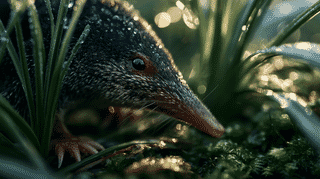
A team from Hokkaido University, Tokai University and Sapporo Maruyama Zoo has bred the slender shrew in captivity for the first time anywhere. Here is how they pulled it off with a mammal that cannot skip a meal, and why it matters for one of the smallest endangered mammals on Earth.
University of Tokyo scientists find that heat lingers for seconds inside living cells instead of escaping instantly. How non-diffusive heat dissipation reframes the decade-old 10^5 gap problem, and what it means for temperature signaling and disease research.
A University of Tokyo and RIKEN team has switched a magnet in just 40 picoseconds with almost no heat, using the antiferromagnet Mn3Sn. Published in Science, the result shatters the nanosecond speed limit that has held back chips for years. Here is why the wall stood, and how it fell.
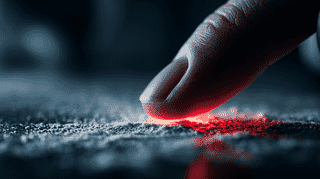
A team in Japan re-engineered zinc oxide, the harmless powder in sunscreen, into a material that emits near-infrared light from a gentle fingertip press. No power, no rare earths. Here's why it matters for medicine, bridges, and the rare-earth standoff.
Light travels faster through air than glass. By hollowing out the core, OKI, Lightera and Keio University demonstrated a world-first wideband single-fiber bidirectional link. Commercialized, it could cut network power by up to 90 percent. We unpack the race, where Microsoft is already in via its Lumenisity buy, as AI devours electricity.
In Japan's science city of Tsukuba, a coffee roaster and the KEK physics lab created five drip-bag blends named after subatomic particles, each tuned to the particle's real character. Why visiting researchers love them as souvenirs.
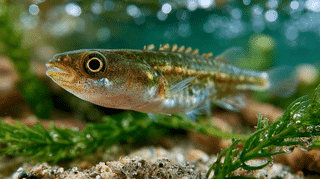
It has its own asteroid and is a prefectural symbol, yet for over 60 years the Musashi stickleback officially didn't exist. How an ice-age survivor near Tokyo finally became a named species, Pungitius nakamurai.
Researchers at Japan's Shinshu University and JST have built a hybrid nanosheet that folds all three of nature's color mechanisms — absorption, reflection and emission — into one self-assembling photonic crystal, with color switchable by magnet or light. It is also the story of a scientist chasing 'living materials' at a textile faculty whose roots reach back to a 1910 silkworm school.
Researchers at the University of Tokyo and Chiba University have developed ETE, a method that mass-produces hundreds of thousands of uniform cell-loaded capsules using only a bench-top vortex mixer and temperature control. A look at why it lowers the barrier for drug discovery and regenerative medicine, and how it compares with America's organoid industry.
Kyoto Institute of Technology and JST have demonstrated a spinor condensate at room temperature, a quantum state once confined to cryogenic cold. Here is what it means for light-based quantum devices and Japan's distinct path versus Google and USTC.