A Japanese headline put this year's El Niño losses in the trillions. The figure traces back to a 2023 estimate of $5.7 trillion for the 1997–98 event. Why estimates differ 100-fold, and a think tank's own correction.
An international team used NAOJ's ATERUI III to show how a newborn black hole could look like one of Webb's little red dots. NAOJ's Japanese release says 'closing in'; its English one says 'explained.'
For nearly 25 years, only one double-Lambda hypernucleus had been fully identified. A RIKEN-led team used AI to sift 0.2% of J-PARC's photographic film, then pinned down a boron-13 nucleus by hand.
The Tsugaru Strait separates Japan's brown bears from its black bears. According to a genetic study of 327 frogs, the only amphibian known to live naturally on both sides crossed it 1 to 2.5 million years ago.
Japan's gene-edited GABA tomato opened its field. It wasn't the first gene-edited food sold (US soybean oil, 2019), but the first CRISPR food shoppers could buy. How Japan's rules compare with the EU's.
Masahiko Inami read Ghost in the Shell as lab homework and helped build optical camouflage from reflectors and a projector. The world called it an invisibility cloak. He says that name would never have sparked the idea.
Chihaya Adachi, a 2026 Citation Laureate, was first author of a 2001 paper on iridium-based OLEDs, then created TADF, which needs no rare metal. Yet iridium, mined at about 7 tonnes a year, is still in OLED screens.
A wild fox dropped a mole at a home in Yonago, Japan, and walked away. It has visited about seven times. Japan's internet thought of a school folktale; a mole researcher has a more practical theory.
A Japan-led team corrected the single-letter mutation behind the inherited nerve disease HMSN-P without cutting DNA, with effects in model mice and in patient-derived organoids, plus the 40 years of work behind it.
Japan's NIMS built a molecular sheet where some electrons act massless and others barely move. What that means, how a bamboo-basket word entered physics in 1951, and what the material might one day be used for.
Genji fireflies flash about every 4 seconds in eastern Japan and every 2 in the west. A survey of 164 populations found western and Kyushu lineages in over 70% of Tokyo's, most likely brought in by people.
Fossils said the Late Cretaceous Arctic was warm enough for dinosaurs, but climate models could not reproduce it. A Japanese team let Earth's axial tilt roam its full range and points to geography as the amplifier.
Japan's National Institute of Genetics and Danish partners built a photovoltaic retinal implant with carbon electrodes and 40-micrometer pixels. The implant already in patients uses 100, and that width sets the ceiling.
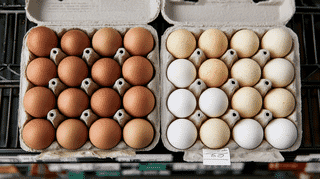
A Japanese team tracked 563 metabolites and 107 tasters to show how hen housing changes egg flavour, in a country where 96.6 percent of laying hens are still caged and cage-free eggs cost about twice as much.
Japan's AMAGOI moonshot starts field trials over Toyama Bay in December 2026, seeding winter snow clouds with dry ice. Its own published flight log shows how hard it is to prove anything worked.
On September 11, 2026, 25 Fields Medalists signed a declaration on AI and mathematics. Headlines read it as a revolt against AI. The real target was AI companies using math problems as a benchmark.
A Japanese team pinned down when CD4 killer T cells start to expand: right around age 100. The study needed blood from ten donors over 110, and the cohort that could supply them took thirty years to build.
Japan counted 6,220 university spinouts in October 2025, more than double the 2,905 five years earlier. A gene-edited sea bream and a pigment-free coating are the way in. Each Japanese listing raises only $28 million.
A 1977 paper by two Japanese ENT doctors, from airflow readings on 15 men, said to blow one nostril at a time. It won the 2026 Ig Nobel medicine prize 49 years later, at a ceremony that had left the US for Zurich.
Thirty players throwing together need about 64,201 rounds to leave one winner. The widely quoted 63,917 counts only the wait until the first non-tie, and just 4.61 throws settle anything.