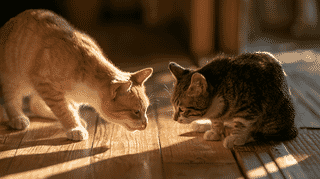
That blank, open-mouthed face your cat makes after a sniff may finally have an explanation: 13 branched-chain fatty acids in urine, blended to a ratio unique to each cat and stockpiled in the kidney.
Cold sleep was a movie prop. Then ESA calculated that a hibernating crew would cut a Mars spacecraft's mass by a third, and a Japanese lab found the brain switch. With humans, it is still a matter of hours.
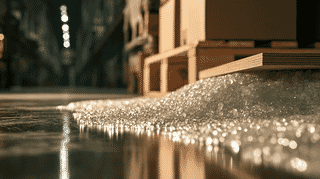
Kanazawa Institute of Technology and sand maker Yamakawa Sangyo scatter sapphire grains across a warehouse floor and let the load slide instead of resisting. The grains cost a few hundred yen per square meter.
Seven Japanese research groups repeated two landmark University of Tokyo senolytics experiments under blinded conditions and found no effect. The original team's rebuttal ran the same day, in the same journal.
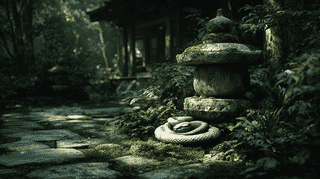
A shrine in Iwakuni held a memorial for 281 white snakes that died in one year, the most since records begin in 2009. Only 804 remain in the society's care, and this sacred albino population now breeds as a closed group.
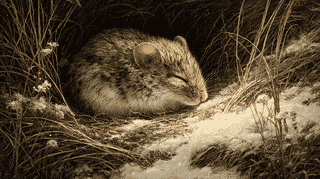
Mice spent two days in artificial hibernation and lost more than half the synapses in the hippocampus, yet still knew where the food was. What survived was not the big connections but the tightly clustered ones.
Kagawa University Hospital treated a three-year-old girl's recurrent C. diff colitis with her father's gut bacteria. A year on, no relapse. US-approved products exclude children, and the EU sets shared rules in 2027.
A Czech team pooled five studies on what competitive gaming does to the body. Energy use barely moves, 1.3 to 2.5 kcal a minute, while heart rate can jump from 85 to 137 bpm. In Japan, the argument is about the word.
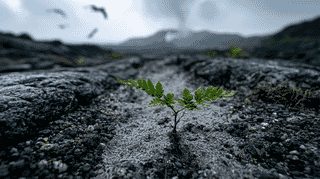
Researchers landing on Nishinoshima must first wade into the sea, gear and all, so no seed comes ashore. Two 2026 studies show why: seabirds, not people, brought the plants.
In 200 colorectal cancer patients from Tokyo and Osaka, 44.8 percent of tumours carried a gut bacterium's mutational signature, rising to about 70 percent under 40. The damage may predate the age of ten.
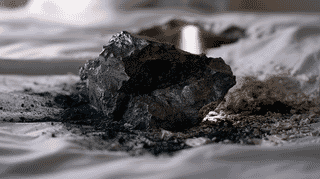
A rock punched through a New Jersey ceiling on July 16, 2024. The homeowner sealed the pieces in jars within minutes, letting a team with the Institute of Science Tokyo and JAMSTEC read traces of ancient asteroid brine.
A German team had 50 students play Super Monkey Ball on a Wii and then work an arthroscopy box trainer. The game scores tracked surgical scores. Splatoon 2 did not, and gamer status predicted nothing.
Tohoku University, JAMSTEC and Fuji Electric filmed droplets on a geothermal turbine blade spinning at 430 m/s, and what held on stationary walls did not hold here. Japan itself runs just 607 MW of geothermal.
Japanese researchers held 1.58 tesla inside a 20 mm model in a 7 km/s hypersonic flow, about 2.1 times what a comparable neodymium magnet gives. Heat flux itself, though, was not among the measurements.
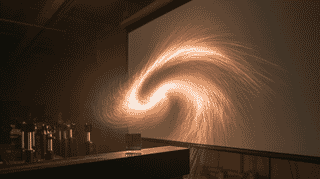
The hat, found in 2023, tiles the plane forever without repeating. A Japanese team etched 372,100 of its points into a silicon nitride film, fired a laser, and got back a pinwheel of light with no mirror image.
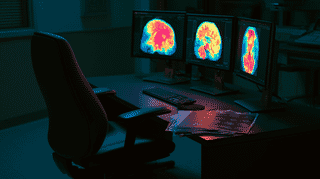
PET scans of 37 patients whose hallucinations began after age 40 found tau, the protein behind Alzheimer's, in 64.9% of them against 14.9% of controls. They split into three near-equal groups.
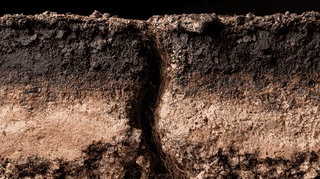
Glassy radioactive particles called cesium balls were thought to stay in Fukushima's topsoil. A Kyoto University team found them inside 39 of 52 earthworms, and one 15.5 centimeters down.
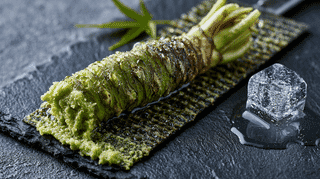
Sensitive teeth affect roughly a third of adults in some surveys, and the usual fix is to seal the surface over. A Tokyo Dental College team has shown that 6-MSITC, a compound in Japanese wasabi, pushes dentin-building cells to lay down new tissue instead. It began with a question asked at a sushi counter in Kanda.
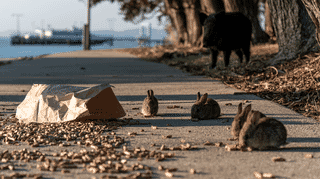
A wild boar was seen hunting a live rabbit on Japan's Rabbit Island in March 2024. Researchers say unregulated tourist feeding has swollen the rabbit population, and that leftovers and carcasses draw boars in.
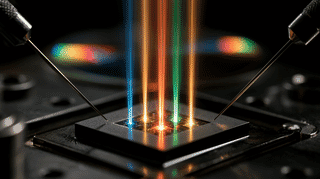
A terbium-doped AlGaN LED from the University of Osaka and Ritsumeikan University emits four colors from a single spot, with wavelengths that barely move as the current rises.