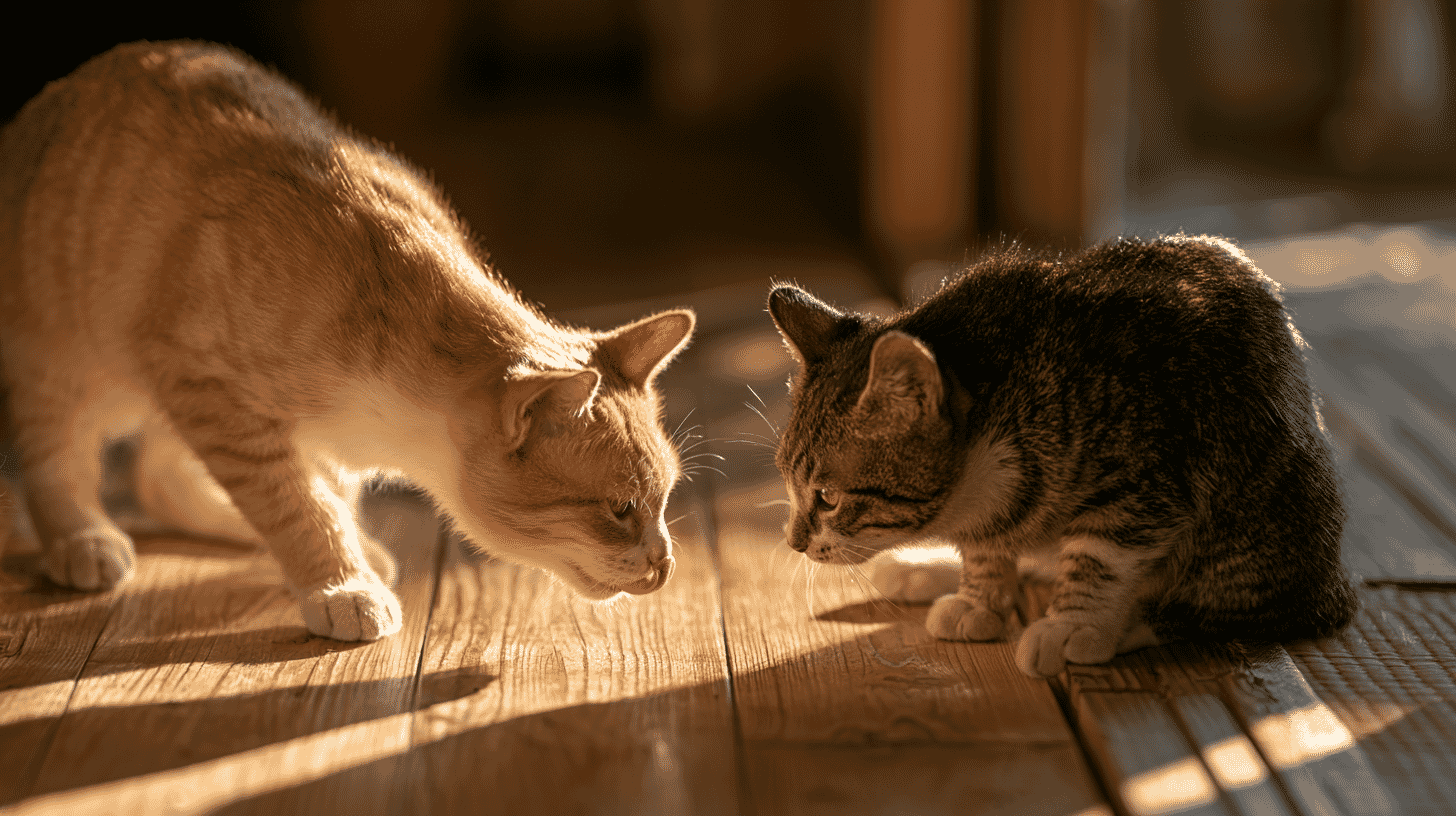
🐱 You know the face. Your cat sniffs something, then freezes with its mouth hanging open and its eyes fixed on nothing at all. Every cat owner has tried to photograph it. It turns out the expression is not disgust and not a brain glitch. On August 20, 2026, an international team from Japan, Germany and Spain, led by Iwate University, published evidence that the face is what a cat looks like while reading another cat's calling card.
That face has a name
Lift the upper lip, part the mouth, hold still. The expression is called flehmen, and horses, cattle, sheep, goats and elephants all do a version of it.
It looks goofy. The mechanics are not. The roof of a cat's mouth houses the vomeronasal organ, a scent detector separate from the nose, and the open-mouthed pose is thought to be a way of steering odour molecules toward it. Researchers had long known that male cats flehmen after sniffing the urine of a female in heat. What the behaviour was doing the rest of the time was much less clear.
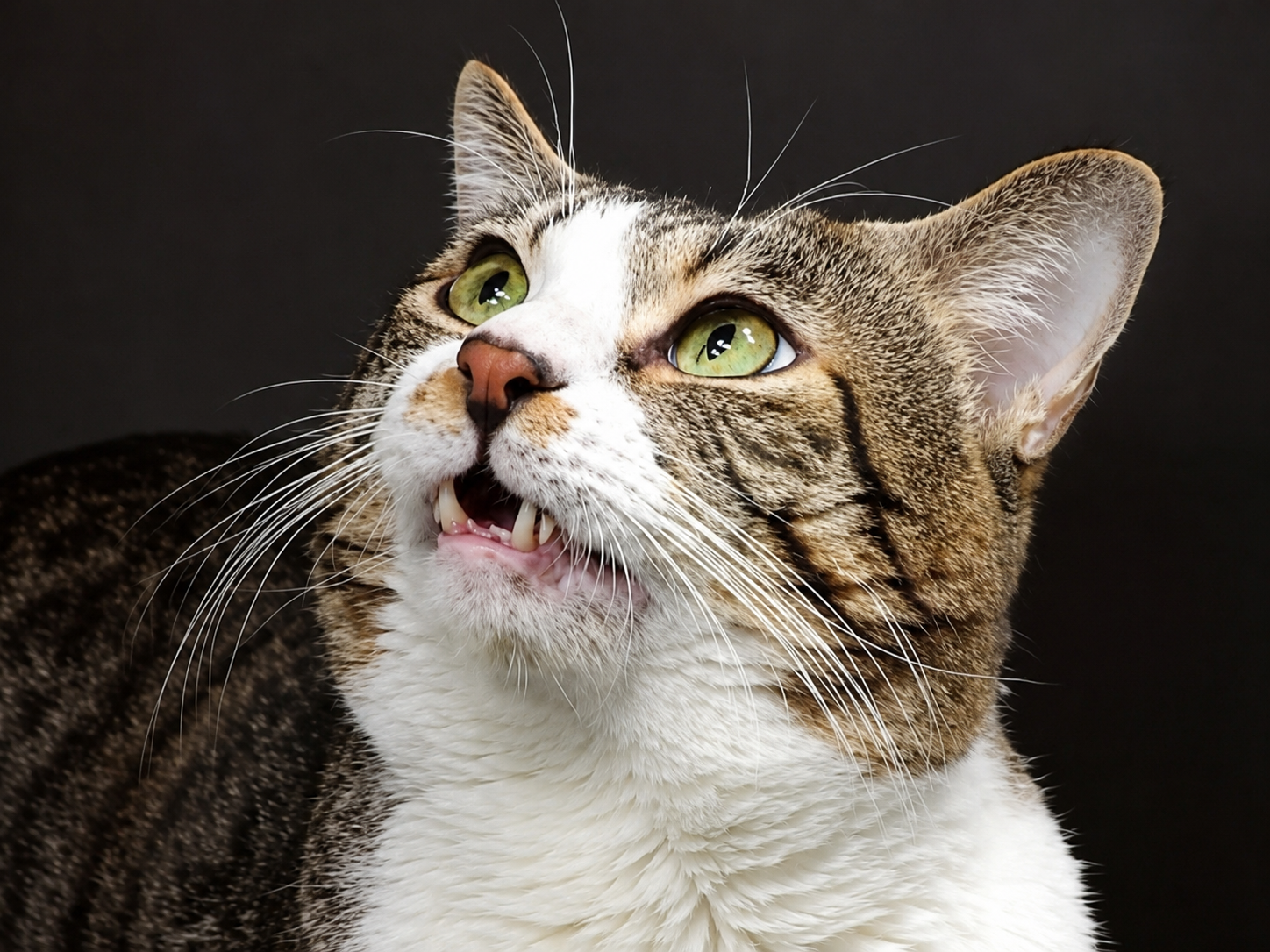
Source: Iwate University
How long does a cat remember another cat's pee?
The team started with a simpler question: can a cat tell one individual's urine from another's?
Present the same cat's urine over and over, and the sniffing time gets shorter each round. Swap in urine from a different cat and the sniffing jumps back up. This is a standard trick in animal behaviour research: boredom is itself the proof that the animal noticed the change.
That habituation was still detectable after gaps measured in months. The university's release takes this as a sign that cats hold on to urine scents over the long term.
Flehmen followed the same pattern. Cats did it more often for unfamiliar urine than for their own, and less and less as the same sample kept coming back. So the researchers flipped the behaviour into a tool. If the face reliably tracks novelty, it can be used to hunt down which chemical in the urine is carrying the identity.
Thirteen branched fatty acids, blended to a personal ratio
They split urinary lipids into fractions and tested them one by one, watching for the face. What eventually surfaced was a group of unusual fatty acids whose carbon chains fork rather than run straight: branched-chain fatty acids, thirteen of them. According to the university's release, a literature survey turned up no prior reports of these same compounds in the excretions or secretions of any mammal.
The identity is not in the ingredients but in the recipe. The proportions of those 13 compounds differ from cat to cat, and stay broadly consistent in one animal from one sampling day to the next. Cats that are related have more similar blends, though individual differences survive even inside a single family.
To be sure the cats were reading the blend and not some other compound travelling with it, the team held every other urinary lipid constant and swapped only the branched-chain fraction for a different donor's. Cats that had settled down went back to sniffing hard.
The paper's own wording stays careful: these compounds are strong candidates for the calling card, not a closed case. The Nikkei reported the result as a world first. That cats can tell individuals apart by urine odour, though, was already shown in a 2019 paper by the group of Masao Miyazaki, the Iwate University professor who led this project. What this study adds is naming the compounds that carry the information and tracing where in the body they are made.
Why the message doesn't fade
Scent marking has an awkward requirement built into it. Whoever left the mark is gone. Odour molecules evaporate and degrade, so how does a cat wandering past hours later still get a name?
Branched-chain fatty acids turn out to be semi-volatile, meaning they lift off slowly. Urine left at 25°C for 24 hours still carried a recognisably individual profile. They are not the loud top notes of a smell; they are the ones still in the room after everybody has left.
A hundred-year-old puzzle in the cat kidney
Where does the blend come from? When the team went looking in the body, the branched-chain fatty acids showed up in the kidney and nowhere else they examined, stored as lipids inside droplets in the renal cortex.
Cat kidneys have been known to be full of lipid droplets for more than 100 years, and nobody has been able to say why. The new work suggests one answer: the droplets may work as a reservoir, holding a supply of the signature compounds and buffering the day-to-day wobble that diet and physiology would otherwise introduce.
Mice, for comparison, encode identity in urine using major urinary proteins. Same problem, completely different solution.
In the release, Miyazaki says supporting a stable chemical signature in urine may be one of the droplets' functions, and flags how the stored lipids actually reach the urine as the open question. The link to feline chronic kidney disease, which is common enough to worry any cat owner, also sits on the other side of that question.
Lions, tigers and a very rare wildcat
The team looked beyond house cats. Related urinary compounds and renal lipid droplets turned up in lions, tigers, leopards, jaguars, lynxes and the Iriomote cat. Compositions and droplet abundance varied from species to species, which the team reads as a trait shared widely across the cat family and then diversified over the course of felid evolution.
As of the August 2026 announcement, whether wild felids actually use these compounds to tell one another apart has not been tested. If they do, urine left in the field would identify whoever left it, and rare animals could be tracked without ever being trapped.
The team names two other possible applications: targeting branched-chain fatty acids to control urine odour, and using the kidney droplets to understand where healthy lipid storage ends and disease begins. The release is upfront that this is basic research and not a product waiting to ship.
Next time your cat pulls the face
The paper ran in Current Biology, published by Cell Press. Masao Miyazaki of Iwate University's Faculty of Agriculture is the corresponding author; the co-first authors are Shota Ichizawa, a graduate student at Iwate, and Jana Caspers of Technische Universität Braunschweig.
The equipment for replicating the observation is already in your house. If you have two cats, watch the face one of them makes after investigating the other's litter box. It happens with shoes that have been outside, and with a hand that has been petting somebody else's cat. In that moment your cat is not zoning out. It is working out whose smell that is.
In Japan, photographing the flehmen face and posting it for laughs is a firmly established internet habit. Does the expression have a name where you live, or is it just the weird thing your cat does?
References
- https://www.iwate-u.ac.jp/cat-research/2026/08/008021.html
- https://www.iwate-u.ac.jp/upload/0172c09a25fe7a06664334f17a5f3e7a.pdf
- https://doi.org/10.1016/j.cub.2026.07.045
- https://doi.org/10.1007/s10886-019-01083-3
- https://www.japantimes.co.jp/news/2026/08/20/japan/science-health/cats-identification-fatty-acid-research/
- https://www.nikkei.com/article/DGXZQOUD19B3Y0Z10C26A8000000/


Global Discussion
4 comments