Calicos are almost always female, so a male kitten in a Kumamoto rescue trap surprised the vet. Fearing resale, the group kept him. The orange gene was pinned down in 2025; "one in 30,000" has no cited source.
Sukunaarchaeum has the smallest archaeal genome yet found: about 238,000 base pairs and 189 genes, with almost no metabolism. Smaller bacterial genomes exist, and the peer-reviewed abstract drops the cell-or-virus label.
Japanese researchers have read the genome of the potted cyclamen's wild ancestor: 1.48 billion base pairs, 83% of them repeats. Breeding scent back into the flower once took Saitama 21 years.
Tohoku University-led researchers built a DNA switch: blue light makes mRNA inside cell-sized capsules, UV stops and cuts it. Why the brake matters, and why pinpoint therapy is still far off.
The Tsugaru Strait separates Japan's brown bears from its black bears. According to a genetic study of 327 frogs, the only amphibian known to live naturally on both sides crossed it 1 to 2.5 million years ago.
Japan's gene-edited GABA tomato opened its field. It wasn't the first gene-edited food sold (US soybean oil, 2019), but the first CRISPR food shoppers could buy. How Japan's rules compare with the EU's.
A Japan-led team corrected the single-letter mutation behind the inherited nerve disease HMSN-P without cutting DNA, with effects in model mice and in patient-derived organoids, plus the 40 years of work behind it.
Genji fireflies flash about every 4 seconds in eastern Japan and every 2 in the west. A survey of 164 populations found western and Kyushu lineages in over 70% of Tokyo's, most likely brought in by people.
Japan counted 6,220 university spinouts in October 2025, more than double the 2,905 five years earlier. A gene-edited sea bream and a pigment-free coating are the way in. Each Japanese listing raises only $28 million.
Yamanashi and Riken researchers cut out the whole Y chromosome to make female clones of male mice. Read next to the same university's finding that cloning dies at 58 generations, and Osaka's eggs from male cells.
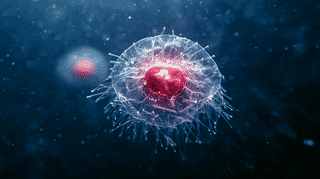
A 10 mm jellyfish rewound itself ten times in two years. A genome paper on about 1,000 genes cast it as nature's Yamanaka reprogramming; a US researcher attacked that premise with Japanese data it never cited.
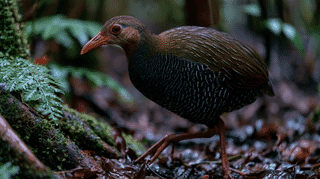
Japan's NIES has made iPS cells from four endangered birds. The flightless Okinawa rail has lost one of the two genes birds use to spot a virus. Inside the minus-160°C cell bank and the brain organoids grown from it.
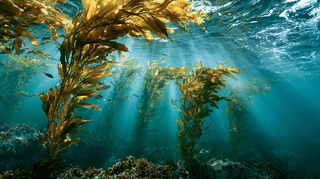
Rausu, Rishiri, hosome, ma-kombu: four kelps sold under four names and four price tiers. A Hokkaido University team read the DNA of 475 plants and found no genetic line between them.
A University of Tokyo and Arc Institute team has shown how the IS621 jumping gene cuts itself out of an E. coli genome, resolving a chicken-and-egg puzzle that had stood since 2024.
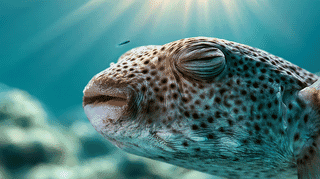
Fish have no eyelids, yet pufferfish close their eyes. Shimonoseki's Kaikyokan aquarium dissected 51 species and traced the eye-closing muscle to the one that deflates a puffed-up puffer.
Warming seas pushed a pufferfish north across the Tsugaru Strait, and the hybrids do not fit Japan's 1983 table of edible species and parts. How the rulebook caught up, and why the Mediterranean has the same gap.
A kawakawa hybrid made bluefin tuna sperm at eight months, and rainbow trout now spawn Chinook salmon yearly. Inside Japan's 20-year surrogate broodstock effort and Kindai's 32-year tuna project.
Kobe University isolated seven bacterial strains from PFAS-polluted river sediment in Osaka. Three cut PFOS by up to 17.8%; one removed up to 97% of PFHxS in real landfill leachate. Degradation or adsorption? Unsettled.
That blank, open-mouthed face your cat makes after a sniff may finally have an explanation: 13 branched-chain fatty acids in urine, blended to a ratio unique to each cat and stockpiled in the kidney.
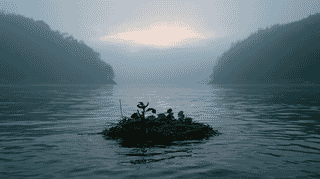
Researchers landing on Nishinoshima must first wade into the sea, gear and all, so no seed comes ashore. Two 2026 studies show why: seabirds, not people, brought the plants.