
🐟 A company in Kyoto switched off a gene in red sea bream so the fish carries more meat. A company in Kobe makes a coating with no pigment in it at all; the color comes from how big the particles are. The two have almost nothing in common. What they share is where they came from. In October 2025 Japan counted 6,220 startups founded out of its universities. Five years earlier the number was 2,905.
The company that edits fish
Regional Fish Institute was founded in April 2019, built on research from Kyoto University's Graduate School of Agriculture and Kindai University's Aquaculture Research Institute. The product that reached the market carries a name that sounds like a promise: 22-seiki Madai, literally the 22nd-century sea bream.
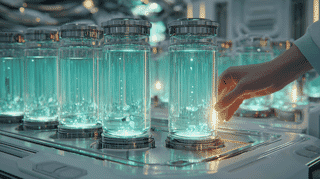
Fish carry a gene called myostatin whose job is to stop muscle from growing past a certain point. Knock it out and the muscle keeps going. The edited sea bream carries about 1.2 times the edible flesh of an ordinary one, and up to 1.6 times in some individuals. A tiger pufferfish came next, this time with leptin disabled, the hormone that tells an animal it has eaten enough. A flounder followed, filed with the ministries on December 25, 2023.
Japan's rules draw their line on the difference between genome editing and genetic modification. A genetically modified fish carries DNA borrowed from some other organism. Genome editing, at least as these two companies use it, breaks a gene the fish already had and leaves nothing foreign behind. The handling rules were settled in September 2019 and took effect that October. If the change is the kind that could have arisen in nature, and no introduced DNA remains, the food reaches the market on a notification to the health ministry. A transgenic food needs the full safety review. The sea bream was filed in September 2021, the pufferfish on October 29, 2021.
Other places are still arguing about where that line belongs. The EU Council approved its new genomic techniques regulation on April 21, 2026, sorting gene-edited crops into two tiers by risk; as of September 2026 the European Parliament has not finished with it.
A pre-Series D announced on October 31, 2025 brought Regional Fish's cumulative total to about $56 million.
Color that is not a pigment
A morpho butterfly's wing contains no blue. Neither does a soap bubble, or the neck of a pigeon. Those colors are geometry: light bouncing off structures sized to favor one wavelength over the others. Chemists call this structural color.
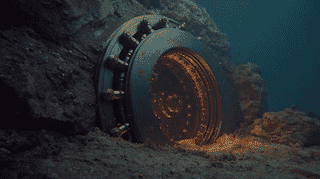
NanoResonance, out of Kobe University, is selling a version of it. The particles come from the lab of professor Minoru Fujii and associate professor Hiroshi Sugimoto, and they are silicon spheres wrapped in a silica shell. Light resonates inside each sphere, an effect known as Mie resonance, and the sphere throws back the wavelength that matches its size. Change the core diameter, anywhere from 110 to 204 nanometres, and you change the color. Nothing is being absorbed and slowly destroyed, which is why the color does not bleach the way a dye does.
The university reported in September 2026 that the films run under about 250 nanometres thick and weigh 0.4 grams or less per square metre, which it calls among the lightest in the world. An earlier paper from the same lab, published in January 2024, worked out that the paint on a large aircraft, normally hundreds of kilograms of it, could in principle come down to under a tenth of that weight. The commercial product is called ResoFia, and the targets are vehicles, packaging and building materials. The company itself is barely older than the technology: business records compiled by Speeda put its incorporation in February 2026.
Fish and paint. There is no technical thread connecting them. The thread is institutional.
The number that doubled
Japan's trade ministry counts university spinouts every year. The October 2025 tally came to 6,220, up 1,146 from 5,074, and by the ministry's own reckoning both the total and the increase were the highest since the survey began. Go back to October 2020 and the number was 2,905. More than double, in five years.
Something changed, and it was mostly money and paperwork. A government fund for pushing university research out into companies was capitalized at about $640 million in Japan's fiscal 2022 supplementary budget. In fiscal 2023 alone it backed 1,079 commercialization projects, and the stated goal is 5,000 cumulative by fiscal 2027. Small pushes spread across a lot of labs, and it shows up in the count.
It also stopped being a Tokyo story. Of the 1,093 new companies the ministry breaks out by location in the latest survey, 656 were founded outside the capital, roughly six in ten.
The survey is assembled from what universities and the companies themselves send back each year, and the net change of 1,146 does not match that 1,093. A tally built that way counts the companies it can find, which is not the same as the companies that exist.
What counting companies does not show
Japanese startups raised about $4.9 billion in 2025, essentially flat against the year before. The median raise per company dropped to roughly $403,000 from $502,000. The total is being held up by a handful of very large rounds while everything underneath gets smaller.
The exits point the same way. Japan ranked third in the world by IPO count from 2016 to 2025, with 320, behind the United States at 788 and South Korea at 406. But the amount raised per listing was $28 million in Japan, the lowest of the six countries the trade ministry compared and about an eighth of the American figure of $225 million. Unicorns, the crude shorthand for scale, numbered eight as of January 2026 against a government target of 100.
Many doors out, then, all of them narrow, and deep tech feels that directly. A fish company needs generations of breeding stock. A coating company needs years of certification before anything gets sprayed on an aircraft. Neither runs on a median round of $403,000, and neither finishes in the time a fund usually waits.
Neither the American model nor the Chinese one
The American figures in that same survey are the mirror image: more listings, and eight times the money per listing. Read next to Japan's, they say the difference is not how many companies start but how much capital each one can absorb on the way out. China has been raising its research spending fast enough that the Nikkei reported this year it had overtaken the United States as the world's largest spender on research and development. Japan's own position in those tables, per the science ministry's 2026 indicators, is third in R&D spending, first in patent families and fifth in published papers.
What Japan has built over the last five years is the on-ramp. Grants to get a professor's result out of the building, a fund to pay for the first prototype, a legal path for a genome-edited fish to reach a fish market. The highway it merges onto is still two lanes. That is not a failure of the on-ramp. It does mean the count of 6,220 is measuring the easy part.
Five years is early on the clock deep tech runs on, and the results so far are a sea bream with more meat on it and a paint that weighs almost nothing. Both are real. Neither has turned into an industry yet.
How does research get out of the lab where you live? Does it walk out with a professor and a grant, get bought by a large company, or mostly stay on the shelf?
References
- https://xtech.nikkei.com/atcl/nxt/column/18/03719/090800002/
- https://www.meti.go.jp/press/2026/06/20260612001/20260612001.html
- https://j-net21.smrj.go.jp/news/nskto60000022u76.html
- https://www.sentankyo.jp/articles/5c38f026-46cb-478b-b11b-d37db49b9ba8
- https://www.cas.go.jp/jp/seisaku/atarashii_sihonsyugi/wgkaisai/startup_dai7/siryou5.pdf
- https://regional.fish/news/preseries_d/
- https://prtimes.jp/main/html/rd/p/000000028.000060432.html
- https://bio-sta.jp/news/administration/2750/
- https://bio-sta.jp/regulation-ip/domestic/
- https://crisp-bio.blog.jp/archives/27446686.html
- https://sustainablejapan.jp/2026/04/25/eu-ngt-regulation/124552
- https://www.kobe-u.ac.jp/ja/news/article/20260908-68240/
- https://www.kobe-u.ac.jp/ja/news/article/20240131-21760/
- https://ascii.jp/elem/000/004/367/4367575/
- https://response.jp/article/2026/07/24/414421.html
- https://initial.inc/companies/A-WYTXT
- https://prtimes.jp/main/html/rd/p/000000276.000010548.html
- https://ascii.jp/limit/group/ida/elem/000/004/406/4406835/
- https://current.ndl.go.jp/car/283388







Global Discussion
4 comments