
In early March 2026, Japan's Nikkei newspaper revealed that the Japanese government has approached Japan Display Inc. (JDI) about operating an advanced display manufacturing plant in the United States. The project is estimated at $13 billion and would form a key part of the $550 billion investment package Japan has pledged to the US under a tariff-reduction deal with the Trump administration.
To understand why this matters, you need to follow three threads: the massive Japan-US investment deal born out of Trump's tariff pressure, growing security concerns about China's grip on the global display supply chain, and the turbulent history of JDI itself, a company that has been on financial life support for years.
The $550 Billion Deal: Japan's Answer to Trump Tariffs
In July 2025, Japan reached a landmark economic agreement with the Trump administration. Under the deal, Japanese companies would invest a total of $550 billion in the United States, and in return, tariffs on Japanese goods would be capped at a base rate of 15%.
The first tranche was announced in February 2026, totaling about $36 billion across three ventures: a 9.2-gigawatt gas-fired power plant near Portsmouth, Ohio, to be operated by SoftBank affiliate SB Energy (roughly $33.3 billion), crude oil export infrastructure in Texas and along the Gulf Coast ($2.1 billion), and an industrial diamond manufacturing facility in Georgia ($600 million).
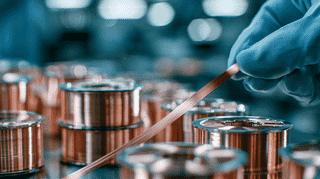
A second tranche is now taking shape around three candidates: nuclear power plant construction (the largest item, reportedly involving as many as ten Westinghouse reactors), copper smelting facilities, and the subject of this story, LCD and OLED display manufacturing. The second tranche could exceed $100 billion in total, and an announcement may coincide with the Takaichi-Trump summit scheduled for March 19, 2026.
The full $550 billion package remains controversial in Japan. Critics see a forced concession to Trump's tariff threats. Supporters argue it strengthens Japanese supply chains and expands the country's industrial presence in America. The display project sits at that intersection of trade politics and industrial strategy.
Why Displays Are Now a National Security Issue
When you think of displays, you probably picture smartphone screens or TVs. But in Washington, flat panel displays are being reclassified as strategic assets, right alongside semiconductors, rare earths, and batteries.
The concern centers on China's dominance. BOE Technology Group, China's largest display maker, has grown rapidly with heavy state subsidies. Industry forecasts suggest that virtually all global display equipment spending from 2025 through 2027 will be concentrated in China.
For the US military, this is alarming. Fighter cockpit displays, aircraft carrier control systems, soldier-worn head-mounted displays: many of them rely on LCD or OLED panels sourced from Chinese supply chains.
In October 2024, the US House Select Committee on the Chinese Communist Party formally asked the Pentagon to blacklist BOE and Tianma Microelectronics as "Chinese military companies." Then, on December 18, 2025, the National Defense Authorization Act for fiscal year 2026 (P.L. 119-60) was signed into law. Section 835 directs the Pentagon to develop and begin implementing a strategy to end its reliance on computer displays sourced from China, Russia, North Korea, and Iran by 2030. It is a planning mandate rather than an immediate procurement ban, but the direction of travel is explicit.
The catch is that the US has virtually no domestic flat panel display manufacturing capability. Unlike the CHIPS Act for semiconductors, where existing US fabs provided a foundation, the display sector starts from near zero. That is the gap JDI has been asked to fill.
Who Is JDI? A Story of National Ambition and Corporate Decline
Japan Display Inc. was born in 2012 as a bold national project. The display divisions of three Japanese electronics giants, Sony, Hitachi and Toshiba, were merged under one roof, with the government-backed Innovation Network Corporation of Japan (INCJ) putting in ¥200 billion. JDI was supposed to be Japan's champion in the global display race.
Reality was far less kind. The company became dangerously dependent on Apple, to the point that Japanese analysts described it as running on a single leg. Meanwhile, Samsung, LG, and especially China's BOE surged ahead. JDI's revenue shrank to roughly one-fifth of its peak, and the company has posted net losses for 11 consecutive fiscal years.
Since 2020, Ichigo Trust, a Japan-based investment fund, has served as JDI's controlling shareholder and financial lifeline. By June 2025 JDI owed Ichigo ¥65 billion (about $420 million), and the interest alone had become a serious drag. Net assets fell to minus ¥12.9 billion at the end of that month, tipping the company into negative net worth, and the stock traded around 20 yen, among the lowest on the Tokyo Stock Exchange's Prime Market.
In 2025, JDI closed its only OLED production facility in Mobara, Chiba Prefecture, and exited its Apple Watch panel supply contract. The company now pins its hopes on a "Beyond Display" strategy focused on semiconductor packaging and sensors, though profitability remains elusive.
JDI's Secret Weapon: eLEAP Technology and an American Partner
Despite its financial troubles, JDI holds one card that few competitors can match: a proprietary OLED manufacturing technology called eLEAP.
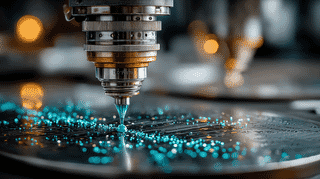
Traditional OLED production uses fine metal masks, ultra-precise stencils through which organic materials are deposited onto substrates. The process is expensive, limits resolution, and restricts display shapes. JDI's eLEAP replaces the masks with photolithography, a light-based patterning technique borrowed from semiconductor manufacturing. The result: lower cost, higher precision, longer-lasting OLEDs, and the freedom to build displays in almost any shape.
The technology has drawn serious attention. South Korea's LG Display has reportedly been testing eLEAP on its OLED TV production lines. And in February 2025, JDI made a strategic investment in OLEDWorks, a Rochester, New York-based manufacturer that is the only significant OLED maker outside Asia. JDI took a 6.69% stake, and the two companies announced plans to build an advanced display fab and R&D center in the US, targeting defense, automotive, and medical applications.
OLEDWorks already has US defense credentials. In March 2024 it won an agreement worth roughly $8.6 million, overseen by the US Army, to develop high-performance OLED microdisplays for head-mounted applications. Together, JDI and OLEDWorks say the fab would be the first of its kind in the Western Hemisphere.
The Japanese government's $13 billion proposal essentially supercharges this existing partnership with massive public funding.
The Hard Questions: Can This Actually Work?
The proposal faces serious challenges on multiple fronts.
The demand gap: The US military display market is estimated at roughly $350 to $400 million a year. A $13 billion factory cannot survive on defense contracts alone. JDI would need civilian markets such as automotive heads-up displays, medical imaging panels and AR devices, where it would face fierce price competition from Chinese and Korean manufacturers.
JDI's fragile foundation: On March 9, 2026, the day after the report broke, JDI shares touched 55 yen and closed at 52 yen, up about 93% and back above 50 yen for the first time in roughly three years. The underlying company did not change: negative net worth, eleven straight years of losses. Asking it to manage a $13 billion project raises obvious concerns. The government would fund construction, but JDI would have to supply the technical expertise and the people, both depleted by years of downsizing and brain drain.
Political risk: After the first tranche was settled, the US Supreme Court ruled the reciprocal tariffs unconstitutional, knocking away the very thing the $550 billion pledge was meant to buy. Tokyo has said it will proceed anyway, which raises the prospect of the investment surviving without the concession that justified it. The Trump administration also has a history of announced deals that later fizzled.
Yet the convergence of interests is real. Japan needs large-scale projects to fill its $550 billion commitment. The US military needs a domestic display supply chain. JDI needs a lifeline.
What This Says About the Japan-US Relationship in 2026
Trump-era tariff diplomacy is reshaping industrial policy across the Pacific, and this is what that looks like at the level of a single company.
In the 1980s, Japan and the US clashed over semiconductors. The resulting trade agreements coincided with Japan's shrinking share of the chip market and a hardening of American industrial policy. Four decades later, the dynamic has inverted: rather than fighting over market share, Japan and the US are being pushed together by a common strategic concern, China's industrial rise.
The key difference from the 1980s is the framing. Then, Japan was the threat. Now China is, and Japan is being positioned as part of the solution. Whether JDI's factory becomes a genuine pillar of that solution or another chapter in Japan's troubled display history is an open question. What is no longer in doubt is that the screens people look at every day have become a matter of national security.
Has your country ever tried to revive a struggling company as a "national project"? Did it work? And how does your country handle dependence on Chinese supply chains for everyday technology? We'd love to hear your perspective.
References
- https://www.nikkei.com/article/DGXZQOGN042Y70U6A300C2000000/
- https://www.oledworks.com/news/oledworks-and-jdi-announce-plans-to-bring-world-leading-advanced-display-manufacturing-to-the-united-states/
- https://www.aei.org/op-eds/are-displays-the-next-batteries/
- https://www.oled-info.com/us-force-its-military-stop-use-chinese-and-russian-display-technologies-2030
- https://jp.usembassy.gov/ja/fact-sheet-trump-billions-investment-from-japan/
- https://www.manufacturingdive.com/news/oledworks-jdi-to-build-us-display-fabrication-plant-OLED/740480/






Global Discussion
15 comments