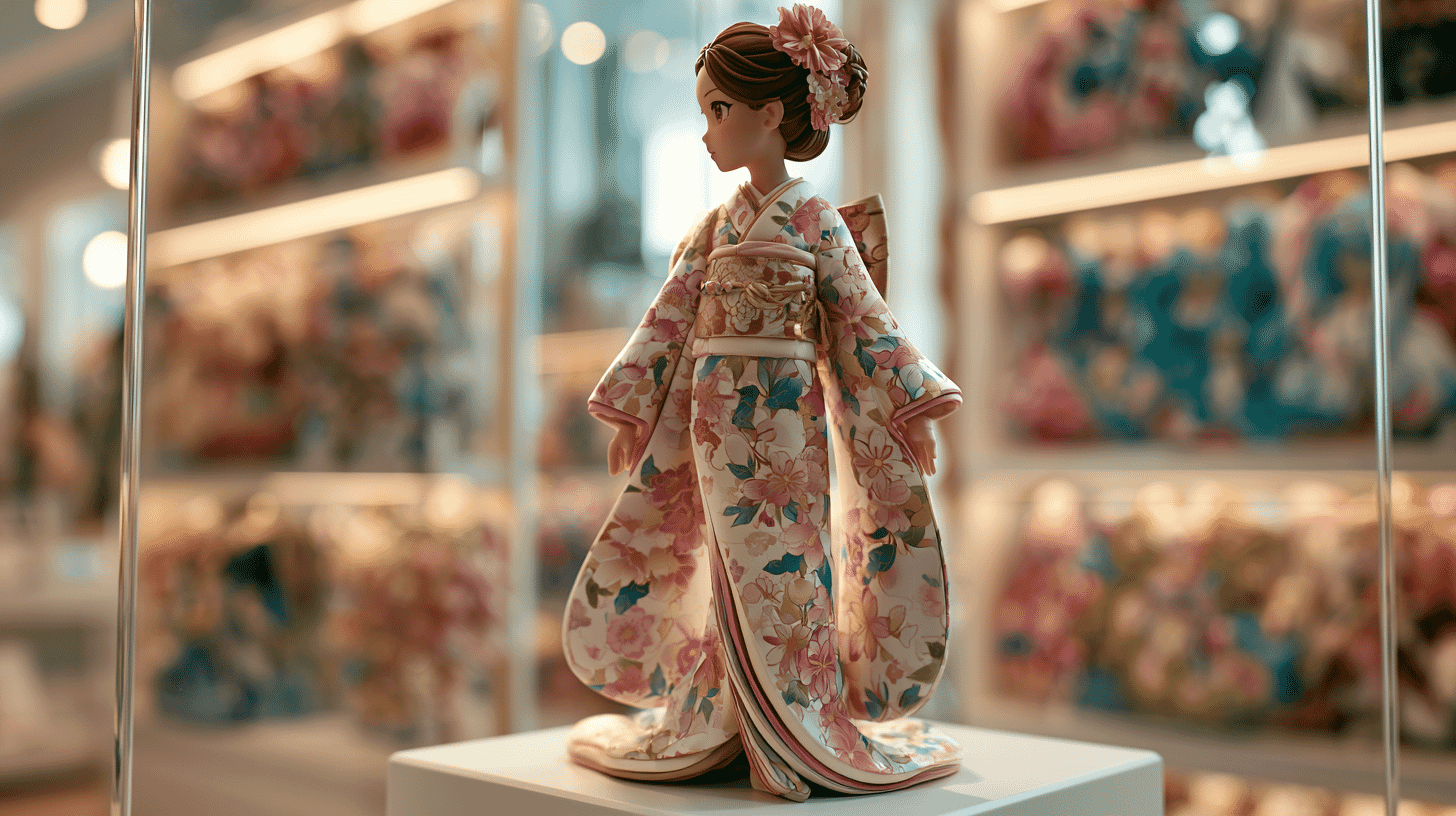
🪆 In 1980, a Japanese doll quietly crossed the Pacific, took the name "LISA," and went looking for a fight with Barbie on her home turf. It lost fast, and so completely that the company barely kept any records of it. Forty-six years later, that same doll is back in American stores, this time as "Licca." But almost nothing about the plan resembles the first attempt. This is the story of what Takara Tomy got wrong in 1980, and why it thinks the rematch will go differently.
A doll named LISA, and a defeat nobody documented
Licca-chan was born in Japan in 1967. Created by the toymaker Takara (now Takara Tomy), she was designed as an 11-year-old fifth grader with a full cast of family and friends, a girl-next-door you could imagine living down the street. That ordinariness was the point, and in Japan it worked. Around 69 million Licca-chan dolls have sold since, and she is now in her fourth design generation.
The first time she left Japan, she went as someone else. According to Takara Tomy, it was the second-generation Licca who crossed the Pacific around 1980, sold in the United States under the name "LISA." The company says detailed records from that era no longer survive, but what is clear is that the venture collapsed soon after it began.
It is not hard to see why. In 1980, Barbie wasn't just a doll. She was the doll, an American icon Mattel had been building since 1959. And the two products were built on opposite ideas. Barbie was a glamorous, aspirational older teenager. Licca-chan was a relatable kid. In Japan, that contrast created a comfortable split: Barbie was the fashionable fantasy, Licca was the friend your own age. But an American child in 1980 walking down a toy aisle had no reason to pick the unfamiliar "girl next door" over the icon she already wanted to be.
There was also no second reason to choose her. In 1980, "Cool Japan" did not exist as an export idea. There was no anime wave in American living rooms, no global market for kawaii. LISA wasn't a piece of Japanese culture you could buy. She was just a slightly different doll, fighting Mattel without a distribution network on Mattel's own ground.
The irony is almost too neat. At nearly the exact moment Licca was failing in America as LISA, Takara was signing a deal with Mattel to import Barbie into Japan, and in 1982 it began producing a licensed, locally tuned version known as "Takara Barbie." For a few years, the company that made Licca-chan was also the company that sold Barbie in Japan. When the license ended in 1986, that doll was renamed "Jenny" and lived on as its own brand.
This time, the name is Licca, and the store matters
The 2026 return looks like a company that studied its own loss.
In late March, Takara Tomy began rolling out the doll across North America, this time under a name much closer to the original: simply "Licca." It launched an English-language website and official social accounts to go with it. But the most revealing decision isn't the name. It's where you can buy her.
Licca did not march into Walmart or Target to take another swing at Barbie in the mass-market toy aisle. The first wave is being sold through BoxLunch, Hot Topic, MINISO, animate Los Angeles / animate USA and Gacha&Catch, specialty and pop-culture retailers where anime fans and adult collectors already shop, at price points of $24.99 and $29.99. That is a deliberate, narrower door, and it points at a deliberate, narrower customer.
The opening lineup of ten products tells the same story. Alongside dolls in kimono and Japanese school uniforms, the first wave leans hard on Japanese character collaborations: outfits tied to the hit anime Frieren: Beyond Journey's End, and to Sanrio's My Melody and Kuromi. The pitch is not "here is another fashion doll." The pitch is "here is a piece of Japan."
And the target customer is not a child. Takara Tomy is openly aiming at what the toy industry now calls "kidults," playful adults with disposable income, and exporting a hobby that is already a boom back home. In Japan, "Rika-katsu" (リカ活) describes grown-up fans who sew their own outfits for the doll, style elaborate looks and post the results online. The company wants American adults, many of whom grew up with Barbie, to pick Licca up as a creative collector's hobby rather than a toy.
So far the early numbers are encouraging. Takara Tomy says sales are already running about 20 percent ahead of plan, after a debut at New York's Toy Fair in February drew a strong response. President and CEO Akio Tomiyama frames the move as part of the "regional expansion" pillar of the company's mid- to long-term strategy.
Barbie isn't the rival anymore
Here is the part that changes everything. In 1980, the enemy was obvious and overwhelming. In 2026, the competitive map looks nothing like that.
For one thing, Barbie herself is wobbling. Mattel reported a 6 percent drop in sales for the second quarter of 2025, with North American sales down 16 percent and its entire dolls category falling 19 percent, driven, the company said, by soft demand for Barbie. This is not a one-quarter blip, either. Barbie's share of the U.S. doll market has been eroding for years; it sat above 25 percent in 2009 and had slipped below 20 percent by 2013.
More importantly, the battlefield itself moved. The heat in the American "doll" market today is not in the children's mass-market aisle at all. It is in the world of kidult collectibles and blind boxes, and the symbol of that shift is Labubu, the toothy little monster from China's Pop Mart. Pop Mart pulled in more than $4 billion in revenue in 2025. Labubu functions as both a collectible and an adult fashion accessory, a status symbol clipped onto handbags, sold in "blind boxes" that hide which figure you've bought until you open it. That format, small and wearable and surprise-driven, has rippled across the whole industry, with rival toymakers rushing to make their own miniaturized, blind-boxed versions.
So when Licca returns, she is not really walking back into a ring with Barbie. She is entering a market where a weakened Barbie still holds the "fashion doll" identity, MGA's Bratz and L.O.L. Surprise crowd the shelves, and an entire collector economy, the one Labubu built, has rewritten what it even means for an adult to buy a doll.
What Hello Kitty and Pokémon figured out first
If Licca's second attempt has a playbook, it was written by other Japanese brands decades ago.
Pokémon is, by most estimates, the highest-grossing media franchise in history, bigger than Star Wars, bigger than Marvel, and it got there not through a single blockbuster but by turning characters into games, cards, merchandise and collaborations that refresh endlessly. Hello Kitty, born from Japan's kawaii culture in 1974, is the quieter masterclass: a brand with no real storyline that survives purely on licensing, appearing on tens of thousands of products in well over a hundred countries because the character can be cute, ironic, minimal or luxury without ever stopping being Hello Kitty.
The lesson both teach is the same one Licca's 1980 self never learned. A Japanese character does not win abroad by being a marginally better version of a Western product. It wins by being unmistakably itself, and by letting that identity ride on collaborations and merchandise rather than a frontal sales war. Licca's anime and Sanrio tie-ins, her kimono outfits, her pitch as a "touch of Japan": that is the Hello Kitty and Pokémon strategy applied to a fashion doll.
So, will it work?
The honest answer depends on what you measure it against.
Measured against 1980, the case for optimism is real. Licca is no longer trying to out-Barbie Barbie. She is selling Japan itself, and unlike in 1980, there is now genuine American demand for that. She is selling through the stores where her actual customer already shops. She is aiming at adults with money and a collector's mindset, riding the same kidult wave that lifted Labubu. And she is doing it at a moment when Barbie is weak and the collectible category is hot. The early 20-percent-over-plan figure suggests the niche approach is landing, and the company says it will widen the lineup and retail footprint later in 2026.
But it is not a sure thing, and it helps to be clear-eyed about why. Licca is still a traditional dress-up doll, not a blind-box or wearable charm. Part of what made Labubu explode was the format, the thrill of the hunt, not just the character. Brand awareness is another problem: those 69 million dolls were sold almost entirely in Japan, so there is no reservoir of American nostalgia to tap the way Barbie can. The "Japan" hook depends on keeping the anime collaborations fresh. And toys imported into the U.S. now face real tariff uncertainty.
The most useful way to read this is that Takara Tomy has not set out to dethrone anyone. It has set out to build a profitable, durable niche around Japanese culture and collector fans, and it has carefully avoided the head-on fight that sank LISA in 1980. By that standard, the prospects look good. The mistake would be to grade the comeback on whether it beats Barbie. The whole point of the new strategy is that it stopped trying to.
What about where you live?
In Japan, Licca-chan has been a household name for nearly sixty years, and now grown adults sew her clothes as a hobby. Do childhood toy brands from your own country still have a hold on adults, or do they vanish the moment you outgrow them? And would a doll marketed as "a piece of Japan" catch your eye, or feel like a gimmick?
References
- https://news.yahoo.co.jp/articles/8e95880cc4c788b6e082750684404358da0dae74
- https://www.takaratomy.co.jp/product_release/pdf/p260403.pdf
- https://www.advertimes.com/20260407/article540573/
- https://ja.wikipedia.org/wiki/%E3%83%90%E3%83%BC%E3%83%93%E3%83%BC
- https://www.foxbusiness.com/lifestyle/labubu-dolls-become-2025s-hottest-toy-craze-among-kids-adult-collectors
- https://www.alphaspread.com/market-news/earnings/mattel-reports-lower-sales-due-to-weak-barbie-demand-and-trade-uncertainty
- https://licca-doll.com/








Global Discussion
4 comments