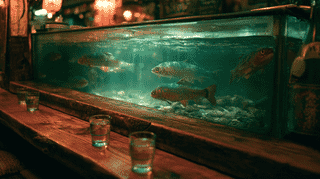
Behind Umitamago aquarium in Oita, a hose dispenses 120 liters of filtered seawater for 100 yen. Izakayas and home aquarists buy it, and one restaurant's remark kept the machine alive.
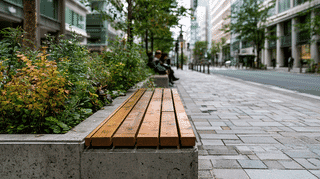
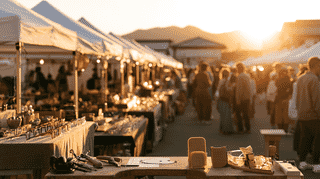
A TV report treated visitors sitting on Ginza's pavements as a manners problem. Benches had been tested on the same avenue days earlier. Road rules and anti-homeless design help explain why seats are scarce.
Nue's Exorcist, AnimeJapan's 2025 most-wanted manga for anime, airs in summer 2027. Headlines called its director the Gochiusa man, but he has worked with Studio Hibari, known abroad as Lerche, for a decade.
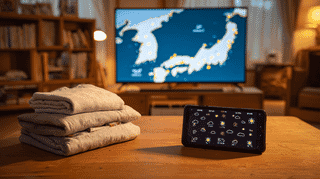
Pokémon director Shigeru Ohmori made a free-to-play phone game about magical girls, real forecasts and laundry alongside Pokopia, which shipped in 9 languages. This one is slated for Japan only.
Restorers found 95 rolled sheets inside the secret Kannon of Shojuin Temple in Kyoto, one with ink writing not yet studied. Why Buddhist statues held objects, and how to visit the temple.
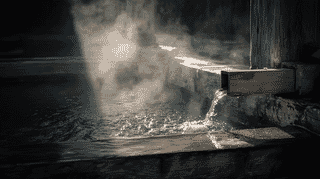
A private system will rate Japan's onsen on five criteria for the water in the tub and name 21 three-star sites on October 26. How it differs from notices required since 2005 and a label abolished in 2019.
Captain Tsubasa: Rising Sun FINALS is back after about four months. Creator Yoichi Takahashi also owns the real Nankatsu SC, which finished third and has one October tournament left to keep its JFL hopes alive.
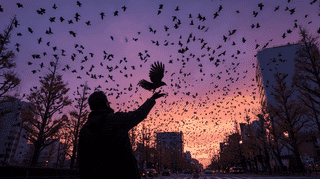
About 1,000 crows roosted on the Asian Games race walk course in Nagoya, and a hospital ruled out firecrackers, so the city hired a falconer. In Japan, scaring off birds is a falconer's everyday job.
A wild fox dropped a mole at a home in Yonago, Japan, and walked away. It has visited about seven times. Japan's internet thought of a school folktale; a mole researcher has a more practical theory.
Japan's NIMS built a molecular sheet where some electrons act massless and others barely move. What that means, how a bamboo-basket word entered physics in 1951, and what the material might one day be used for.
Japan had 2,730 sento left at the end of fiscal 2024. Under a 1946 ordinance, prefectures still cap their prices, and Tokyo calculates its cap like a utility rate. It rose to 600 yen in August 2026.
Kikkoman's third US soy sauce plant has opened in Jefferson, Wisconsin, a $560 million investment. Fifty-five years after a village voted 54 to 14 on the first one, North America now supplies two-thirds of group profit.
A 1977 paper by two Japanese ENT doctors, from airflow readings on 15 men, said to blow one nostril at a time. It won the 2026 Ig Nobel medicine prize 49 years later, at a ceremony that had left the US for Zurich.
Thirty players throwing together need about 64,201 rounds to leave one winner. The widely quoted 63,917 counts only the wait until the first non-tie, and just 4.61 throws settle anything.
A 200,000-yen temple room and a 100-million-yen tax finding surfaced at Koyasan in the same week. Where that price actually sits, why Japanese law taxes the bed but not the offering, and how to book a night.
JR East opened public voting on three successors to the Suica penguin, and about 58% of Japanese posts turned negative. What they object to, why the 2018 Takanawa Gateway vote poisoned the well, and why it may not last.
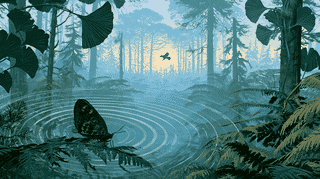
A PNAS study rebuilt the songs of 9 extinct species from 20 fossils in Inner Mongolia. The 5 to 7 kHz result lands in the same band as Japan's 4.5 kHz bell cricket, listened to for 1,000 years.
Megane Fes 2026 takes over Sabae on September 19 and 20. Fukui makes 93.5% of Japan's eyeglass frames, and according to the Fukui Optical Association the town produced the world's first titanium glasses in 1983.
Japan recorded 86,473 IVF births in 2024, about 1 in 8 of its 686,173 births. Treatments fell to 550,265 while the multiple-birth rate rose to 4.15 percent, and the 2022 insurance reform helps explain both.
The Apothecary Diaries is getting a live-action drama starring Mana Ashida, on Prime Video from 2028. Japanese social media flipped from dread to approval within an hour, but one uncast role still has fans nervous.