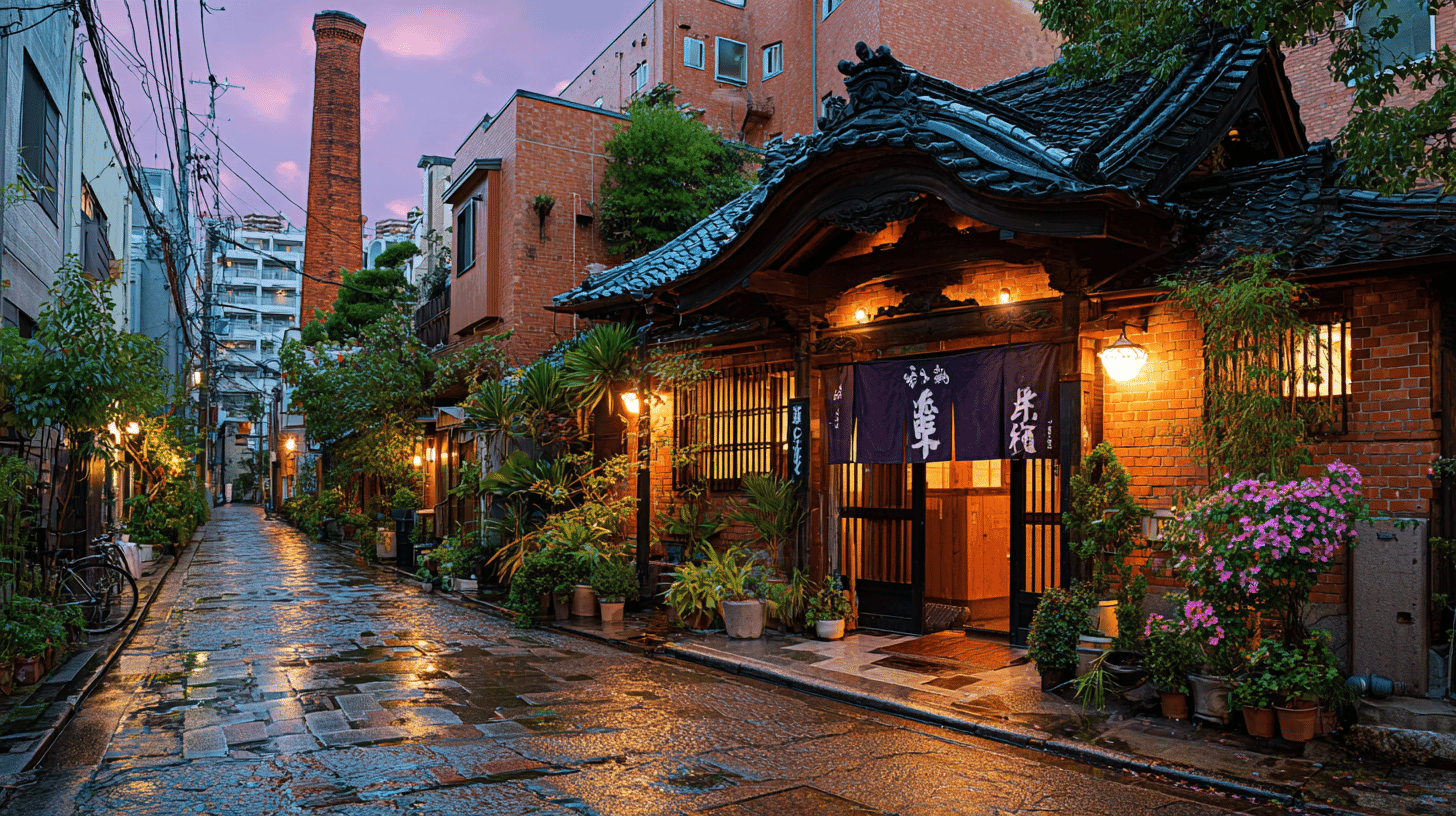
♨️ Japan's neighborhood bathhouses are disappearing. More than 80% have closed over the past half century. Fuel keeps getting more expensive, but a sento still cannot charge more than a cap set by its prefecture, under a price-control ordinance from 1946.
Down to 2,730
At the end of fiscal 2024, Japan had 2,730 "ordinary public bathhouses," according to the health ministry's annual sanitation report. The category covers the classic neighborhood sento, where locals go to wash every day, plus the baths at places such as senior welfare centers. By the Asahi Shimbun's count, more than 80% of them have vanished in half a century.
The national federation of bathhouse cooperatives says its membership peaked at 17,999 bathhouses in 1968. By April 2026 it was down to 1,493. Home bathtubs spread while buildings and owners aged, and then the heavy oil used to heat the water got more expensive along with everything else.
Meanwhile, the category the law calls "other public bathhouses," which includes super sento (large, leisure-style bath complexes) and saunas, grew again in fiscal 2024. All public baths combined numbered 23,668. Ordinary bathhouses made up 87% of that total in 1970, but only 12.0% by fiscal 2023.
A price set like a utility bill
A super sento charges whatever it likes. A sento's admission fee is capped by the prefectural governor under the Price Control Ordinance, an imperial ordinance issued in 1946. The ordinance once covered a long list of goods; today, bath fees are the only prices still controlled under it. Each sento is free to charge less than the cap, but not more.
Tokyo's metropolitan government goes through the books of about 40 typical bathhouses and calculates the cap with the same cost-plus method used for gas, water and electricity rates: add up the necessary costs, then add a reasonable profit. In 2025 the formula said bathhouses needed 574.20 yen per adult, but the cap stayed at 550 yen. The 2026 figure came out at 602.86 yen, and from August 1 the adult cap rose to 600 yen (about $3.80 at 157.1 yen to the dollar as of September 21, 2026).
Osaka raised its cap to 600 yen in April 2025. A March 2026 briefing paper from Aomori Prefecture counted 19 prefectures that had revised their caps since 2025. Hokkaido announced on September 11, 2026 that its adult cap will rise from 500 yen to 550 yen on October 1.
When protection starts to pinch
In 1968, only 42.2% of homes in Tokyo had their own bath, and the average sento served 530 people a day. By 2008, 97.6% of homes had one. According to Aomori Prefecture, governors set the cap because bathhouses were essential to postwar daily life and hygiene and had to stay cheap enough for anyone to use. In 1981, Japan also passed a law requiring national and local governments to take steps to stop price-controlled bathhouses from disappearing.
In Tokyo's cost table, subsidies made up about 13% of the surveyed bathhouses' income. Even so, costs slightly exceeded income in 2025.
Many members of Tokyo's advisory council stressed that the cap is only a ceiling and that bathhouses could be more flexible with their prices. One said the cap had left management stuck in a kind of "thinking freeze." Yet in the city's survey, nearly 100 bathhouses said they wanted to stay at 550 yen, and some members worried about losing customers.
Kobe tried something else. When Hyogo Prefecture raised its cap from 490 yen to 570 yen in January 2026, the city began paying bathhouses 70 yen per visit from March, so residents can still get in for 500 yen. The program is scheduled to run through March 2027.
Aomori leads, Yamagata has none
According to the Asahi Shimbun, Aomori has the most bathhouses for its population, at 22.40 per 100,000 people, followed by Kagoshima at 15.80 and Oita at 11.52. A public-bath researcher interviewed by the paper explained that the top prefectures are all rich in hot springs, and that many town bathhouses there use spring water.
Even in Aomori, when the prefecture examined 2024 accounts at bathhouses that heat their own water, seven of the nine that responded were in the red. In March 2026, its council unanimously recommended raising the adult cap from 480 yen to 530 yen.
Yamagata, according to the statistics, has zero. The numbers don't say why. The rules still apply there, though. As of March 2026, Yamagata's cap stood at 300 yen (about $1.90), a figure set in 1995 and the lowest in Japan.
If you want to try one
The Tokyo Sento Association's English guide says swimsuits and underwear aren't allowed, and most bathhouses sell towels and shampoo. Wash yourself at the washing area before you get into the tub.
On tattoos, Japan's government said in a 2017 written answer that a tattoo alone is hard to treat as falling under the Public Bathhouse Act's provisions, such as the one on people with infectious diseases. But the lawmaker's question that prompted the answer had noted that some bathhouses turn away people with tattoos, so check before you go.
Korea is building its own
According to The Korea Herald, South Korea had 8,904 bathhouses, known as mogyoktang, in 2000 and 5,656 in 2025. The rising cost of the fuel that heats the water is one of the main reasons. In Gangwon Province, the city of Taebaek opened a public bathhouse in February 2026 and, as of April 2026, planned a second one by 2028.
Japan has mostly capped prices at private bathhouses and propped them up with subsidies. Some Korean towns chose to build the baths themselves. In both countries, the starting point is people who can't rely on a bath at home.
Is there still a public bath in your town that anyone can use for a few dollars?
References
- https://www.mhlw.go.jp/toukei/saikin/hw/eisei_houkoku/24/dl/kekka3.pdf
- https://www.mhlw.go.jp/stf/seisakunitsuite/bunya/kenkou_iryou/kenkou/seikatsu-eisei/seikatsu-eisei03/04.html
- https://www.mhlw.go.jp/stf/seisakunitsuite/bunya/kenkou_iryou/kenkou/seikatsu-eisei/seikatsu-eisei04/04.html
- https://news.yahoo.co.jp/articles/2c1a341ca0b122373d27e5aee23d78faa4eeb201
- https://president.jp/articles/-/117881
- https://www.ben54.jp/news/3773
- https://www.metro.tokyo.lg.jp/information/press/2026/07/2026072121
- https://www.shouhiseikatu.metro.tokyo.lg.jp/chousa/yokujyo/kyougikai/documents/24-3siryou5.pdf
- https://www.shouhiseikatu.metro.tokyo.lg.jp/chousa/yokujyo/kyougikai/documents/24-4siryou4.pdf
- https://www.shouhiseikatu.metro.tokyo.lg.jp/chousa/yokujyo/kyougikai/documents/24-4houkoku.pdf
- https://www.spt.metro.tokyo.lg.jp/tosei/hodohappyo/press/2020/08/24/documents/04_01.pdf
- https://www.pref.osaka.lg.jp/o100090/kankyoeisei/nyuyoku-ryokin/nyuyoku-ryokin.html
- https://www.pref.hokkaido.lg.jp/hf/kse/sei/sento/166072.html
- https://www.pref.aomori.lg.jp/soshiki/kenko/hoken/files/kaigi_shiryou.pdf
- https://www.pref.aomori.lg.jp/soshiki/kenko/hoken/files/giji_gaiyou.pdf
- https://www.city.kobe.lg.jp/a84140/kenko/health/hygiene/sento/shien.html
- https://web.pref.hyogo.lg.jp/kf14/nyuuyoku_ryoukinn_kyougikai/documents/r7_7_kanren_shiryou.pdf
- https://www.1010.or.jp/english/how-to-enjoy-sento/
- https://www.shugiin.go.jp/Internet/itdb_shitsumon.nsf/html/shitsumon/a193069.htm
- https://www.shugiin.go.jp/Internet/itdb_shitsumon.nsf/html/shitsumon/b193069.htm
- https://www.koreaherald.com/article/10718907

Global Discussion
4 comments