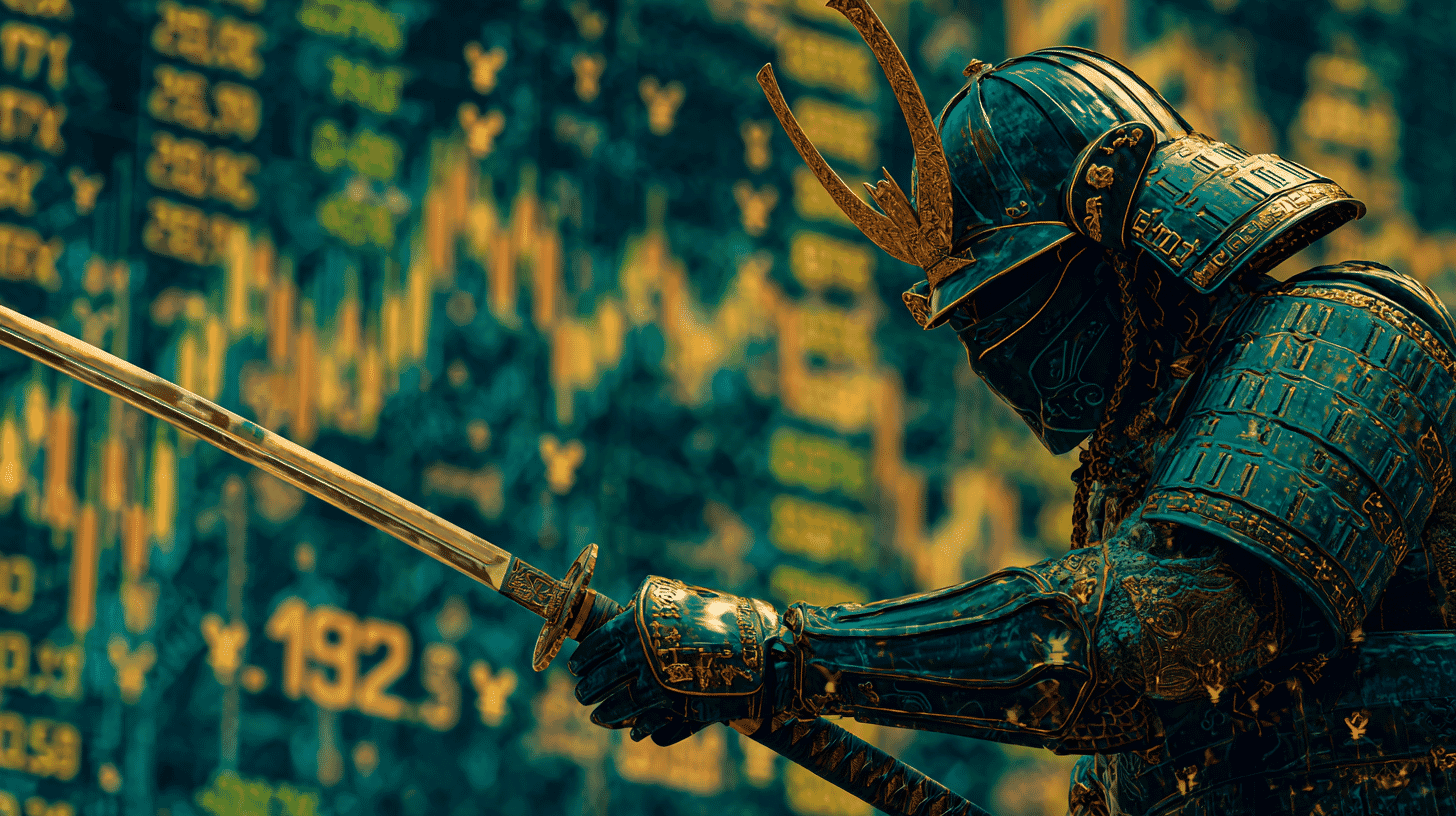
💼 A gaming company where close to 30% of ordinary profit comes from financial market investing. That is an actual Japanese company, not a hypothetical.
On April 27, 2026, Koei Tecmo Holdings announced full-year FY2026 results that hit record highs across nearly every line: revenue of ¥88.4 billion ($564M), operating profit of ¥37.2 billion ($237M), ordinary profit of ¥57.0 billion ($364M), and net income of ¥42.8 billion ($273M). On the surface, the story is simple: hits like Nioh 3, Pokopia, Hyrule Warriors: Age of Imprisonment, and Romance of the Three Kingdoms 8 REMAKE drove the gaming business. But read the financial documents carefully, and a much more unusual picture emerges.
The gap between ¥57.0 billion in ordinary profit and ¥37.17 billion in operating profit, about ¥19.8 billion, comes from non-operating items. At its core sits roughly ¥16.4 billion ($105M) of financial market gains: a ¥10.9 billion gain on investment securities sales, plus ¥5.5 billion in derivatives valuation gains. Money generated not by the core gaming business, but by the company's investment portfolio. That's 28.7% of ordinary profit coming from finance. It's an extraordinary income structure that you almost never see at Western gaming companies.
Full-Year Highlights
Koei Tecmo's FY2026 (April 2025–March 2026) consolidated results:
- Revenue: ¥88.4 billion (+6.3% year-over-year)
- Operating profit: ¥37.2 billion (+15.7%)
- Ordinary profit: ¥57.0 billion (+14.0%)
- Net income attributable to owners: ¥42.8 billion (+13.8%)
Revenue, ordinary profit and net income set record highs; operating profit did not. The 42.0% operating margin still puts Koei Tecmo among the highest-margin operators in the industry. Nintendo, reporting the same fiscal year, came in at 15.6%, down from 24.3% the year before. Overseas sales account for 70.3% of Koei Tecmo's revenue.
The company had already raised guidance on April 20, lifting the ordinary profit forecast from ¥37.0 billion to ¥55.5 billion. The final ¥57.0 billion beat even that revision.
By quarter, Q4 (Jan–Mar 2026) ordinary profit jumped 53.8% year-over-year to ¥25.9 billion, fueled by concentrated launches: Nioh 3 (February), Pokopia (March), and Fatal Frame: Crimson Butterfly REMAKE.
The "Game Company × Investment Firm" Hybrid
You can't talk about Koei Tecmo without the founding Erikawa family. Koei was founded in 1978 by Yoichi and Keiko Erikawa; Yoichi still serves as Representative Director, Chairman and Chair of the Board. Within Japan, Keiko Erikawa has long been known not just as a gaming executive but for her track record as a personal investor.
The non-operating line in Koei Tecmo's statements has logged financial gains every year, typically running from a few billion yen to more than ¥10 billion. This year the investment gains alone reached ¥16.4 billion. The company's explanation: it managed funds while monitoring financial markets, and non-operating income came in substantially above plan.
A line like "profit recognized through portfolio rebalancing" appearing in a gaming company's earnings report is rare globally. In substance, Koei Tecmo operates as a hybrid "IP business + asset management" company.
This isn't something to criticize. If anything, it's a pragmatic management approach: smoothing the inherently hit-dependent, year-to-year volatility of the gaming industry through stable investment income. Cash reserves are robust, the new mid-term plan emphasizes "expanded human capital investment," and the financial gains help fund those commitments.
The Game Side Is Also Firing on All Cylinders, Nioh 3, Pokopia, Hyrule Warriors
The core gaming business is genuinely strong. The fiscal year saw 14 packaged game releases, plus two new online/mobile titles. Three releases stand out:
Nioh 3 (released February 2026) crossed 1 million units worldwide, bringing the cumulative series total to 10 million units. Team NINJA's Japanese-styled Soulslike has secured a firm position among Western Soulslike fans as "an alternative to the FromSoftware lineup." A first-time PlayStation Store sale promises long-tail revenue ahead.
Pokopia (Pokopia / Poko a Pokémon) (released March 2026) is a collaboration with The Pokémon Company. Both Nintendo and Koei Tecmo stocks climbed materially on news that Pokopia sales were tracking ahead of expectations, a market signal worth noting.
Hyrule Warriors: Age of Imprisonment is the latest in Koei Tecmo's long-running collaboration with Nintendo, with potential for further synergy from the Switch 2 rollout of the Zelda IP.
Beyond those, Romance of the Three Kingdoms 8 REMAKE with Power-Up Kit, Winning Post 10 2026 (the latest in the long-running horse racing simulation series), and Fatal Frame: Crimson Butterfly REMAKE (a remake of the cult J-horror title) rounded out a balanced lineup of remakes and sequels.
A Dynamic Dividend: Hike to ¥66, Then Cut to ¥48
Strong performance led to a dividend hike: this year's annual dividend rose to ¥66, up from ¥60 the previous year. The year-end portion was raised significantly from ¥43.
But next year (FY2027), the dividend forecast drops to ¥48, an effective ¥18 cut from this year. This follows the company's stated policy: "consolidated total payout ratio of 50% (combining dividends and buybacks), or annual dividend of ¥50 per share." It's a mechanical, formula-driven dividend policy that moves with earnings.
While many Japanese companies have shifted toward stable or progressive dividend policies, Koei Tecmo deliberately maintains an earnings-linked dividend approach. It's predictable for investors, but during downturns it can also weigh on share prices.
"Conservative" Doesn't Quite Cover It, Next Year's Forecast Shows a Sharp Decline
FY2027 guidance:
- Revenue: ¥90.0 billion (+1.8%)
- Operating profit: ¥32.0 billion (-13.9%)
- Ordinary profit: ¥42.0 billion (-26.3%)
- Net income: ¥31.0 billion (-27.6%)
A 27.6% net income decline coming directly off a record year is a strikingly large drop. The company's explanation: "While multiple new titles are scheduled for release, we are conservatively planning for expanded human capital investment, increased development costs, and selling expenses."
Crucially, the projected ¥42.0 billion ordinary profit doesn't bake in another year of ¥16.4 billion in investment gains. The forecast assumes operating profit of ¥32.0 billion plus roughly ¥10.0 billion in non-operating income, well below this year's actual financial results.
In other words: if financial markets stay favorable and produce comparable investment gains, ordinary profit could substantially exceed forecast. Koei Tecmo's "conservative guidance" can be read less as a downbeat view of the gaming business and more as a prudent buffer against financial market uncertainty.
The "¥90 Billion Wall" and the 4th Mid-Term Plan
Koei Tecmo has long faced what's called "the ¥90 billion wall", revenue tends to plateau in the high ¥80s to low ¥90s, and breaking ¥100 billion has remained elusive. This year's ¥88.4 billion and next year's projected ¥90.0 billion both hover around that boundary.
The 4th Mid-Term Management Plan (FY2025–2027) targets cumulative operating profit of over ¥100 billion across three years, with operating profit of ¥40 billion in the final year (FY2028). Given this year's operating profit of ¥37.2 billion and next year's projected ¥32.0 billion, the final year requires significant re-acceleration to clear ¥40 billion.
The strategic pillar is "strengthening the ability to create, sell, leverage, and support IP." Concretely, this means consistently shipping AAA-to-mid-budget titles for console/PC plus new online/mobile releases each year, leveraging Koei's multiple brands (Koei, Tecmo, Team NINJA, ω-Force).
Amusement & Real Estate, An Unexpected Diversification
Beyond gaming, Koei Tecmo runs amusement facilities, the live-music venue KT Zepp Yokohama, and a real estate operation. The amusement segment recovered sharply this year with revenue of ¥4.8 billion (+15.2%) and operating profit of ¥800 million (+60.4%). KT Zepp Yokohama maintained high utilization, generating ¥1.3 billion in revenue (+5.3%).
The venture capital business posted a ¥600 million segment loss due to fund management costs, though this is largely seen as upfront investment positioning for future portfolio returns.
Why International Audiences Should Care, A Distinctly Japanese Management Approach
Look at major Western gaming companies, EA, Take-Two, Activision Blizzard, Ubisoft, and you'll find management styles overwhelmingly focused on the core gaming business. M&A strategies exist, but you almost never find a structure where the company's financial portfolio actively boosts ordinary profit at the level Koei Tecmo achieves.
In that sense, Koei Tecmo embodies a distinctly Japanese form of "holistic corporate management." Financial operations to stabilize gaming cash flows, earnings-linked dividends as shareholder dialogue, long-horizon thinking by a founder family, each is a divergence from mainstream Western practices, yet the result is a 42% operating margin and successive record profits.
Where Koei Tecmo Sits in the 2026 Earnings Wave
As FY2026 results trickle out across the Japanese gaming industry, the strategic differences across companies are becoming sharply visible:
- Sony Group: integrated hardware + IP + music strategy
- Nintendo: first-party + Switch 2 transition
- Konami: third consecutive record year, IP combination strategy, packed new lineup
- Koei Tecmo: IP + financial operations hybrid, earnings-linked dividends
Bandai Namco, Capcom, Sega Sammy and Square Enix went on to report their own fiscal 2026 results during May.
Each company moves to a different management philosophy. How would gaming companies in your country be received if they ran a "gaming + investment" hybrid like Koei Tecmo's? And among Koei Tecmo's titles, Nioh, Hyrule Warriors, Dynasty Warriors, Fatal Frame, Dead or Alive, which one left the strongest impression on you? We'd love to hear.







Global Discussion
14 comments