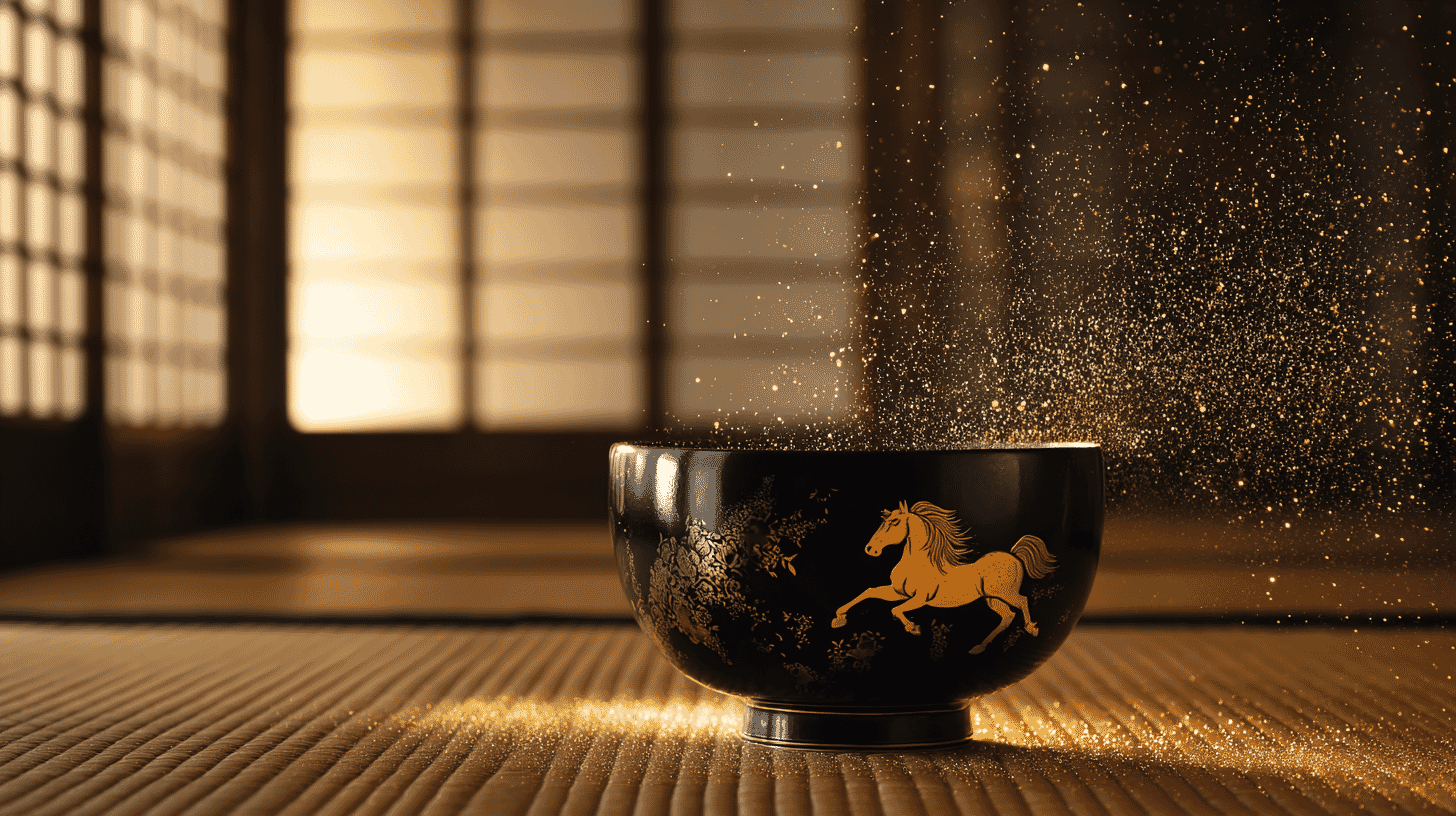
On March 26, 2026, Yamada Heiando, a lacquerware shop founded in 1919 and a longstanding purveyor to Japan's Imperial Household Agency, released its latest creation: a handcrafted bowl featuring Ponyta, the Fire-type Pokémon.
Yamada Heiando was founded in 1919 by Konosuke Yamada in Tokyo's Nihonbashi district. After training in Kyoto, the birthplace of Japan's most refined lacquerware tradition, Yamada wanted to bring that elegance to Tokyo. The company later renamed itself "Heiando" after Kyoto's ancient name (Heian-kyo) and earned the prestigious designation of "Purveyor to the Imperial Household Agency", the Japanese equivalent of a Royal Warrant. Today, the company operates flagship stores in Daikanyama, GINZA SIX, and Coredo Muromachi.
The "Pokémon Eto Small Bowl" series launched on January 17, 2025 with three designs, Pikachu, Dragonite and Arbok, priced at ¥16,500 each at the time. A second wave added Torchic that August, a third added Swinub in December, and Ponyta now joins as the sixth design for 2026, the Year of the Horse in the Chinese zodiac.
What Is Makie? The Gold-Dust Art That Takes Decades to Master
The bowls' most remarkable feature is the decorating technique: makie (literally "sprinkled picture"), a Japanese lacquer art form dating back to the Nara period in the 8th century, over 1,200 years ago.
In makie, an artisan paints a design in urushi, the sap of the lacquer tree, then sprinkles fine gold or silver powder onto the surface before the lacquer hardens. The window is narrow, and it shifts with small changes in temperature and humidity. Sprinkle too early or too late and the powder will not sit properly, ruining hours of work.
Creating a single Pokémon Eto bowl involves three major stages. First comes kiji-biki (wood shaping), where natural wood is turned on a lathe into a bowl form. Then comes nuri (lacquering): coats of urushi are applied, polished and dried in cycles under strict climate control. Finally, the makie stage adds the golden shimmer that brings Ponyta to life. Every step is performed entirely by hand by artisans with decades of experience.
Zodiac Meets Pokémon: A Concept Only Japan Could Create
What makes this series especially clever is its connection to eto, the Chinese zodiac. Each person's birth year corresponds to one of twelve animals, and zodiac-themed tableware is a standard gift in Japan for a birth or a first birthday.
The current lineup matches Pokémon to their zodiac counterparts: Torchic for the Rooster, Dragonite for the Dragon, Arbok for the Snake, Swinub for the Boar, and Ponyta for the Horse. Pikachu, not a zodiac animal by any stretch, earned a special spot anyway. It's Pikachu. It's welcome everywhere.
The Ponyta design carries a wish for children to grow strong and agile and eventually gallop freely across the world, just as Ponyta grows faster by chasing after its parent.
Practical Craft, Not Just a Display Piece
Despite their artisanal pedigree, these bowls are designed for daily use. The all-natural construction, real wood finished with genuine urushi lacquer, makes them safe for infants and young children. There's no plastic, no synthetic coating.
Wood's natural insulating properties mean the bowl stays cool to the touch even when filled with hot miso soup. The low-profile base makes it stable and less likely to tip over, a thoughtful feature for small hands still learning to eat independently.
The bowls come in two classic lacquerware colors: vermilion (shu) and black (kuro). Every bowl includes a matching lacquered baby spoon. Buyers can also request a name written in makie, up to six characters, making each bowl one of a kind.
Each bowl is priced at ¥17,600 (roughly $110) and can be ordered through Yamada Heiando's official online shop. Production takes about three weeks per piece.
A Growing Trend: Traditional Craft × Pop Culture in Japan
The Pokémon lacquerware series is part of a larger movement in Japan where traditional artisans are collaborating with pop culture franchises to reach new audiences.
From March to June 2023, the National Crafts Museum in Kanazawa hosted "Pokémon × Kogei," an exhibition of 72 works by 20 master craftspeople who interpreted Pokémon through lacquerwork, ceramics, metalwork and textiles. Lacquer artist Yoshiaki Taguchi contributed two pieces: a dry-lacquer lidded vessel titled "Yu," in which makie and mother-of-pearl trace Horsea's evolution into Kingdra, and a tea caddy titled "Calling Spring," with Moltres rendered in makie. Taguchi told the magazine Waraku he was struck to find that all 800 or so Pokémon in the reference book he was given had stories of their own, and were not merely characters.
These collaborations address a serious challenge facing Japan's traditional crafts. By the Association for the Promotion of Traditional Craft Industries' estimate, output of government-designated traditional crafts peaked at about ¥540 billion in fiscal 1983 and had fallen to roughly ¥105 billion by fiscal 2022, about one-fifth of the peak. Workshops struggle to attract young apprentices, and demand has shifted toward mass-produced goods.
By partnering with a globally recognized brand like Pokémon, craftspeople gain visibility among younger and international audiences who might never have encountered makie or urushi otherwise.
With proper care, urushi lacquerware lasts decades, sometimes centuries. A baby who eats their first solid food from a Ponyta bowl could one day hand that same bowl to their own child. In a market of disposable tableware and short-lived merchandise, a Pokémon product built to be inherited is a rare thing.
Does your country have examples of traditional craftsmanship meeting pop culture? We'd love to hear about it in the comments.





Global Discussion
15 comments