🏨 A hotel brand born in Thailand is about to open its first Japanese address, and it picked a 60-year-old newspaper headquarters in the middle of Kyoto to do it. The hall where presses once printed the local paper is set to become a restaurant. Here's what Avani Kyoto means for travelers, and why global hotel names keep circling the old capital.
A Thai hotel brand picks a newspaper building for its Japan debut
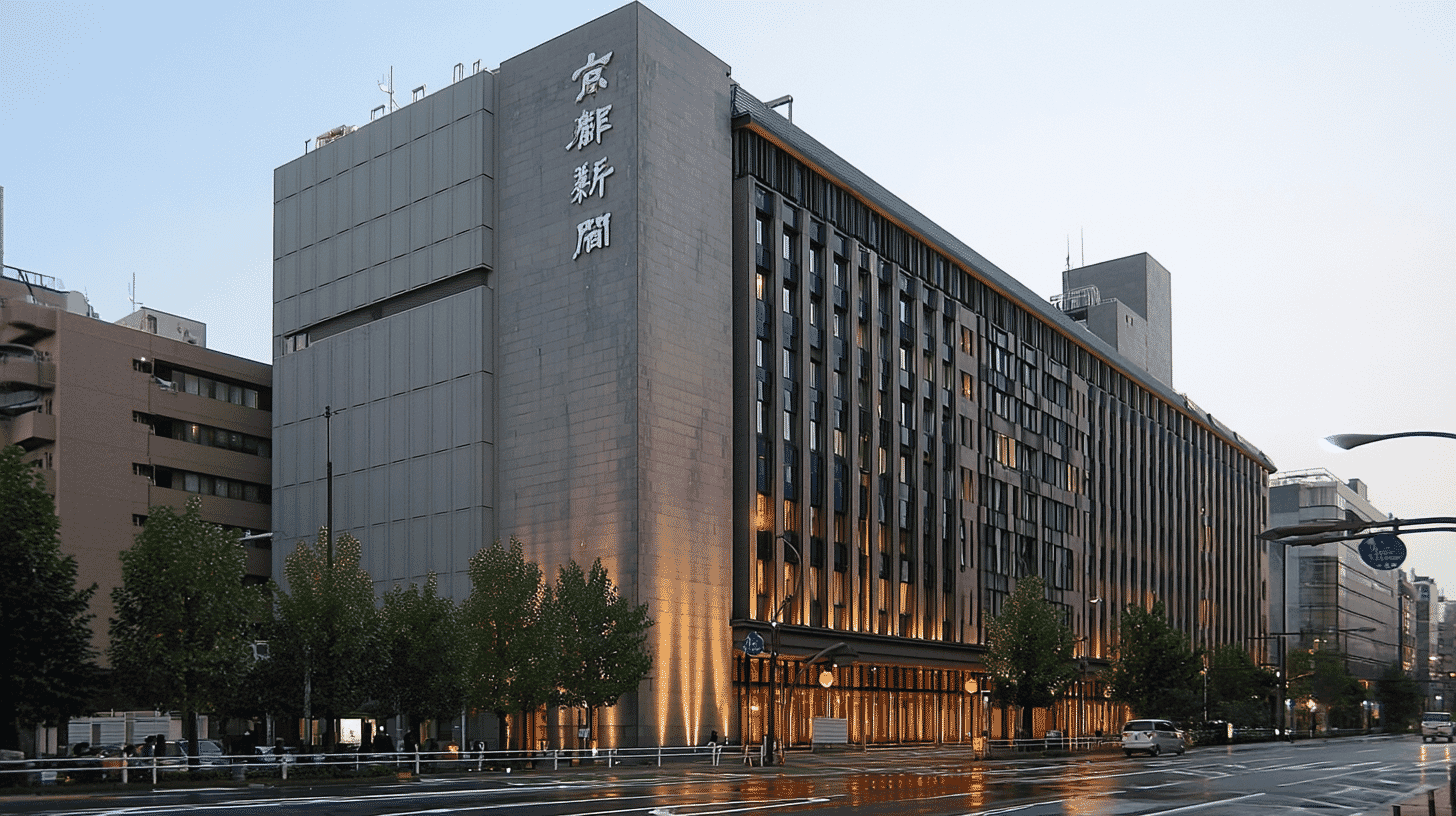
On June 15, 2026, three companies announced they would turn the former headquarters of the Kyoto Shimbun newspaper into a hotel: Japanese construction giant Taisei, the property firm Heiwa Real Estate, and Thailand's Minor International. It will open under the provisional name Avani Kyoto around fiscal 2029, run by Royal Minor Hotels, a joint venture between Minor and Japan's Royal Holdings (the company behind the Royal Host family-restaurant chain and the Richmond Hotel brand).
The headline for international readers is simple: this is the first Avani in Japan. Avani is one of Minor's lifestyle brands, and until now you had to leave the country to stay at one.
The site sits on Karasuma Street in central Kyoto, near the Ebisugawa Street intersection and a short walk from Marutamachi subway station. The Kyoto Imperial Palace and Nijo Castle, a UNESCO World Heritage site, are both within walking distance, central but away from the crush of the eastern temple districts. The plan calls for about 240 rooms.
From printing presses to a hotel restaurant

Photo: J o / Wikimedia Commons (CC BY-SA 3.0)
The Kyoto Shimbun is a regional paper that traces its founding back about 150 years. Its old headquarters stood on Karasuma Street for some six decades, long enough to become part of the streetscape. The paper has since moved on. The building had not.
Rather than knock everything down, the developers are splitting the project in two. The former north wing, eight floors above ground and two below, will be kept and renovated with its exterior and design carried over. The former south wing will be rebuilt from scratch as a new five-story structure. Together the two wings make up the roughly 240 rooms.
The detail worth lingering on is the old rotary-press hall, where the newspaper was physically printed. It is slated to become a restaurant and lobby lounge. The developers say these public spaces will be open to locals, not just guests, the idea being a lobby that doubles as a neighborhood fixture rather than a sealed-off hotel interior.
There's a practical reason adaptive reuse makes sense in Kyoto specifically. The city enforces some of the strictest building-height and landscape rules in Japan, which is part of why central Kyoto has no glass towers, and why a well-located older building is worth preserving rather than replacing.
So what is Avani, exactly?
If you've never stayed at one, here's the short version. Avani launched in 2011 under Bangkok-based Minor Hotels, one of Asia's largest hotel groups, with properties across roughly two dozen countries. The name is said to come from a Sanskrit word for "earth."
Where Minor's Anantara brand aims at full luxury, Avani sits a notch below and to the side. It's a lifestyle brand pitched at millennial and Gen-Z travelers who want design, decent value, and a sense of place without five-star formality. In practice that tends to mean a lobby-lounge-bar that works as a co-working spot by day and a social space at night, locally inspired food, a fitness corner, and rooms built around a good night's sleep rather than gilded excess. Stays earn points in the GHA Discovery loyalty program.
Avani has done this kind of building rescue before. Its Amsterdam property occupies a refurbished mid-century building in the museum district. Moving into a former newspaper HQ in Kyoto fits the brand's habit of taking over structures with a past.
Why every hotel brand wants into Kyoto right now
The timing isn't an accident. In 2025, Kyoto drew a record 62.8 million visitors, up 12% from the year before, and tourist spending topped ¥2 trillion (about $12.7 billion) for the first time, according to the city. Foreign visitors hit a record 12.7 million.
That demand has pushed hotel rates to levels Kyoto has never seen. By figures from the Kyoto City Tourism Association, the average room rate at major hotels reached ¥21,286 (about $133) in 2025, a record since the series began in 2014. Occupancy ran at 80.6%. Citywide, foreign guests accounted for 17.3 million room-nights against 12.5 million for Japanese, close to 60% of the total. The flip side is friction. Rising prices and crowding have pushed Japanese room-nights down for a third straight year, and "overtourism" is now a permanent topic in Kyoto.
Into that market, international operators keep piling in. Minor alone plans to open 21 properties in Japan by 2035 across three brands: Avani, Anantara, and Tivoli.
For travelers, the takeaway is simpler: the doors won't open until around fiscal 2029, so there's plenty of time to plan.
In a lot of cities, old landmark buildings get torn down and forgotten. Kyoto keeps choosing to give them a second life as places to stay and eat. Would you book a night in a former newspaper office, and what tends to happen to old landmark buildings where you live?







Global Discussion
0 comments