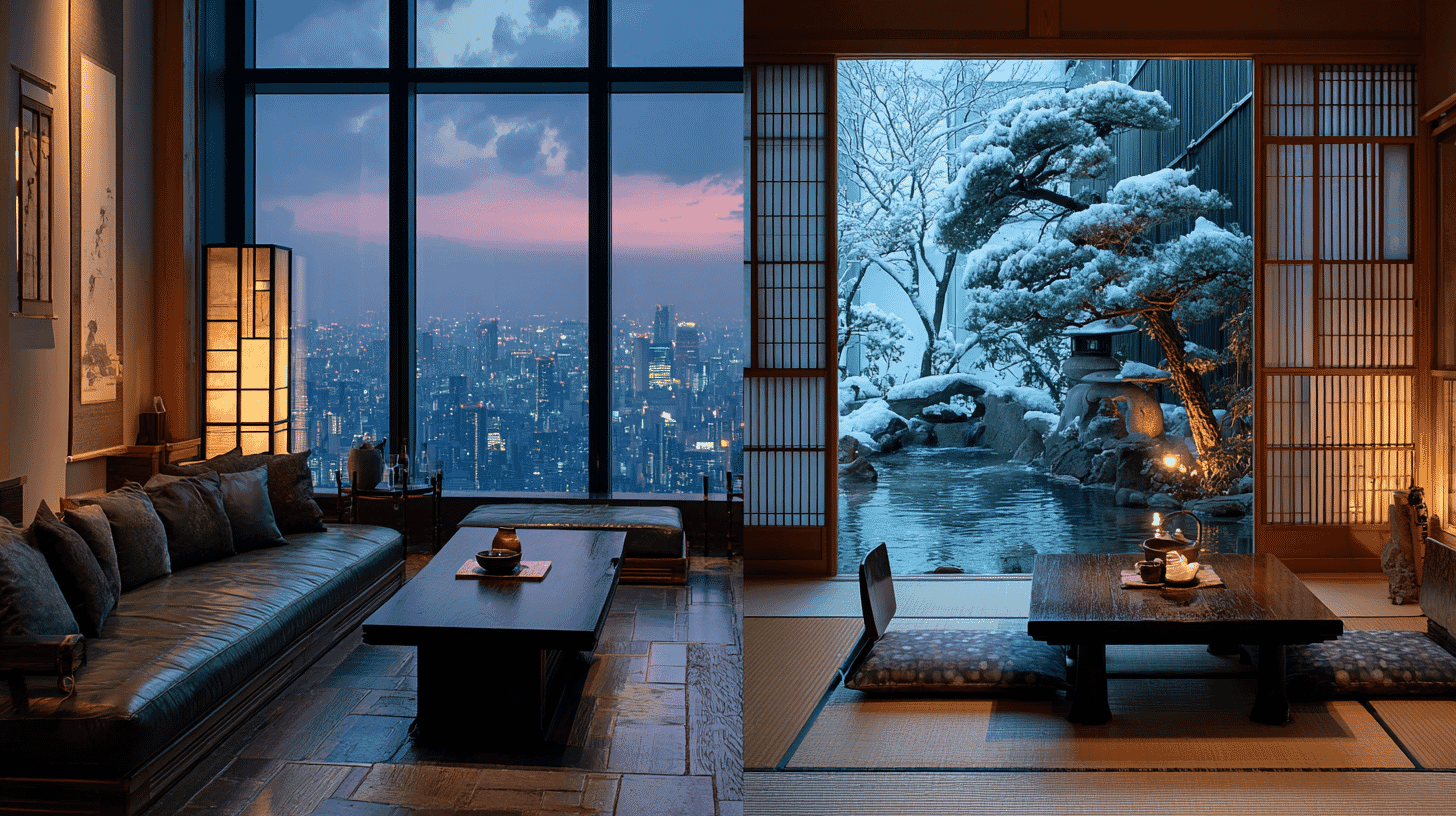
In 2025, Japan welcomed a record-breaking 42.68 million international visitors, and tourism spending hit an all-time high of 9.46 trillion yen (roughly $59 billion). And yet, despite Japan's celebrated hospitality (known as "omotenashi"), the world's ultra-wealthy largely skip the country's historic ryokan inns and traditional rural hot spring towns. They'd rather stay at a Marriott, an Aman, or a Bulgari. Financial analyst Katsuhide Takahashi argues that even world-class ski destinations like Shiga Kogen, Nozawa Onsen, and Zao get cut from their itinerary simply because "no familiar brand is listed on the booking site."
Why do the richest guests in the world bypass the very hotels Japan is most proud of?
Record Year, Missing Top Tier
Let's start with the numbers. According to the Japan National Tourism Organization (JNTO), 2025 saw 42.68 million international arrivals, up 15.8 percent year on year, and the first time Japan has crossed the 40-million mark. Tourism spending reached 9.46 trillion yen (approximately $59 billion at ¥159 to the dollar), up 16.4 percent.
Average spend per visitor was 229,000 yen (about $1,440). German travelers spent the most at 394,000 yen (about $2,480), followed by the UK and Australia at around 390,000 yen (about $2,450). Long-stay, high-spend Western travelers are clearly driving the shift from "quantity" to "quality."
On paper, Japan is winning. But as Takahashi argues in his new book, the country is missing the very top layer: the ultra-high-net-worth travelers who could anchor the entire shift.
The "Luxury of Doing Nothing"
Most ultra-wealthy travelers, Takahashi explains, already live lives of constant motion, juggling businesses, investments, and social calendars across multiple cities. That constant motion is their work. Their vacation, by contrast, is logging off.
They want to sit still. They want to be with family or trusted friends somewhere beautiful. Ideally, they don't leave the hotel at all. Which means the hotel needs everything inside it: restaurants, bars, spa, pool. If it's a ski trip, the rooms need to be ski-in/ski-out. If it's a beach trip, beachfront. Privacy must be guaranteed. Service must be predictable in exactly the same way it is at the same brand's property in Paris, Aspen, or Phuket.
This is why global luxury brands (Ritz-Carlton, Park Hyatt, Aman, Bulgari, Four Seasons) win this segment almost by default. The ultra-rich trust them because the experience is identical everywhere on earth.
The Loyalty Program Is the Moat
There's a second, often underestimated, factor: loyalty programs.
Marriott Bonvoy, World of Hyatt, Hilton Honors: these programs hand out free nights, room upgrades, and lounge access that function across every continent. A surprising number of wealthy travelers pick destinations because their preferred brand has a property there. "We only stay at Marriott" or "must be Hilton" is a real constraint.
In other words, the order of decisions has flipped. It's not "pick a destination, then pick a hotel." It's "pick the brand, then pick which of the brand's destinations to visit this year." Rural Japan, no matter how beautiful, simply never enters that shortlist.
Japan's "Big Three" Are Excellent, but That's Not the Point
Let's be clear: Japan's high end absolutely holds up on quality.
The Imperial Hotel, Hotel Okura Tokyo, and Hotel New Otani are Tokyo's "Big Three" classic hotels. The Kamikochi Imperial Hotel, Shima Kanko Hotel. Hakone's Gora Kadan. The Hoshinoya brand. The Fufu brand. The Michelin Guide's new "Keys" rating has recognized a growing number of Japanese properties.
On the global stage, Japan placed five hotels in the 2025 "World's 50 Best Hotels" ranking: Bulgari Tokyo (15th), Aman Tokyo (25th), Janu Tokyo (37th), Tokyo Edition Toranomon (45th), and HOTEL THE MITSUI KYOTO (46th). Park Hyatt Kyoto (59th) and Aman Kyoto (74th) also placed in the top 100.
The problem isn't quality. It's which hotels in rural Japan speak the global shared language of service, and the answer is very few.
Shiga Kogen, Nozawa, Zao: World-Class Snow, No Familiar Name
Takahashi uses ski resorts as his sharpest example.
Shiga Kogen, Nozawa Onsen, and Zao Onsen rival or even exceed Niseko and Hakuba in terrain, scale, and legendary powder quality. But when a foreign visitor searches Expedia or Booking.com, there's no familiar luxury brand to anchor the booking. Without that anchor, the destination quietly falls off the list.
Niseko didn't succeed because its snow was slightly better. It succeeded because Park Hyatt, Ritz-Carlton Reserve, and other globally recognized names all clustered there. Identical snow, identical hot springs, but without the brand ecosystem, the resort stays invisible to the world's wealthiest travelers.
When "Omotenashi" Works Against You
This is the part that's hard for Japanese readers to hear. Takahashi argues that "omotenashi" itself can backfire at this level.
Ultra-wealthy travelers, he says, aren't necessarily looking for uniquely Japanese service when they're off the clock. They want predictable, globally standardized service. Receiving constant, attentive, exquisitely calibrated cultural hospitality can actually feel like work during vacation.
Legendary global resorts (Aspen, Courchevel, Hawaii, the Maldives, the Côte d'Azur) have spent decades mastering the "luxury of doing nothing." If Japan's rural resorts want to compete for the same guests, Takahashi argues, they can't simply double down on traditional hospitality. They have to understand these travelers' lifestyles first, and design backward from there.
Why International Brands Cluster in Tokyo and Kyoto Only
Meanwhile, international luxury chains keep pouring into Tokyo and Kyoto.
Aman Tokyo (opened 2014, Otemachi), Aman Kyoto (2019, Takagamine), and Amanemu in Mie Prefecture form a three-property Aman circuit. Bulgari Hotel Tokyo (2023, Yaesu) has 98 rooms starting around $2,000 per night. Janu Tokyo, a new brand born from the Aman universe, opened in 2024 with 122 rooms from about $900 per night.
On March 22, 2026, Capella Kyoto opened in Higashiyama, designed by architect Kengo Kuma. Four Seasons operates in Tokyo, Kyoto, and Osaka, and even runs a "platform-to-platform" Shinkansen shuttle service connecting the three cities in just over two hours.
The urban concentration is obvious. What's missing is any equivalent rollout into the countryside.
Beyond the "Omotenashi" Debate
To be fair, a growing number of foreign travelers genuinely seek out ryokan and traditional townhouses precisely because they want the unique Japanese experience. For them, a ryokan stay is a once-in-a-lifetime memory and nothing else compares.
But those are usually once-a-decade visitors. The question is whether Japan is capturing repeat ultra-high-net-worth travelers, people who will pick Japan six times over the next ten years, and the answer, so far, is mostly no.
The structural fix isn't easy. Building a ryokan loyalty program to rival Marriott Bonvoy isn't realistic. The practical path, as properties like Hoshinoya have shown, is for high-end Japanese inns to partner with global brands, or to preserve the ryokan form while upgrading the global booking, payment, and language infrastructure behind the scenes.
What About the Rest of Us?
Honestly, I don't really understand the ultra-rich mindset. The idea of paying $2,000 a night for the privilege of "doing nothing" is probably something I'll never get, and I'd likely have to become ultra-wealthy myself to truly grasp it.
But I think that's fine.
Most of us find joy in something else entirely: being greeted by a stranger at a small hot spring inn who says "the bath's free right now"; stumbling into a rural family-run diner and discovering the best simmered fish of your life. The unpredictability is the point. The luxury of brand-standardized sameness and the magic of serendipitous discovery are both called "travel," but they're completely different experiences.
Sure, it matters strategically for Japan to attract ultra-wealthy visitors to its countryside. But as an individual traveler, if you know which kind of trip you love, that's probably enough.
So what about you? Where do the wealthiest travelers from your country stay when they visit Japan? And more importantly: where do you find the kind of experience that makes a trip worth remembering?
References
- https://news.yahoo.co.jp/articles/9c0b7779986949e8ca3c23db6f082e0b4c9c703e
- https://yamatogokoro.jp/inbound_data/59128/
- https://www.travelvoice.jp/20260121-159116
- https://yamatogokoro.jp/inbound_data/59160/
- https://japanluxurylifestyle.com/en/2025/12/02/japan-claims-5-of-worlds-50-best-hotels-2025/
- https://www.aman.com/hotels/aman-tokyo
- https://travelsort.com/top-luxury-hotel-openings-2026/








Global Discussion
14 comments