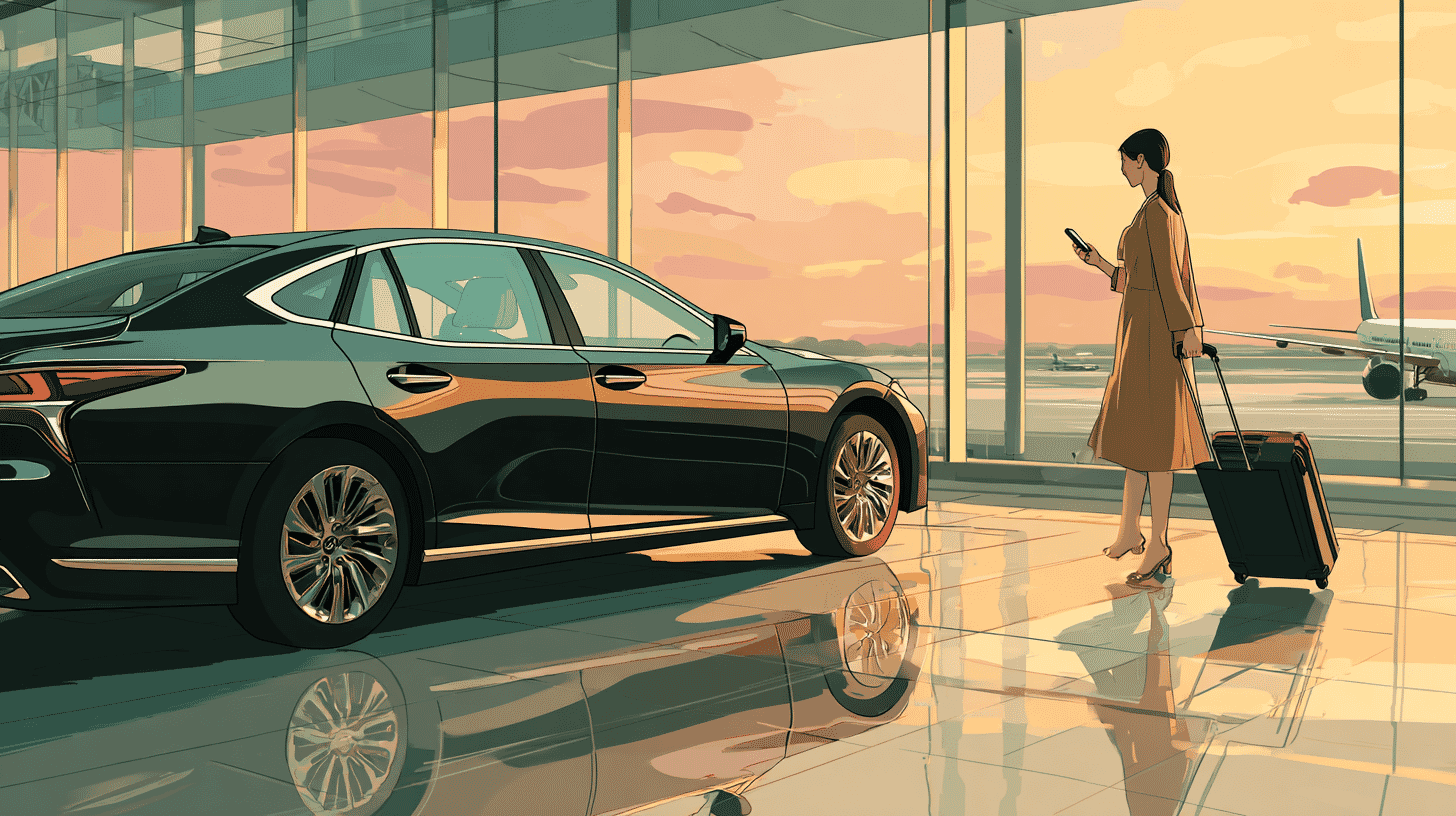
"My flight was delayed, but my taxi showed up on time anyway", that classic airport pickup nightmare? Uber just launched a serious fix for it in Japan.
On April 27, 2026, Uber Japan rolled out flight-linked pre-booking at six major airports: Haneda, Itami, Chubu, New Chitose, Naha, and Kobe. The system automatically detects flight delays and early arrivals, and adjusts your pickup time accordingly. With Japan welcoming over 36 million inbound tourists in 2025 (and counting), this new feature could dramatically simplify the airport-to-city journey for foreign travelers and locals alike.
But there's a surprising omission: Narita, Japan's busiest international gateway for foreigners, isn't included.
What Just Changed
Until now, Uber's pre-booking required you to pick a specific pickup time yourself. But flights get delayed. Or they arrive 20 minutes early thanks to tailwinds. If your driver showed up at the booked time but you were still at baggage claim, that meant either expensive waiting fees or a frustrating cancellation.
The new feature lets you input your flight details, airline, flight number, and intended pickup time, and Uber's system automatically pulls real-time arrival/departure data. Whether your flight is late or early, the system optimizes the pickup timing for you.
The service covers Uber Taxi at all six airports, plus Uber Premium (chauffeured premium vehicles) at Haneda only. New Chitose actually got it slightly earlier in early April 2026, with the other five airports following on April 27.
The Six Airports, and Their Quirks
| Airport | Code | Routes | Notes |
|---|---|---|---|
| Haneda | HND | Domestic + International | Japan's busiest. Uber Premium also available |
| Itami | ITM | Domestic only | Osaka's local airport |
| Chubu Centrair | NGO | Domestic + International | Nagoya region's gateway |
| New Chitose | CTS | Domestic + International | Hokkaido's main hub |
| Naha | OKA | Domestic + International | Okinawa's gateway |
| Kobe | UKB | Mostly domestic (some intl) | Kansai's growing third option |
Why Now
Behind this rollout is an explosive surge in airport demand. According to the Japan National Tourism Organization (JNTO), 3.62 million foreign tourists arrived in March 2026 alone, pushing the year-to-date total past 10 million by the end of Q1. 2025 closed at around 36.87 million for the full year, and 2026 is on pace to exceed 40 million.
Uber Japan has also stated that pre-bookings on its existing reservation feature were heavily concentrated around airport rides. Since launching reservations in Tokyo and Osaka in April 2025, usage has grown roughly thirteenfold.
The pain points are real: hauling oversized luggage through unfamiliar terminals, queuing at packed taxi stands during flight delays, late-night arrivals when ride-hailing apps can't find available cars. With inbound tourism rebounding hard, addressing these has become urgent.
The Curious Absence of Narita
Here's the eyebrow-raiser: Narita International Airport (NRT), the gateway most foreign tourists fly into, isn't on the list.
Narita handles a huge share of Tokyo's international arrivals, particularly for low-cost carriers from Asia. For foreign visitors, this is a notable gap. Uber's general airport page does list flight-tracking as available at Narita globally, but the specific six-airport pre-booking promotion launched in April doesn't include it.
The likely reasons involve partnerships with local taxi operators around Narita and airport-specific operating regulations (Japanese taxis are restricted to designated service zones). Similarly puzzling: Itami and Kobe are included, but Kansai International Airport (KIX), Osaka's main international gateway, isn't. KIX will probably join later, but for now, the lineup feels oddly tilted toward domestic-leaning airports.
Japan's Uber Is a Different Beast
If you're picturing Uber the way it works in San Francisco or Bangkok, hit pause. Japan's Uber is structurally different from almost everywhere else.
Ridesharing, regular folks driving their own cars to ferry passengers, is largely illegal in Japan. So Uber operates as a partnership platform with about 1,000 licensed taxi companies nationwide. Every single Uber driver in Japan is a professional taxi driver holding a Class-2 commercial license.
This has consequences. Pricing follows the standard taxi meter rates set by partner companies. Surge pricing, the bane of Uber riders in many cities, basically doesn't exist. Japanese Uber is "predictable and stable" rather than "cheap and disruptive." It won't undercut local taxis on price, but it also won't gouge you during rain or rush hour.
Worth knowing: in Japan's ride-hailing app market, the local app GO holds over 80% market share. Uber sits in the second tier, but its share is rising fast, driven primarily by inbound tourists who already have the app from back home.
A 700 Yen Discount, If You Hurry
To celebrate the launch, Uber Japan is running a limited-time promotion. Enter the promo code JPRAPURADO26 in the app, complete a pre-booking for Uber Taxi (or Uber Premium at Haneda) departing from or arriving at one of the six airports, and you'll get 700 yen (about $4.40) off your fare. The offer runs through July 31, 2026.
Note that the standard reservation fee is also 700 yen flat, plus a pickup fee (varies by taxi company, typically 300–500 yen) and an app handling fee (Tokyo's 23 wards only).
What This Looks Like for a Foreign Traveler
Imagine the new flow:
- Before departure: Open Uber on your home phone, plug in your flight number and intended pickup time, confirm the booking. No Japanese phone number needed.
- In flight: Your flight is 30 minutes late? Uber's system silently adjusts your pickup time.
- After landing: Clear immigration and baggage. Open the app, your driver is already waiting at the designated pickup spot.
- In the car: Your driver is a fully licensed professional. The fare is metered, with an estimate shown upfront in the app.
- Payment: Auto-charged to the credit card linked to your Uber account. No tipping expected (Japan doesn't tip).
For travelers who don't speak Japanese, and many Japanese taxi drivers don't speak much English, this is genuinely game-changing. The Uber app supports about 50 languages with auto-translated chat between rider and driver, basically eliminating the "explaining your destination" headache.
Not All Sunshine
A few caveats based on existing user feedback for Uber Taxi in Japan:
Fee transparency: With reservation fee + pickup fee + app handling fee, you can be looking at 1,300 yen ($8.20) before the meter even starts in Tokyo. Local taxis flagged on the street don't carry these add-ons.
Cancellation issues: Some users report drivers being reassigned at the last minute, or no driver being matched at all for advance bookings. The system isn't bulletproof.
Peak-time supply crunch: During Golden Week (Japan's late April–early May holiday cluster) or weekend nights in central Tokyo, demand can outstrip supply badly.
Regional thinness: Outside major metros, the local app GO or simply calling a local taxi company often works better than Uber.
Ripple Effects on Japan's Taxi Industry
This isn't just a feature launch, it's another step in restructuring Japanese transport. The average Japanese taxi driver is in their late 60s, and the industry faces a severe labor shortage. Apps like Uber and GO are essential to the industry's survival.
Uber has already partnered with the Tokyo Personal Taxi Cooperative Association, opening a new revenue stream for individual taxi operators. And in select rural municipalities, Kyotango (Kyoto), Kaga (Ishikawa), Nozawa Onsen (Nagano), and Beppu (Oita), Uber supports a "Japan-style ridesharing" program where ordinary drivers can use private vehicles, supervised by licensed taxi companies, to fill rural transit gaps.
Global Comparison
| Region | Ridesharing Status | Major Apps | Airport Norm |
|---|---|---|---|
| US | Fully legal | Uber, Lyft | Uber/Lyft dominant |
| EU | Varies by country | Bolt, FreeNow | Apps + rail |
| SE Asia | Mostly legal | Grab | Grab dominant |
| China | Didi monopoly | Didi | Didi + bullet train |
| Japan | Largely banned (limited zones legalized) | GO (#1), Uber, S.RIDE, DiDi | Rail + taxi (apps growing) |
Japan stands out globally for its strict ridesharing rules. The trade-off: drivers are uniformly professional, cars are clean, no horror stories, but you pay full taxi rates.
Looking Ahead
Uber Japan aims to extend Uber Taxi coverage to all 47 prefectures by the end of 2025. The airport pre-booking program will likely expand too, Kansai International (KIX), Fukuoka (FUK), and yes, eventually Narita (NRT) seem like logical next adds.
There's also a bigger play: in March 2026, Uber announced a three-way partnership with UK AI startup Wayve and Nissan to launch robotaxi trials in Tokyo in late 2026. Pair flight-linked pre-booking with self-driving cars, and the day when an autonomous vehicle picks you up from Haneda based on your flight data isn't science fiction anymore.
Bottom Line
This launch isn't just an app update. It sits at the intersection of inbound tourism, taxi industry labor shortages, and Japan's ongoing ridesharing debate, a strategic move by a global player navigating a uniquely Japanese transport landscape.
For foreign travelers, the friction-heavy first hour after landing in Japan just got a lot smoother. For Japanese residents, business trips and family visits got more convenient too.
What's airport pickup like where you live? Do you have apps that automatically adjust to flight delays? Or are you still calling a taxi company by phone or queuing at the airport stand? Tell us in the comments, we're curious how this stacks up against your home country.
References
- https://www.travelvoice.jp/20260428-159709
- https://prtimes.jp/main/html/rd/p/000000101.000130465.html
- https://www.appbank.net/2026/04/28/iphone-application/2983655.php
- https://news.mynavi.jp/article/20260428-4396784/
- https://sky-budget.com/2026/04/27/uber-japan-news/
- https://www.uber.com/ja-JP/newsroom/taxi-reserve-2025/








Global Discussion
14 comments