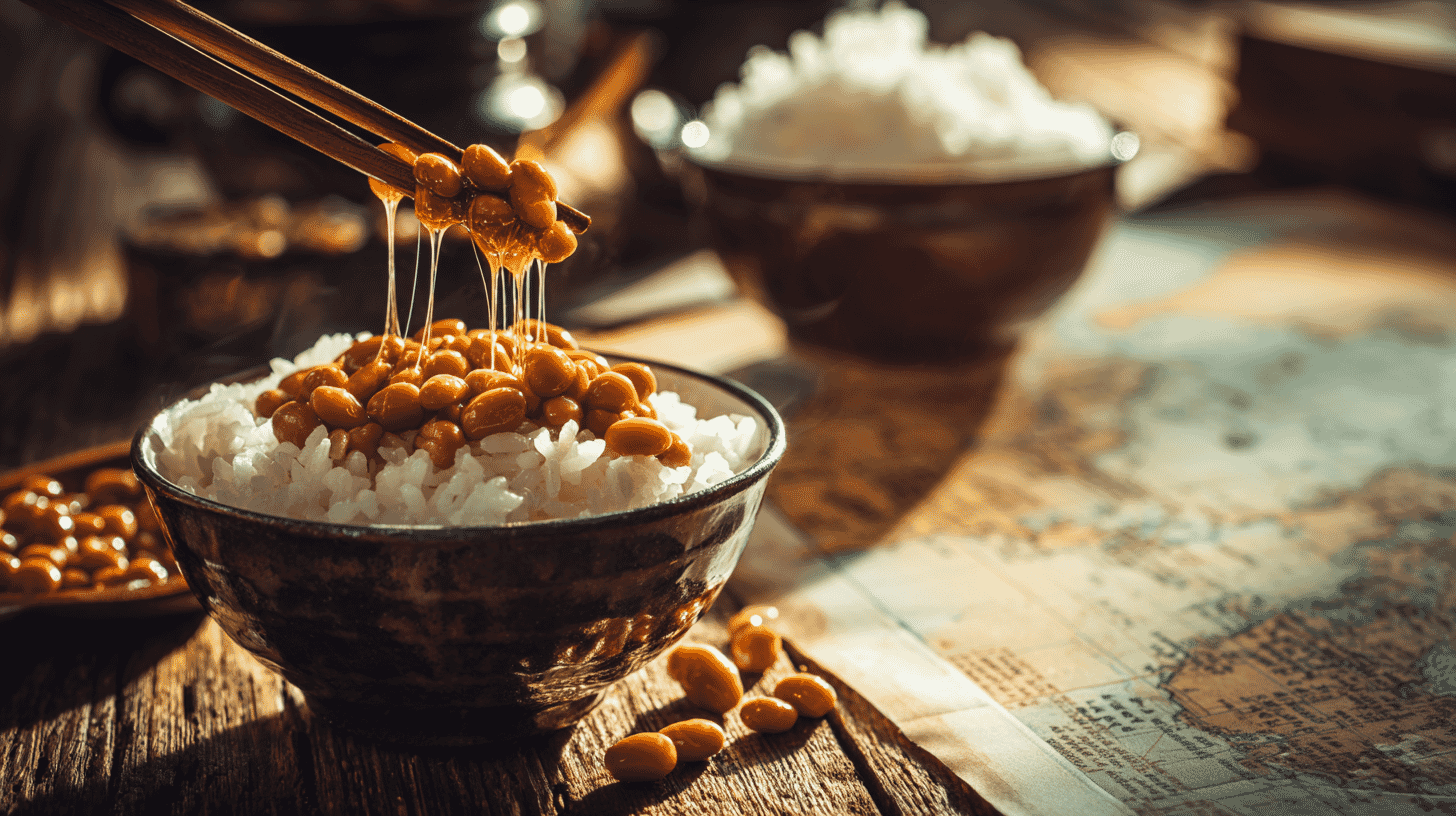
Japan's stickiest food is conquering the world, and it's not sushi. Natto exports hit an all-time high in 2025: 5,248 tons, up 44% from the previous year, worth roughly $21 million. But here's the catch: the iconic white styrofoam cups that Japanese people eat natto from every morning are banned or restricted in several countries for environmental reasons. Here's the full story behind natto's global boom, its packaging problem, and how the world is eating it.
Natto Exports Triple in Eight Years
According to Japan's Ministry of Finance trade statistics, natto exports reached 5,248 tons in 2025, roughly triple the 1,752 tons recorded in 2017 when tracking began. Export value grew from about $6.2 million to $21 million over the same period.
China is the largest destination, accounting for nearly 30% of all exports, followed by the United States, Thailand, Hong Kong, Taiwan, and South Korea. Together, China and the U.S. make up roughly half of all natto exports.
Why Is Natto Suddenly Popular Overseas?
Three key factors are driving the boom:
Post-pandemic health consciousness. After COVID-19, consumers worldwide became far more interested in immunity-boosting foods. Nattokinase, an enzyme found in natto believed to help dissolve blood clots, has gained widespread recognition overseas, even as a standalone supplement.
The global fermented food trend. Alongside kimchi, kombucha, and kefir, natto has ridden the wave of gut-health awareness. It's packed with probiotics, vitamin K2, and plant-based protein, making it a darling of health-conscious eaters.
UNESCO recognition of washoku. When traditional Japanese cuisine was designated a UNESCO Intangible Cultural Heritage in 2013, it sparked broader curiosity about foods beyond sushi and ramen. Many tourists try natto at hotel breakfast buffets during their Japan trips, then keep eating it back home.
On social media, hashtags like #Natto and #NattoChallenge show people around the world trying, and often loving, the famously sticky, stringy beans.
The Styrofoam Problem: Why Japan's Packaging Doesn't Work Abroad
Despite booming demand, natto faces a significant export barrier: its packaging.
In Japan, nearly all natto comes in PSP (polystyrene paper) containers, a design perfected about 50 years ago. These cups weigh just 2 grams, breathe well, handle both heat and freezing, and cost only about $0.016 each. For the Japanese market, they're essentially perfect.
But internationally, PSP is considered environmentally unfriendly. In the U.S. and Europe, where waste management relies on landfills and recycling rather than Japan's advanced incineration technology, PSP containers are problematic: they don't decompose in landfills, and natto residue makes them nearly impossible to clean for recycling.
Canada and Australia have outright banned the import of natto in PSP containers. The EU's packaging regulations also pose potential barriers.
In Japan, high-temperature incineration cleanly burns PSP into just water, CO2, and heat. But this approach doesn't translate to countries with different waste infrastructure.
Zenyoki, a Japanese trading company specializing in natto packaging materials, warns: "PSP is not the global standard. If Japan rests on its laurels, it could be dangerous."
Korea's Pulmuone Enters the Game
Adding competitive pressure, South Korea's food giant Pulmuone has begun manufacturing natto independently, developing everything from the container to the natto starter culture (Bacillus subtilis) in-house. The company is targeting the Korean domestic market and Southeast Asia.
While Japanese makers struggle with the packaging transition, overseas competitors may capture market share with globally compliant products. Developing natto products designed specifically for export, with appropriate packaging and localized flavors, is becoming urgent.
How the World Eats Natto
In Japan, the standard way to eat natto is over steaming white rice with soy sauce and mustard. But overseas, creative adaptations are everywhere:
- Western countries: On toast, avocado-toast style
- United States: Plain, without sauce or mustard, or mixed into salads
- New Zealand: Drizzled with maple syrup
- China: Paired with century eggs at specialty natto restaurants
- Thailand: Combined with avocado
- Hong Kong: Mixed with mascarpone cheese on crackers
- France: Homemade using yogurt makers, seasoned with cilantro and garlic
Natto bacteria enter a dormant state when frozen, so quality is virtually unchanged. Overseas, natto is typically shipped and sold frozen.
Natto 101: A Beginner's Guide
Never tried natto? Here's how to eat it the Japanese way:
- Open the pack and slowly peel off the plastic film (the sticky strings will stretch, don't panic)
- Add the included soy sauce packet and mustard
- Stir vigorously with chopsticks; the more you mix, the better it's said to taste
- Place on top of freshly cooked rice and enjoy
Once you're comfortable, try adding toppings like chopped green onions, raw egg yolk, kimchi, or nori seaweed.
What's Next for Natto?
The domestic market remains strong, with annual production at around 337,000 tons and a market size of about $1.75 billion. Some manufacturers, like Hokkaido Hamanasu Foods, have built new factories to meet surging overseas demand, and their international sales grew roughly 60 times over eight years.
The industry's future hinges on developing export-ready products: environmentally compliant packaging, flavors adapted to local tastes, and reliable cold-chain logistics. Whether natto becomes a true global superfood or loses ground to overseas competitors depends on how quickly Japan adapts.
Can you buy natto in your country? Have you ever tried it? If so, how do you eat it, the traditional Japanese way, or with your own twist? We'd love to hear about it!








Global Discussion
14 comments