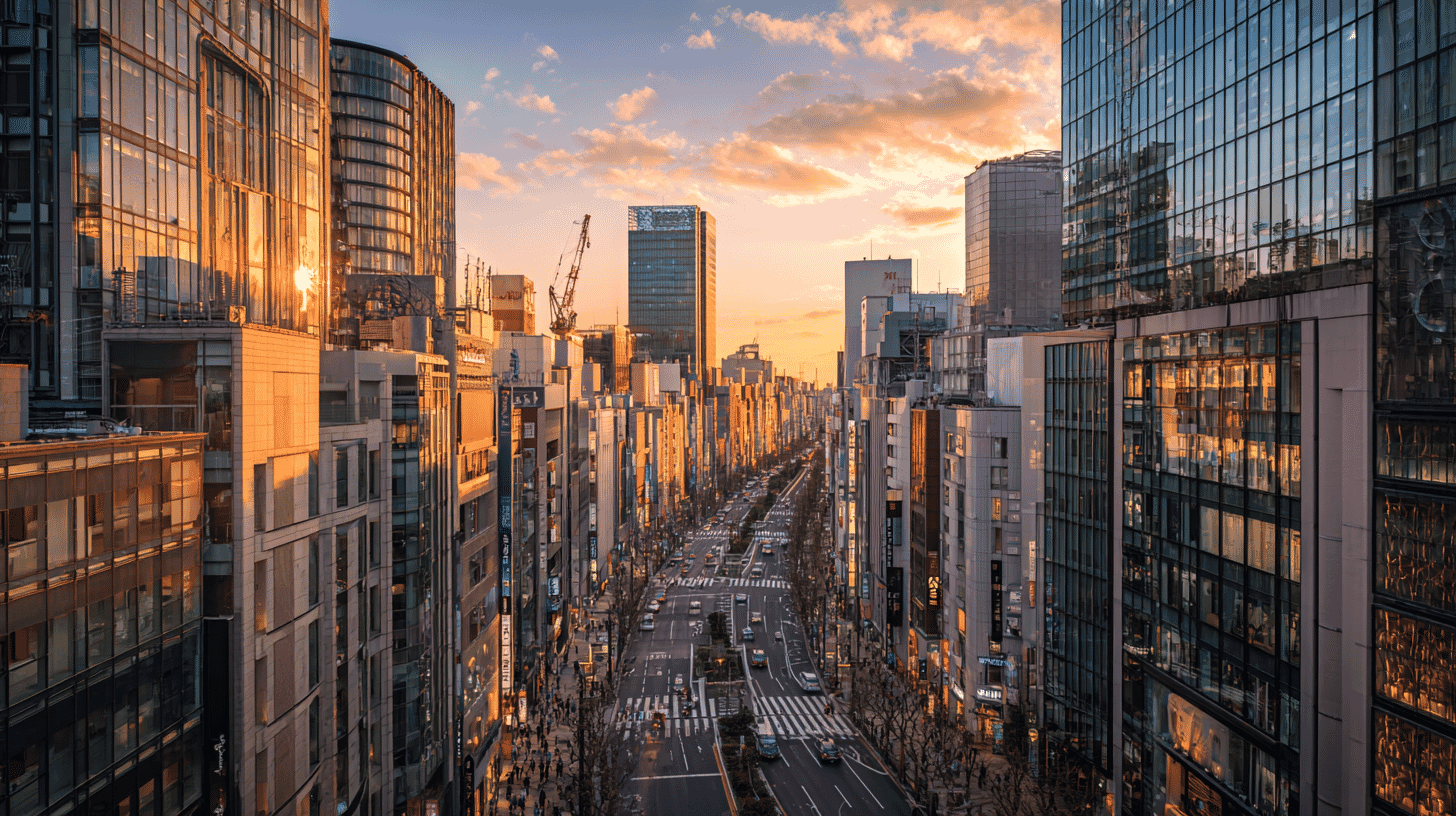
Japan's published land prices rose 2.8%, the biggest gain since the bubble burst. After the stagnation that earned the name "the lost three decades," the property market is moving. Tokyo took the top spot nationally for residential price growth for the first time in 18 years, and a small town in Hokkaido saw land jump 44% on the back of a semiconductor plant. The world's money is arriving on Japanese soil.
Five Straight Years of Gains, Biggest Since the Bubble
On March 17, 2026, Japan's Ministry of Land, Infrastructure, Transport and Tourism released its annual official land price survey (known as "koji chika", the government's benchmark valuation of land per square meter). The nationwide average across all land categories rose 2.8% year-on-year, marking the fifth consecutive annual increase. It is the largest gain recorded since 1992, in other words since the bubble burst. The scale is a different order of magnitude from the bubble itself, though: land prices rose 11.3% in 1991. The right way to read 2.8% is as a post-bubble record, not as a return to bubble-era heat.
Breaking it down by category: residential land rose 2.1% nationwide (unchanged from last year), commercial land jumped 4.3% (up from 3.9%), and industrial land climbed 4.9% (up from 4.8%). Of approximately 25,500 survey points nationwide, 68.3% showed increases, 12.3% were flat, and 19.4% declined.
Tokyo Tops Residential Growth for the First Time in 18 Years
One of the headline stories is Tokyo Prefecture's residential land prices surging 6.5%, propelling it to the top spot nationally for the first time since 2008. Tokyo's overall all-category average jumped 8.4% year-on-year, with commercial land soaring 12.2%.
Six of the top 10 nationally for residential land price growth were located in central Tokyo, a striking illustration of the capital's magnetic pull. The most expensive residential land point, for the ninth consecutive year, was in Akasaka 1-chome, Minato Ward: ¥7.11 million per square meter (approximately $44,700), up 20.5% from last year.
Reuters' analysis highlights a phenomenon called "han-jū han-tōshi" (半住半投資), literally "half living, half investing." Buyers are purchasing homes to live in while simultaneously banking on future appreciation. High-earning dual-income couples, known as "power couples," are taking out joint mortgages to buy premium condominiums, treating homeownership as both a lifestyle choice and an investment strategy.
A Single Square Meter in Ginza: $422,000
The most expensive commercial land in Japan, for the 20th consecutive year, is the Yamano Music Ginza store in Chuo Ward, valued at ¥67.1 million per square meter (about $422,000). That's a 10.9% increase, accelerating from 8.6% the previous year.
The greater Tokyo area rose 5.7% overall, while Osaka climbed 3.8%. Residential land in the city of Osaka rose 6.5%, matching Tokyo, as inbound demand that took hold around the 2025 Osaka-Kansai Expo settled in alongside redevelopment.
The biggest structural shift in this year's figures, though, happened outside the big cities. Japan's four major regional cities (Sapporo, Sendai, Hiroshima, Fukuoka), which had outgrown the three metropolitan areas every year since the pandemic, slowed enough that their all-category average fell below the metros for the first time in 14 years. They are still up, for a 13th straight year, but soaring construction costs have forced redevelopment plans to be revised or shelved: delays around Sapporo Station and to the Hokkaido Shinkansen extension, the cancellation of the "sky city" plan in front of Hakata Station in Fukuoka. The Nagoya area also narrowed its gain. Demand is re-concentrating in Tokyo and Osaka.
Semiconductor Factories Are Transforming Rural Japan
The standout story in regional land prices is the impact of semiconductor manufacturing. The top commercial land price increase in all of Japan was in Chitose, Hokkaido, a staggering 44.1% surge. Rapidus, a next-generation semiconductor manufacturer, is building a cutting-edge chip factory there, and the effects on this once-quiet city have been dramatic.
Already, 45 semiconductor-related companies have set up operations in Chitose, with 94 more considering the move. The city estimates that over the next 15 years, the semiconductor industry will bring approximately 7,800 new workers and generate an economic impact of ¥142.3 billion (roughly $900 million). Near JR Chitose Station, hotels and apartment buildings are going up rapidly, and some commercial land near the station has jumped to five times its pre-Rapidus price.
A similar transformation is underway near TSMC's factory in Kumamoto Prefecture, demonstrating how semiconductor plants are functioning as powerful engines of regional revitalization.
Record Tourism Is Reshaping Land Values
Japan welcomed a record-breaking 42.7 million international visitors in 2025, who spent a combined ¥9.5 trillion (about $59.7 billion). This unprecedented inbound tourism demand is reshaping land prices in popular destinations.
In Taito Ward's Asakusa neighborhood, a major tourist draw, commercial land prices rose over 20%. In the resort village of Hakuba, Nagano Prefecture, demand from wealthy buyers for vacation homes pushed residential land up 33%, the highest rate nationally. The Furano ski area in Hokkaido also saw 30% growth, driven by both domestic and international luxury buyers.
Record-Breaking Investment Flows
According to CBRE, a global real estate services firm, investment transactions of ¥1 billion or more totaled ¥6.5 trillion (about $40.9 billion) in 2025, up 31% from the previous year and shattering the previous record of ¥5.4 trillion set during the "mini-bubble" of 2007. Roughly 60% of this investment was concentrated in the Tokyo metropolitan area.
Foreign investor interest in Japanese real estate is at an all-time high. In just the first half of 2025, overseas investors acquired over ¥1.14 trillion in Japanese property, setting a new record. The headline deal was Blackstone's acquisition of Tokyo Garden Terrace Kioicho for approximately ¥400 billion ($2.5 billion), one of the largest-ever foreign real estate purchases in Japan.
International investors now account for about 27% of all property transactions nationwide, up from 21% five years ago. In central Tokyo, 20–40% of new condominium purchases are made by foreign buyers. The weak yen, hovering around ¥159 to the dollar, makes Japanese property appear attractively priced to overseas buyers.
Is This Another Bubble? Experts Weigh In
Talk of "another bubble" is inevitable, but most analysts emphasize fundamental differences between today's market and the late 1980s mania.
The original bubble (roughly 1985–1991) was driven by speculative capital and saw land prices rise at rates far exceeding inflation. Today's growth, by contrast, is supported by real demand. Office vacancy rates in Tokyo's five central wards (Chiyoda, Chuo, Minato, Shinjuku, Shibuya) sit around 2%, well below the 5% equilibrium threshold, and office rents rose 7.3% year-on-year in February 2026.
With Japan's consumer price index running around 3%, a 2.8% national land price increase is broadly in line with inflation, a far cry from the bubble era's double-digit spikes that wildly outpaced price levels.
That said, the Bank of Japan raised its policy rate to 0.75% in December 2025, and rising mortgage rates could eventually cool demand. The Ministry of Land notes that "no clear impact on land prices has been observed so far," but the trajectory bears watching.
How Japan Compares to Global Markets
Tokyo remains relatively affordable compared to the world's most expensive cities. The office yield gap (the difference between investment returns and long-term interest rates) in central Tokyo is 1.9%, higher than New York (1.7%) and London (1.2%), meaning investors get better returns relative to borrowing costs.
For residential property, Manhattan's average is roughly $15,000–$20,000 per square meter, central London runs $12,000–$18,000, and Singapore's core CBD hits $25,000–$30,000. While Tokyo's most expensive residential point reaches about $44,700/sqm, average new condominiums in central Tokyo run roughly $7,000–$12,000/sqm, still considerably below other global financial capitals.
Japan also has few restrictions on foreign property ownership, and national average rental yields run about 4.2%, with Osaka and Fukuoka offering even higher returns than central Tokyo.
Risks for International Investors
Despite the appeal, investing in Japanese real estate carries real risks. The weak yen that makes entry attractive can also erode returns if it reverses. The BOJ's gradual rate hikes are increasing borrowing costs, and further tightening could cool the market.
Earthquake risk is a Japan-specific concern. Areas hit by the 2024 Noto Peninsula earthquake continue to see declining land values, Wajima City in Ishikawa Prefecture recorded a 6.3% drop in both residential and commercial land. Construction costs have risen 25–29% since early 2021, squeezing margins on new developments.
Regulatory uncertainty is also emerging. The government is reviewing foreign ownership trends and may tighten oversight, particularly for land near security-sensitive facilities. Any investor should stay current on regulatory developments.
The "Three-Layer" Market
Reuters characterizes Japan's emerging real estate landscape as a "three-layer market." The top layer consists of ultra-premium central Tokyo neighborhoods seeing 20%+ gains driven by wealth and foreign capital. The middle layer includes suburban areas with solid demand from working families, growing at moderate rates. The bottom layer covers depopulating rural regions where values stagnate or decline.
Residential prices rose in 31 prefectures (up from 30), and commercial land increased in 38 prefectures (up from 34). The wave of growth is spreading, Toyama Prefecture shifted from flat to positive, and four more prefectures turned positive for commercial land. But areas with shrinking populations remain stuck: the steepest residential decline was in Honbetsu, Hokkaido (-6.3%), and the worst commercial drop was in earthquake-affected Wajima City (-6.3%).
The Bottom Line
Japan's 2026 land price data tells the story of a real estate market that has decisively emerged from its "Lost 30 Years." A convergence of investment capital, record tourism, semiconductor industry expansion, and the weak yen is driving prices higher, not just in Tokyo, but increasingly across regional Japan.
Yet the data also highlights growing inequality between urban and rural, between wealthy investors and average homebuyers struggling with affordability, and between areas benefiting from global capital flows and those left behind. Whether Japan can navigate this boom while avoiding the mistakes of its bubble past is a question with global implications.
How are property prices changing where you live? Is homeownership becoming harder for younger generations in your country? We'd love to hear your perspective.
References
- https://www.nikkei.com/article/DGXZQOUA111YJ0R10C26A3000000/
- https://news.yahoo.co.jp/articles/fecad4399ce995795acc916185cedf48d6901779
- https://www.nippon.com/ja/news/yjj2026031700830/
- https://www.cbre.co.jp/en/insights/reports/japan-market-outlook-2026
- https://propertyaccess.com/articles/japan-real-estate-outlook-2026-market-trends-and-investment-forecast





Global Discussion
15 comments