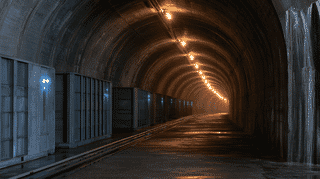
Mitsui Fudosan and partners plan a data center of up to 20 MW in a disused Kobe tunnel that stays 15 to 20°C. What reuse saves, a 2007 precedent, and the open questions on water, power and heat.
A guide dog user in Japan was turned down by more than 100 rentals. The law bans refusals in public housing but only asks private landlords to try. How the US and UK handle the same case.
Tokyo's resident registry shows the city added 75,018 people during 2025, and 62,478 of them were foreign residents: 83 percent of the growth. Count only Japanese residents and Tokyo is down 3,238 over five years.
On July 24, 2026, Japan's chief cabinet secretary told ministers to speed up work on rules for foreign land purchases. Summer was already three-quarters gone. Meanwhile 20 to 40 percent of new apartments in three central Tokyo wards go to foreign buyers, the developers' association gave 40 million yen to the ruling party's funding body, and Japan holds no WTO reservation on land.
Japan's 2025 property investment topped the 2007 record, with foreign buyers at their largest presence yet. We break down Tokyo's 0.9% office vacancy, 7.5% rent growth, and why the Japan-West interest rate gap is pulling global capital in.
Taiwanese buyers now account for 62% of all foreign home purchases in Tokyo's 23 wards, according to data released by Japan's government for the first time. Behind this surge: a historic yen, a Taipei property bubble exceeding Tokyo, TSMC's Kumamoto pipeline, geopolitical hedging, and Taiwan's AI boom—all converging at once.
Japan had FIVE earthquakes of intensity 5 or higher in April 2026, including a magnitude 7.7 offshore Sanriku quake. Casualties: zero deaths, zero collapses. How? The 1981 building code, a 21-story 'fortress' built to survive a magnitude 8 hit, and one counterintuitive rule: don't run outside. A humorous look at the world's most earthquake-hardened country.
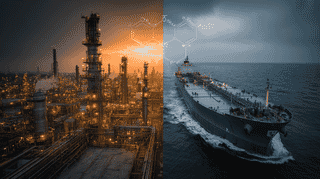
Japan's gasoline has hit record highs, dialysis tubing is running out, and bathtubs can't be shipped. With 95% of crude oil coming from the Middle East, pivoting to the world's largest oil producer, America, seems like a perfect Win-Win. But refinery design, tanker size, the Panama Canal bottleneck, and an ironic naphtha yield problem all stand in the way. Here's why the obvious solution isn't simple.
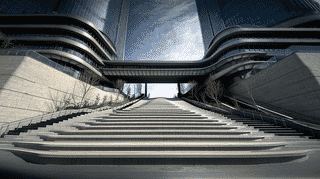
Two people have been injured on the 'grand staircase' at Tokyo's Takanawa Gateway City, which opened in March 2026. The station building next door, designed by world-renowned architect Kengo Kuma, is part of a broader pattern where Kuma's wood-heavy creations rot, mold, and crack within years. Behind the problem: Japan's domestic timber policy, elite university networks, and a philosophy that treats buildings as photographic objects.
The Hormuz Strait blockade has cut off Japan's naphtha supply, forcing TOTO to halt bathtub orders and LIXIL to declare delivery dates unknown. Insulation up 40%, paint up 80%, pipes up 20%; housing materials are skyrocketing across the board. We analyze Japan's structural vulnerability of depending on the Middle East for 90% of its crude oil, with comparative data from other countries.
Japan's real estate investment hit a record $43 billion in 2025, with foreign investors accounting for $16 billion. As the weak yen makes Tokyo properties a global bargain, locals are being priced out — but signs of a market correction are emerging.
In February 2026, Japan's Financial Services Agency issued an unprecedented warning to regional banks about surging real estate lending. Tokyo condo prices average $900,000, the BOJ has taken its policy rate to 1.00%, and variable mortgage rates have crossed 1%. We compare the numbers with the 1990s crash and track where foreign money is going.
Japan's 2026 official land prices rose 2.8% nationwide — the steepest climb since the bubble era. Tokyo topped residential gains for the first time in 18 years, while semiconductor factories and record tourism reshape regional land markets. Foreign investors now account for 27% of property deals.
Japan's Financial Services Agency is tightening scrutiny of regional banks' real estate lending, which has hit a record $770 billion. As BOJ rate hikes stress the property market, we examine cross-border lending risks, lessons from Japan's bubble collapse, comparisons with the US SVB crisis, and the ongoing wave of regional bank consolidation.
Australian data center giant AirTrunk has expanded its Japan investment to over $8 billion. We analyze the paradox of how Japan's population decline is creating prime opportunities for AI infrastructure, examine the 'Data Center Ginza' cluster in Inzai, and compare Japan's position with Singapore and Southeast Asia.
Sanrio is converting Harmonyland in Hiji, Oita into a stay-and-play resort under its Sky Park plan, announced December 8, 2025: 10 billion yen in initial investment, tens of billions in total, more than a decade to finish. On June 15, 2026 it acquired 30.85 hectares, growing the site roughly fivefold. Targets: one million visitors, then two million.
On March 9, 2026, Ethereum Japan launched the Digital Assets Working Group to define practical standards for corporate RWA and stablecoin use: access control, accounting, KYC/AML, audit readiness. Six firms joined, with Allied Architects as secretariat. Plus where the $33.5 billion RWA market actually stands, and Japan's crypto bill clearing its Upper House committee on July 14.
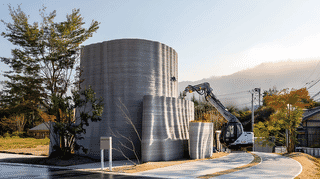
Japan's first two-story 3D-printed house "Stealth House" has been completed in Miyagi Prefecture, built by startups KIZUKI and ONOCOM with 20+ collaborating companies. As Japan's construction industry faces a severe labor shortage with 200,000+ fewer workers since 1997, multiple firms including Serendix and Lib Work are accelerating 3D concrete printing technology. We compare with U.S. giant ICON, explore Japan's strict building code compliance, and examine cost advantages.
Japan's shadow banking sector is sending warning signals. With nonbank financial risks growing, real estate lending surpassing $730 billion, and credit risks shifting under BOJ rate hikes, we analyze the parallels with China's shadow banking crisis and US commercial real estate risks, plus how Japan's regulators are responding.
Resales at Harumi Flag are stalling and Osaka tower mansion inventory has doubled in two years. Foreign ownership above 40%, zero-capital flipping via simultaneous registration, tighter bank screening, and 2026 data showing prices and contract rates moving apart.