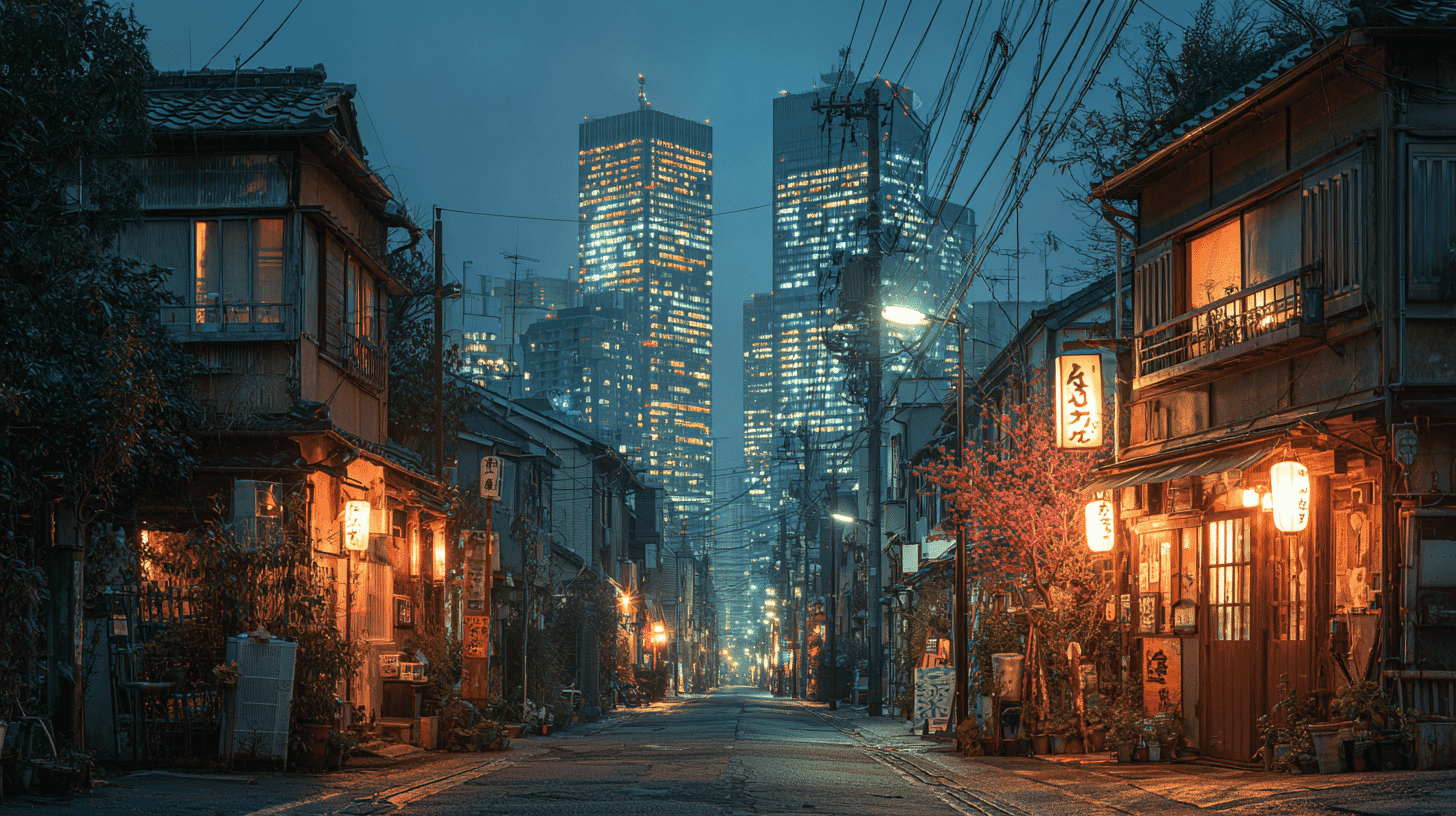
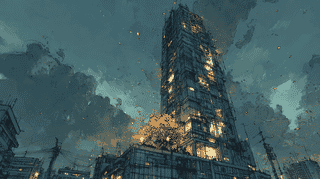
Near the top of Japan's tallest building sits an apartment reportedly priced at around $130 million. With 24-hour concierge, fortress-level security, and everything you need inside one tower, the ultra-wealthy never have to step outside. Meanwhile, the tight-knit neighborhoods below, where families once shared meals and looked out for each other, are vanishing.
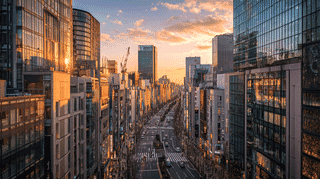
Pritzker Prize-winning architect Riken Yamamoto calls this Tokyo becoming "a colony for the rich." Here is what is happening behind the glittering skyline.
A Nobel-Level Architect Sounds the Alarm
In February 2026, architect Riken Yamamoto made headlines with an unusually blunt Bloomberg interview criticizing Tokyo's urban redevelopment, sparking a nationwide debate.
Yamamoto, 80, won the Pritzker Architecture Prize in 2024, often called "the Nobel Prize of architecture." He is the ninth Japanese laureate, after Kenzo Tange, Fumihiko Maki, Tadao Ando, Kazuyo Sejima and Ryue Nishizawa, Toyo Ito, Shigeru Ban, and Arata Isozaki.
His life's work has centered on a concept called "chiiki shakaiken", literally "local community sphere", an architectural philosophy that designs buildings to foster mutual aid among residents, much like the neighborhood associations (chonaikai) that once defined Japan's communities.
His target? The so-called "Hills-style" mega-developments led by Mori Building, one of Japan's largest real estate developers.
What Is "Hills-Style" Redevelopment?
"Hills-style" redevelopment refers to the super-large mixed-use development style pioneered by real estate giant Mori Building: a series of projects that began with Roppongi Hills in 2003 and continued with Toranomon Hills and Azabudai Hills, which opened in 2023.
These developments share common features.
They are "vertical cities" that pack housing, offices, shops, hotels, museums and international schools into skyscrapers. With 24-hour concierge services and tight security, residents can live almost entirely inside the complex. In exchange, a clear line is drawn between inside and outside, and members of the public who cannot pass security are effectively shut out.
Azabudai Hills shows it in numbers. Total project cost came to roughly ¥640 billion, about $4.3 billion, up from the ¥579.2 billion approved by the Tokyo government in 2018. At about 330 meters, the Mori JP Tower was Japan's tallest building on completion, and the Aman Residences Tokyo occupying its upper floors (91 units in all) include one reportedly priced around ¥20 billion. Even non-penthouse units average around ¥2 billion, roughly $13 million.
Next comes "Roppongi Hills 2" in Roppongi 5-chome, the Roppongi 5-chome West District redevelopment, with Mori Building and Sumitomo Realty as project partners. It covers about 8 hectares and roughly 1.08 million square meters of floor area, and its total cost has been reported at around ¥800 billion, making it one of the largest redevelopments in Japan. Plans call for an office and hotel tower of about 327 meters on Block A-1 and, on Block B, a 288-meter residential tower that would be the tallest in Japan.
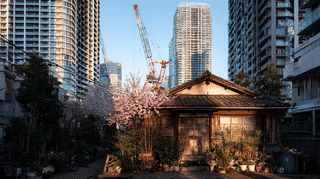
Yamamoto criticizes these projects as "extracting" urban space for global capital and the wealthy rather than for residents. The public quality of the old city, streets anyone could walk through and plazas anyone could drop into, is being turned into private property by the logic of capital, he argues.
Communities Lost, Inequality Built In
What concerns Yamamoto most is the destruction of existing communities.
Before the towers rose in Roppongi, Azabu, and Toranomon, these were real neighborhoods. Families had lived there for generations. They shared festivals, watched each other's children, and built the kind of social fabric that takes decades to weave.
"Developers target communities for redevelopment and destroy their culture along with them," Yamamoto has stated. "They use the pleasant-sounding word 'redevelopment,' but in reality, it's just profiteering through community destruction."
Musashi-Kosugi, in Kawasaki just outside Tokyo, illustrates what happens when tower development outpaces infrastructure. A cluster of luxury towers caused a rapid population spike, overwhelming sewage systems, which led to flooding during a 2019 typhoon, and local schools that could not accommodate the influx of children.
As of 2024, the Greater Tokyo area is reported to hold more than 800 tower mansions (tawa-man), Japan's term for high-rise condominiums, with a quarter built in just the past decade. These towers function as vertical gated communities: residents enjoy premium services inside while the surrounding neighborhood gets little benefit.
A Global Problem, Not Just Tokyo's
Tokyo is hardly alone. The "financialization" of urban space, where housing becomes an investment asset rather than a place to live, is reshaping cities worldwide.
In New York, the stretch of 57th Street overlooking Central Park is called "Billionaires' Row." Ultra-luxury condominiums sell for over $100 million, but many units sit empty, purchased as investment vehicles by the global ultra-wealthy. The resulting "ghost towers" that remain dark at night have become a symbol of inequality.
London faces a similar phenomenon in neighborhoods like Belgravia and Mayfair, where wealthy buyers from the Middle East and former Soviet states park money in real estate without ever living there. The city has imposed additional taxes on overseas investors in response.
Paris saw "Olympic gentrification" during its 2024 Games preparations, as redevelopment in northern Paris displaced low-income communities, sparking protests and policy debates.
Yet some cities have charted a different course.
Vienna houses roughly 60% of its population in public or social housing, with income-based rent that prevents speculative price spirals. Singapore provides public housing for about 80% of citizens through its Housing Development Board (HDB), with policies promoting ethnic integration. Barcelona has cracked down on short-term rentals like Airbnb to stabilize housing prices and protect residents' right to stay in their neighborhoods.
The Counterargument: Cities Must Compete
Not everyone agrees with Yamamoto's critique. Neuroscientist Ken'ichiro Mogi offered a pointed rebuttal on his YouTube channel, arguing that Tokyo's redevelopment must be understood within the context of global competition among cities.
"If Tokyo didn't do this kind of redevelopment, the wealthy would simply go elsewhere," Mogi argued. Tokyo competes constantly with Shanghai, Hong Kong, Singapore, and New York. These developments are economic acts driven by private companies like Mori Building, taking on significant financial risk. The market, not the government, is driving the transformation.
Mogi suggests that the coexistence of traditional neighborhoods like Asakusa alongside modern developments is precisely what makes Tokyo compelling. "Both can exist," he concluded, warning against judging urban development through a single lens.
Tokyo's Crossroads: Whose City Is It?
Rents in Tokyo's 23 wards continue to climb. Small apartments under 30 square meters now average around $680 per month, while family-sized units of 70+ square meters run about $2,550.
In the Global Power City Index published in December 2025, Tokyo passed New York for second place after nine years in third, narrowing the gap with London to its smallest yet. It is worth noting who compiles that ranking: the Mori Memorial Foundation, established by Mori Building's founder Taikichiro Mori. And the city's rising "attractiveness" points in the same direction as its rising cost of living.
The Tokyo Metropolitan Government has begun shifting housing policy toward a "Children First" approach and expanding affordable housing investments. But whether these measures can keep pace with the flood of global capital remains an open question.
Yamamoto's "local community sphere" offers a compelling alternative vision. Instead of sealed towers, he designs buildings with glass facades and shared terraces that make residents visible to each other, architecture that puts human connection, not profit margins, at the center.
A city is a stage for the people who live, work, and raise the next generation there, before it is an asset for investors. That is the question Yamamoto's criticism puts on the table, and not only for Tokyo.
[Update] Demolition work at the Roppongi 5-chome West District began in fiscal 2025. On May 15, 2026, Mori Building and Sumitomo Realty announced Rosewood as the operator of the hotel planned for the complex. Rising construction costs and labor shortages, meanwhile, are reported to be pushing the original fiscal 2030 completion target back (as of August 2026).
Has redevelopment changed the character of your neighborhood?
References
- https://www.bloomberg.com/jp/news/articles/2026-02-13/T9UZRUT96OSK00
- https://president.jp/articles/-/103354
- https://note.com/_takumi_inoue_/n/n2d2f03b36f58
- https://note.com/hitsuji20xx/n/nc73513667b91
- https://news.livedoor.com/article/detail/30581172/
- https://sustainable.japantimes.com/jp/magazine/450



Global Discussion
15 comments