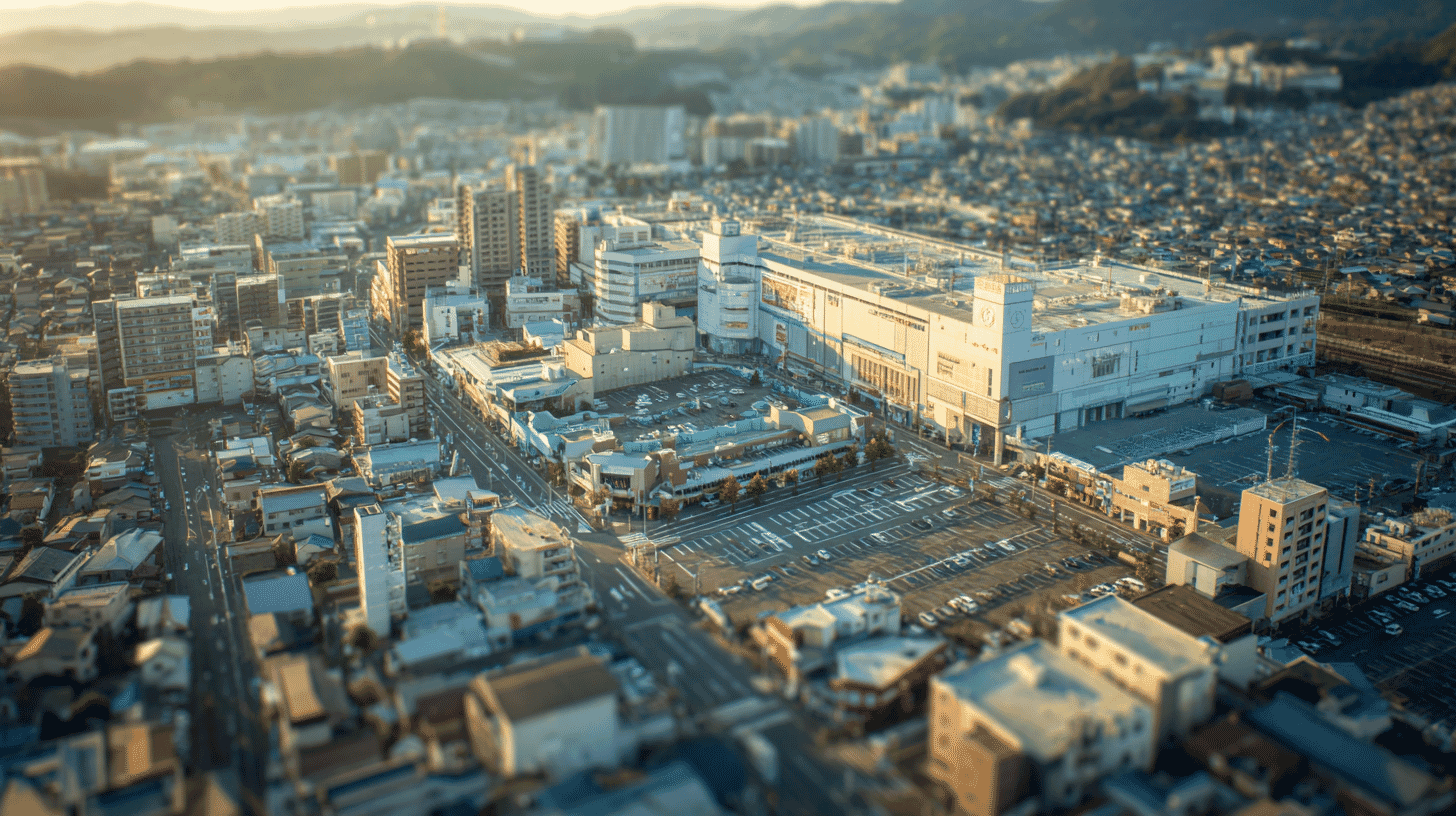
Across Japan, the department stores and shopping malls that once anchored entire communities are disappearing at an alarming pace. Between 2025 and 2026, iconic facilities like the Meitetsu Department Store flagship in Nagoya, Marui City Yokohama, Matsumoto Parco, Inoue Department Store, and Takashimaya Rakusai closed their doors, many after decades of operation. Redevelopment plans exist on paper, but the "next chapter" remains unclear, and Japan's commercial map is being redrawn.
The Closure Wave: Landmarks Disappearing Across Japan
Japan's commercial facilities are closing at an unprecedented rate, with 2025–2026 marking a particularly brutal period for the retail landscape.
In Matsumoto, Nagano Prefecture, three major commercial facilities shut down within just three months in early 2025: Ito-Yokado Minami-Matsumoto, Matsumoto Parco, and Inoue Department Store. The local employment office estimated over 210 workers would lose their jobs, prompting emergency job fairs with dozens of participating companies. Matsumoto Parco, opened in 1984 during Japan's bubble era, once posted annual sales exceeding 10 billion yen (roughly $67 million) in 2006. But competition from a new Aeon Mall and the relentless rise of e-commerce slashed revenues to just 4 billion yen by 2021.
In Nagoya, the Meitetsu Department Store, the Tokai region's first terminal department store, founded in 1954, announced its closure for February 28, 2026, along with the adjacent Meitetsu Grand Hotel. Both are being demolished to make way for a massive redevelopment project around Nagoya Station, but the new commercial facilities won't fully open until the early 2040s, leaving a gap of over a decade.
Marui City Yokohama, a fixture of the Yokohama Station East Exit area since 1996, will also close on February 28, 2026, ending roughly 30 years of service. In Kyoto, Takashimaya Rakusai, which opened in 1984, closed in August 2026 after persistent operating losses and the impossibility of justifying the massive investment needed for renovations.
These are just the headline cases. Ito-Yokado, once one of Japan's largest general merchandise retailers, has been systematically closing stores nationwide as part of a strategy to consolidate in the Greater Tokyo area. Ibaraki Prefecture no longer has a single Ito-Yokado store. Four Japanese prefectures, Yamagata, Tokushima, Shimane, and Gifu, now have zero department stores at all.
Why Commercial Facilities Can No Longer Survive
The closure wave stems from several converging structural forces.
The e-commerce revolution. According to Japan's Ministry of Economy, Trade and Industry, the domestic BtoC physical goods e-commerce market reached 15.2 trillion yen in 2024, with an EC penetration rate of 9.78%, approaching the symbolic 10% threshold. Clothing already has a 23.38% EC rate, home electronics 43.03%, and books and media a staggering 56.45%. Smartphones now account for 61.7% of all online purchases. The categories that once drove department store foot traffic have decisively migrated online.
Aging infrastructure. Many of Japan's large commercial facilities were built during the bubble era of the 1980s and early 1990s, meaning they are now 30 to 40 years old. Bringing these buildings up to modern safety and comfort standards requires enormous capital investment, investment that operators can't justify when revenues are declining. Takashimaya Rakusai's closure is a textbook case: despite efforts to revitalize the store, its 2024 fiscal year ended in an operating loss, with no path to profitability in sight.
Population decline. Japan's shrinking and aging population is eroding the customer base that commercial facilities depend on, particularly in regional areas. The department store industry's total sales peaked at 9.7 trillion yen in 1991 and have since fallen to approximately 5.8 trillion yen in 2024, roughly 60% of the peak.
Suburban competition. Large suburban shopping centers like Aeon Malls, optimized for car-dependent lifestyles with vast parking lots and diverse tenant mixes, have drawn customers away from station-area department stores and fashion buildings. Matsumoto Parco's decline accelerated sharply after Aeon Mall Matsumoto opened in 2017.
The Redevelopment Gap: A Decade of Uncertainty
Perhaps the most concerning aspect of the closure wave is what happens afterward, or rather, what doesn't happen.
The Meitetsu Department Store site in Nagoya illustrates the problem starkly. Demolition begins in fiscal 2026, new construction starts in 2027, but the first phase of the new complex isn't expected until 2033, with full commercial opening not anticipated until the early 2040s. One of Nagoya's most prominent locations could be "under construction" for well over a decade.
In Matsumoto, none of the three closed facilities have confirmed plans for their sites. J. Front Retailing, which operated Matsumoto Parco, has not revealed clear next steps. Inoue Department Store aims to reopen as a new shopping center, but timelines and details remain vague.
Rising construction costs, driven by materials inflation and labor shortages, have made redevelopment economics more challenging than ever. Private companies are increasingly cautious about committing capital, leading to situations where plans exist but execution stalls indefinitely.
A growing trend is the conversion of former commercial sites into residential towers. The former Sogo in Funabashi and the former Isetan in Sagami-Ono are both being replaced by large condominium developments. Where commercial viability is in doubt, housing has become a pragmatic alternative.
A Tale of Two Retail Worlds
Not all of Japan's retail sector is in decline.
Isetan Shinjuku posted over 400 billion yen in sales for fiscal year ending March 2025, a record. Hankyu Umeda in Osaka also reported all-time highs. Flagship stores in prime urban locations, catering to affluent customers and inbound tourists, are thriving.
This polarization holds important lessons. Pure merchandise sales can no longer compete with e-commerce convenience and pricing. But facilities that offer experiences, services, and community gathering spaces retain real demand. New-generation commercial developments like Newoman Takanawa (approximately 200 stores across 60,000 square meters within the Takanawa Gateway City project) and GranGreen Osaka are positioning themselves not as places to shop, but as places to spend time.
The Invisible Cost: Losing Community Spaces
Beyond the economic impact, the closure of commercial facilities erases something harder to quantify, community infrastructure.
Meitetsu Department Store's "Nana-chan" mannequin has been a beloved Nagoya landmark and meeting spot for decades. Inoue Department Store, founded as a kimono shop in 1885, held generations of memories for Matsumoto residents. These "memories of place" cannot be easily transferred to whatever comes next.
For elderly residents in particular, losing a familiar commercial facility means much more than a change in shopping destination. With limited mobility and transportation options, the disappearance of walkable or station-adjacent stores directly affects quality of daily life.
Japan's Challenge in a Global Context
Commercial facility decline isn't unique to Japan. The United States has faced its own "retail apocalypse" with widespread mall closures, and the UK continues to grapple with high street vacancies. However, Japan's population decline is faster than most developed nations, intensifying the challenge.
Japan's commercial sector also has unique assets. The recovery of inbound tourism provides a tailwind for urban facilities, and Japan's distinctive hospitality culture and experience-oriented retail offer value that e-commerce simply cannot replicate.
What's ultimately at stake is a fundamental redefinition of what commercial facilities are for. The transition from "a place to buy things" to "a place where people gather", a kind of community living room, will determine which facilities survive into the next era.
In Japan, beloved commercial landmarks are vanishing one after another, and even the vision for their future remains unclear. Is something similar happening in your country? Are department stores and shopping malls closing, and if so, what's replacing them?
References
- https://news.yahoo.co.jp/expert/articles/c3d0fffbb89634c9dce6a94ac087677be217d0a6
- https://www.kenbiya.com/ar/ns/region/shinhoku/8553.html
- https://www.wwdjapan.com/articles/2000223
- https://www.fashionsnap.com/article/2026-open-and-close/
- https://www.meti.go.jp/press/2025/08/20250826005/20250826005.html







Global Discussion
16 comments