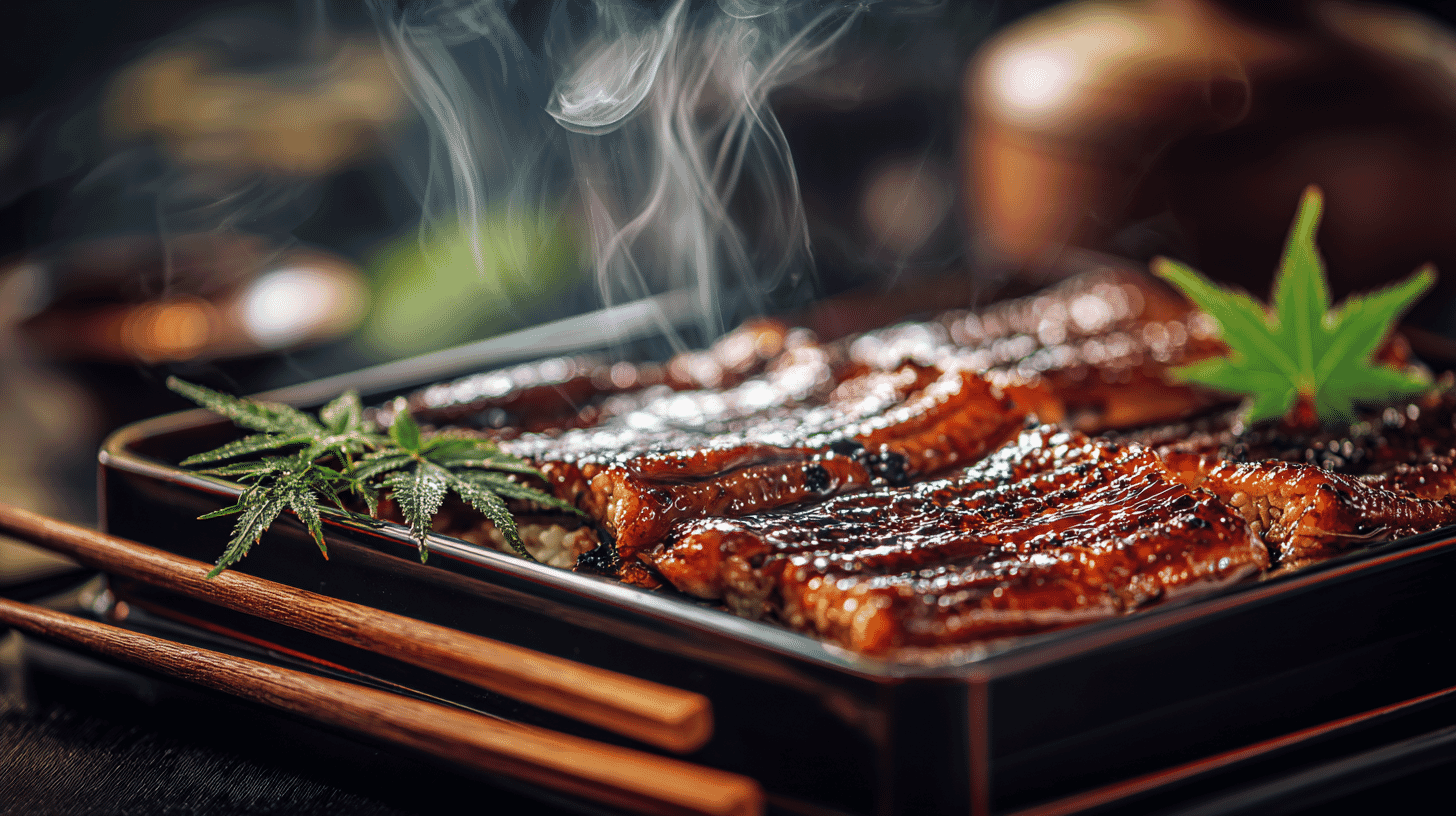
Farmed eels, left to themselves, come out almost entirely male. Male eels toughen in both flesh and skin as they grow, so farmers ship them at around 200 grams. A method patented by Aichi Prefecture uses feed laced with soybean isoflavones to raise more than 90% of them as females, which stay tender at roughly double that weight, yielding more from each glass eel. The brand is called Enman, and it is worth looking at as a question about how to use a shrinking resource.
The Long-Standing Challenge in Eel Aquaculture
Eel, or "unagi," holds a special place in Japanese culinary culture, particularly during the summer tradition of "Doyo no Ushi no Hi" (midsummer day of the ox). However, eel farming has faced a persistent challenge for decades: virtually all eels raised in aquaculture become male.
More than 90% of farmed eels turn out male, and Aichi Prefecture says the reason is still not understood. Males toughen in both flesh and skin as they grow, so farmers ship them at 200 to 250 grams and no larger. Females grow bigger and stay tender at that size. Raising them on purpose, however, had remained technically out of reach.
The Birth of "Enman" and the Technology Behind It
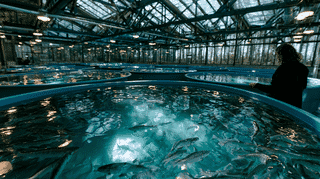
The Freshwater Fisheries Research Institute of the Aichi Prefectural Fisheries Research Institute, based in Nishio City, took this on together with the Mikawa-Isshiki female eel research group, formed by the local fishery cooperative and farmers. The prefecture began research in 2017 and patented the method in 2021. Aichi is Japan's second-largest farmed eel producer after Kagoshima.
The breakthrough rests on the fact that an eel's sex is shaped by rearing conditions rather than chromosomes. Feminisation using female hormones was not new; it had been used to secure female broodstock for closed-cycle aquaculture. It cannot be used on eels destined for the table, however, on safety grounds. What the team turned to instead was soybean isoflavone, a food additive. Feed containing the compound, which is structurally similar to female hormones, pushes more than 90% of juveniles to develop as females.
By strictly managing the dosage and timing of the isoflavone feed, stable production of female eels became possible. Flavour was not the only goal. Females can be grown to 400 to 500 grams, roughly double the conventional shipping weight, without the flesh hardening, which means more meat from each glass eel. With juvenile catches shrinking year after year, that arithmetic matters.
Characteristics and Flavor Profile of Enman
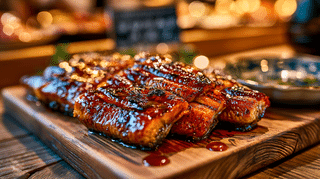
The resulting female eels have been branded "Enman" (艶鰻), meaning "glossy eel." What sets them apart is the softness of both flesh and skin. Males grow muscular and comparatively lean as they get bigger; females hold their fat and stay tender. The sheen on a grilled fillet is where the brand name comes from.
There is blind-tasting evidence behind the claim. At a seafood show in Tokyo, the research group served plain-grilled male and female eel side by side; of more than 800 respondents, 85% picked the female. Shipments were widened in stages after that, leading to full commercial release and the Enman brand in 2024.
Advancing Japan's Aquaculture Technology
With eel stocks under pressure worldwide, work on closed-cycle aquaculture matters, and so does anything that gets more food out of each juvenile caught.
The numbers put that in context. Japan's eel supply came to 60,941 tons in 2024: 44,730 tons imported, 16,159 tons farmed domestically, and just 52 tons caught wild, according to agriculture ministry figures. Domestic farming accounts for under 30% of what the country eats. Premium products like Enman give home producers a place to stand that is not a price war with imports.
The regulatory picture shifted too. At the 20th CITES Conference of the Parties, held in Samarkand from late November to early December 2025, an EU proposal to list all Anguilla species under Appendix II was rejected 35 votes to 100. International trade controls are off the table for now, which does not make the stocks any healthier.
Future Prospects and Challenges
Enman went on sale in 2024, centred on its home region of Isshiki in Nishio City, Aichi Prefecture. The method itself has already spread beyond the prefecture, with farms in Shizuoka and Kagoshima adopting it. Hiroyuki Inaba, the Aichi researcher who led the work, received a chairman's award in the 2025 young agricultural and fisheries researcher programme.
On cost, the isoflavone feed is an added expense, but field trials showed yields improving by a factor of 1.1 to 1.3, enough to more than cover it. The harder problem is on the selling side: explaining an unfamiliar idea to shoppers and marking Enman out from ordinary farmed eel.
Kabayaki, eel glazed with sweet soy sauce and grilled over charcoal, is a Japanese preparation that has found an audience well beyond Japan. Enman is partly a story about flavour, and partly an answer to a harder question: how to make the most of a resource that keeps getting scarcer.
How is eel prepared and enjoyed in your country? What do you think about this kind of aquaculture innovation? We'd love to hear your thoughts in the comments.
References
- https://www.pref.aichi.jp/press-release/wakatenourinsuisankenkyusyahyousyou.html (Aichi Prefecture on the research award)
- https://www.nippon.com/ja/japan-topics/g02606/ (nippon.com on Mikawa-Isshiki)
- https://rakusui.or.jp/mailmag/2021/12/021523214356 (Rakusuikai on the feminisation work)
- https://www.jfa.maff.go.jp/j/saibai/unagi.html (Japan Fisheries Agency: Information on Eel)
- https://www.maff.go.jp/j/heya/sodan/1107/01.html (MAFF: About Eel)





Global Discussion
15 comments