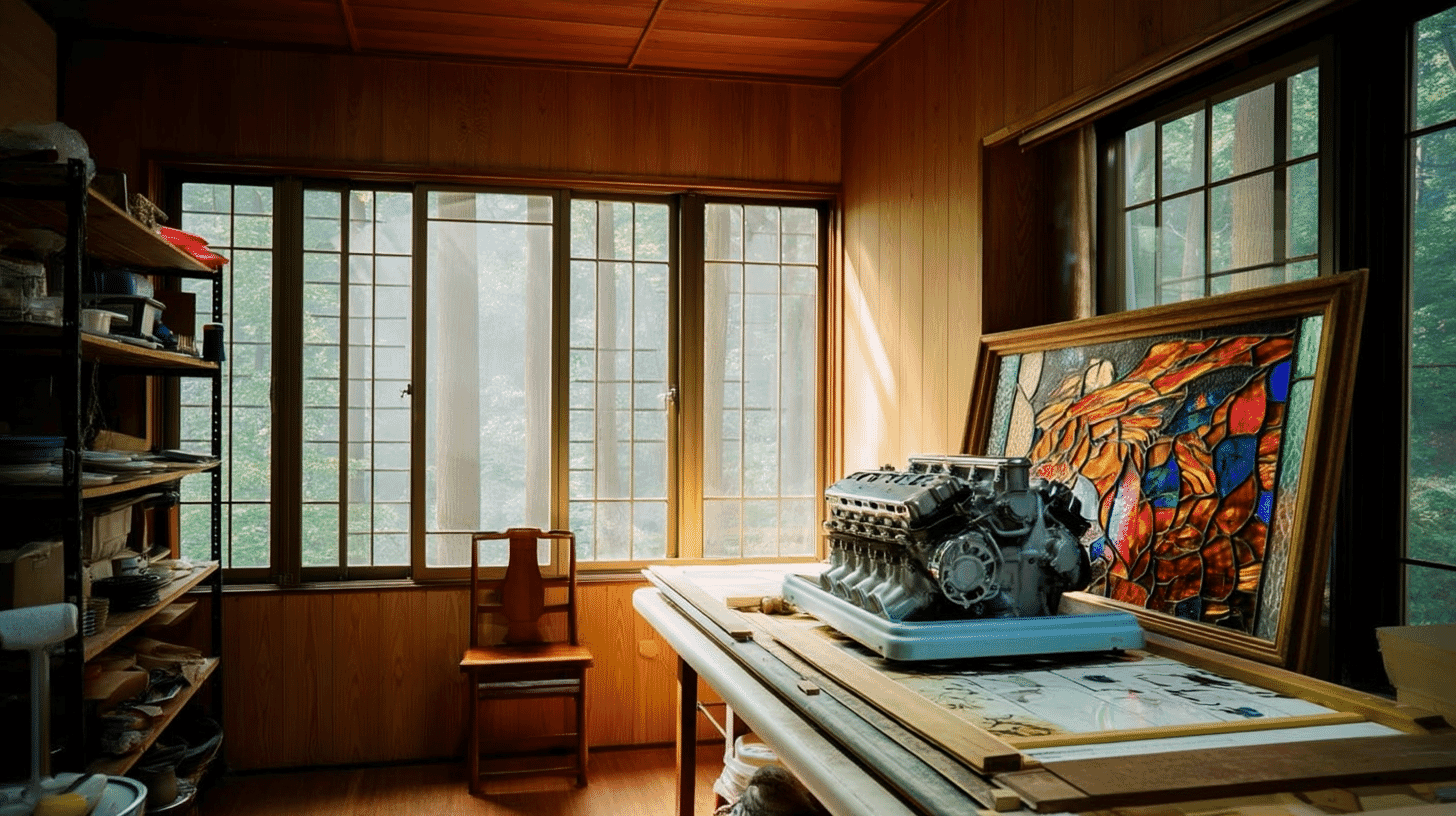
🔧 What if you could spend the night inside the workshop of an engineer who helped Honda outmaneuver the world's toughest emissions law, and wake up to morning light pouring through his stained glass?
In a quiet forest in Zao, northern Japan, a small rental villa has done exactly that. It isn't a museum, and it isn't quite an ordinary inn. It's a place built so you can stay inside a story.
A rental villa in the Zao forest, with an unusual theme
On May 12, 2026, a one-building rental villa called GAIA RESORT|ACURA opened in the town of Zao, Miyagi Prefecture, about 45 km southwest of Sendai and roughly an hour away by highway bus from Sendai Station. It's run by Gaia, a real-estate and resort company based in nearby Shiroishi.
On paper, it sounds like dozens of other countryside getaways: one house, your group only, a private natural hot-spring bath. But the theme is what makes people stop and read twice. The whole place is dedicated to the life of one man: the late Akira Ishizuya, a former managing director of Honda Motor who, decades ago, worked on one of the most important engines in automotive history.
The operator describes it bluntly: this is not just lodging, it's "a stay where you touch an engineer's spirit." That phrase could easily be marketing fluff. The unusual part is that the building actually backs it up.
The "impossible answer" called CVCC
To understand why a Honda engineer gets his own villa, you need a quick detour into the 1970s.
In 1970, the United States passed the Clean Air Act, which set emissions standards for 1975 so strict that most carmakers considered them unreachable. Detroit's giants lobbied for delays. The assumption across the industry was that meeting the law would require expensive catalytic converters bolted onto every car.
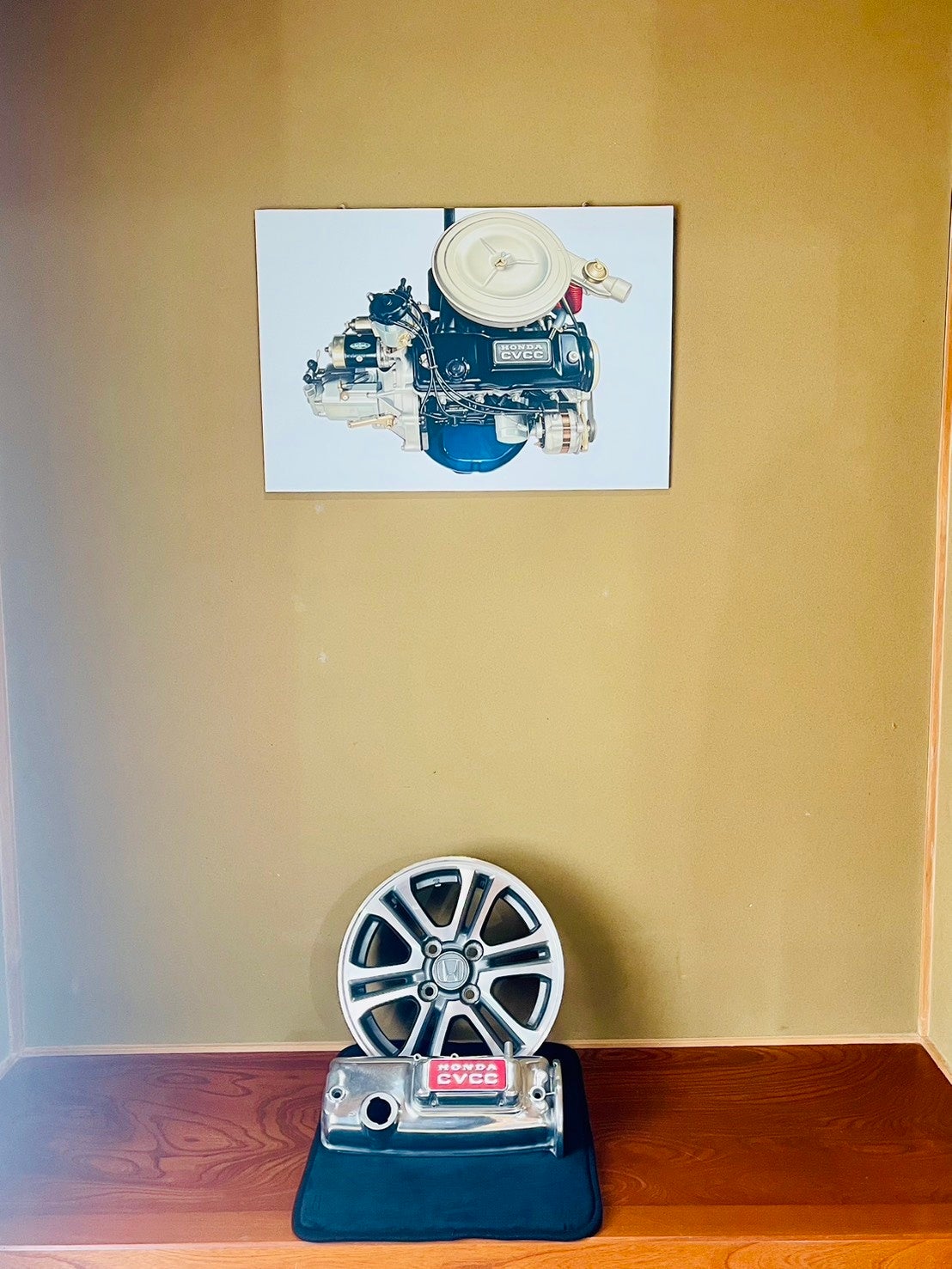
Honda, then a small, scrappy company better known for motorcycles, took a different route. Its engineers developed CVCC, short for Compound Vortex Controlled Combustion. Instead of cleaning up dirty exhaust after the fact, CVCC changed how the fuel burned in the first place. A tiny pre-chamber ignited a rich fuel mixture, and that flame spread into a much leaner mixture in the main cylinder. The result was cleaner combustion built into the engine itself.
In December 1972, a CVCC engine became the first in the world to pass those 1975 standards, and it did so without a catalytic converter. Honda didn't even have a car large enough to house it yet, so early tests were run with CVCC parts fitted to other companies' vehicles. The technology was soon adopted in the first-generation Civic and licensed by rivals including Toyota, Ford, and Chrysler.
Source: GAIA / PR TIMES
Behind that breakthrough was a mindset Honda's founder, Soichiro Honda, drilled into his teams: don't accept the conventional answer just because everyone else has. Ishizuya was one of the people in those rooms, a managing director who, the facility says, supported Honda's engineering work alongside the founder himself.
Why an engineer chose stained glass
Here's the turn that makes this villa more than a car museum.
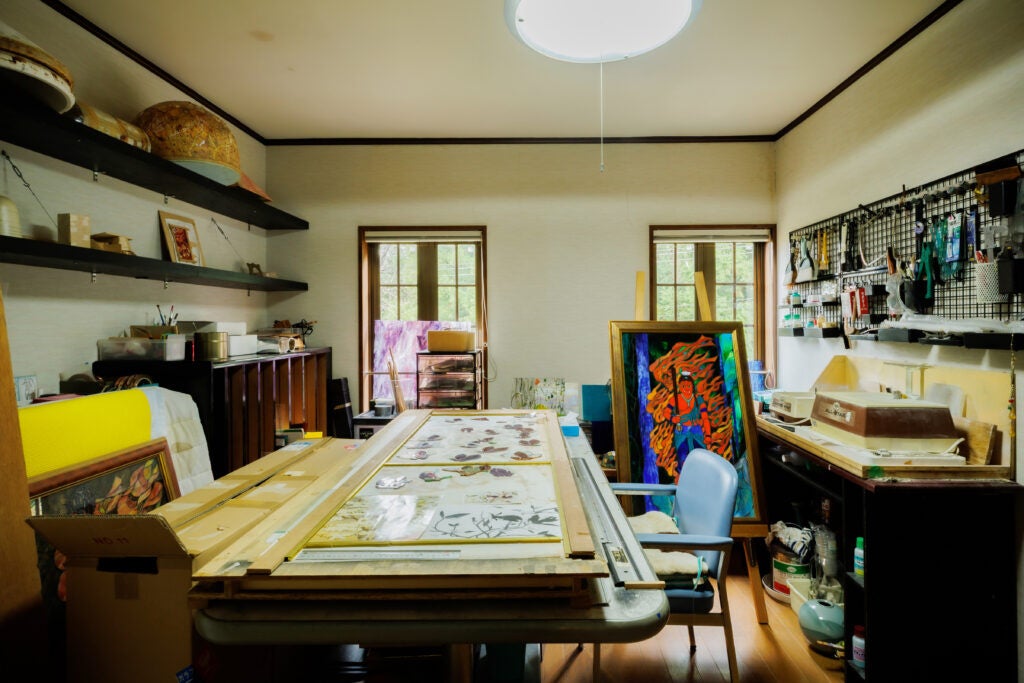
In his later years, Ishizuya put down the engineering drawings and picked up colored glass. He became a stained-glass artist, working from a studio he named the Stained Glass Studio ACURA. That studio name is where the villa gets its own name, a detail Honda fans will enjoy, since Acura is also the company's premium brand, though here the word traces back to one man's private workshop.
The villa preserves that workshop as it was. Inside, his stained-glass pieces, including works centered on Fudō Myōō, a fierce, protective Buddhist deity, sit alongside materials from his Honda years. The operator frames the place as a crossing point of three things: technology, art, and spirit.
It's a quietly profound idea. The same restless curiosity that pushed an engineer to question how an engine burns fuel later pushed him to ask how light moves through glass. The villa argues that these aren't two careers but one continuous way of thinking, and it lets you sleep in the middle of the evidence.
Source: GAIA / PR TIMES
Less "checking in," more "waking up inside the story"
The stay itself leans hard into the theme. Scattered through the rooms are a CVCC engine head cover, original panels, and the grille of a first-generation Civic, kept as it was. Classic-car motifs run through the interior design. There's a helmet display honoring Ayrton Senna, the Brazilian Formula 1 legend of Honda's golden era, and even a nod to ASIMO, Honda's famous humanoid robot.
But this isn't a place where you tiptoe past glass cases. It's a working holiday house. The private bath is fed by a natural hot spring and finished in fragrant Aomori hiba cypress. Up to five guests can stay, and the operator is clear that it's meant for families too, not only for gearheads. Check-in runs from 3 to 8 p.m.
The pitch is simple: spend the day in the forest, soak in the hot spring at night, and in between, let an engineer's life story unfold around you at your own pace.
Zao and Tōgatta Onsen: the setting
The villa sits inside Zao Sansuien, a villa district within Tōgatta Onsen, a hot-spring town with roughly 400 years of history at the eastern foot of the Zao mountain range. The water here is the real thing, flowing straight from the source.
Tōgatta makes a genuinely good base. It's close to the Okama, a startling emerald crater lake near the Zao summit, and to dairy country known for Zao cheese. In winter, the nearby slopes draw skiers and visitors hoping to see juhyō, the snow-and-frost-encased "snow monster" trees. Getting there is easiest by highway bus from Sendai Station, or by local bus from Shiroishi-Zao Shinkansen station.
There's a bigger picture, too. Zao Sansuien holds international certification as an albergo diffuso, a "scattered hotel," the Italian model where a stay is spread across a village rather than packed into one big building. ACURA is part of Gaia's wider "Zao Welfare Forest" plan, which reuses empty houses and aging vacation homes for tourism, employment, and disaster resilience. In a country with millions of empty properties, turning one engineer's old workshop into a destination is a small, hopeful example of what that regeneration can look like.
For a traveler who loves cars, motorsport, or simply the idea of monozukuri, Japan's deep-rooted culture of making things with care, it's a rare kind of trip: one where the souvenir isn't an object, but a way of seeing.
In Japan, the legacy of a single craftsperson can become a place you stay overnight, not just a name on a plaque. Does your country have a way to preserve an individual maker's or engineer's life so people can step inside it? We'd love to hear how legacies are kept alive where you are.








Global Discussion
4 comments