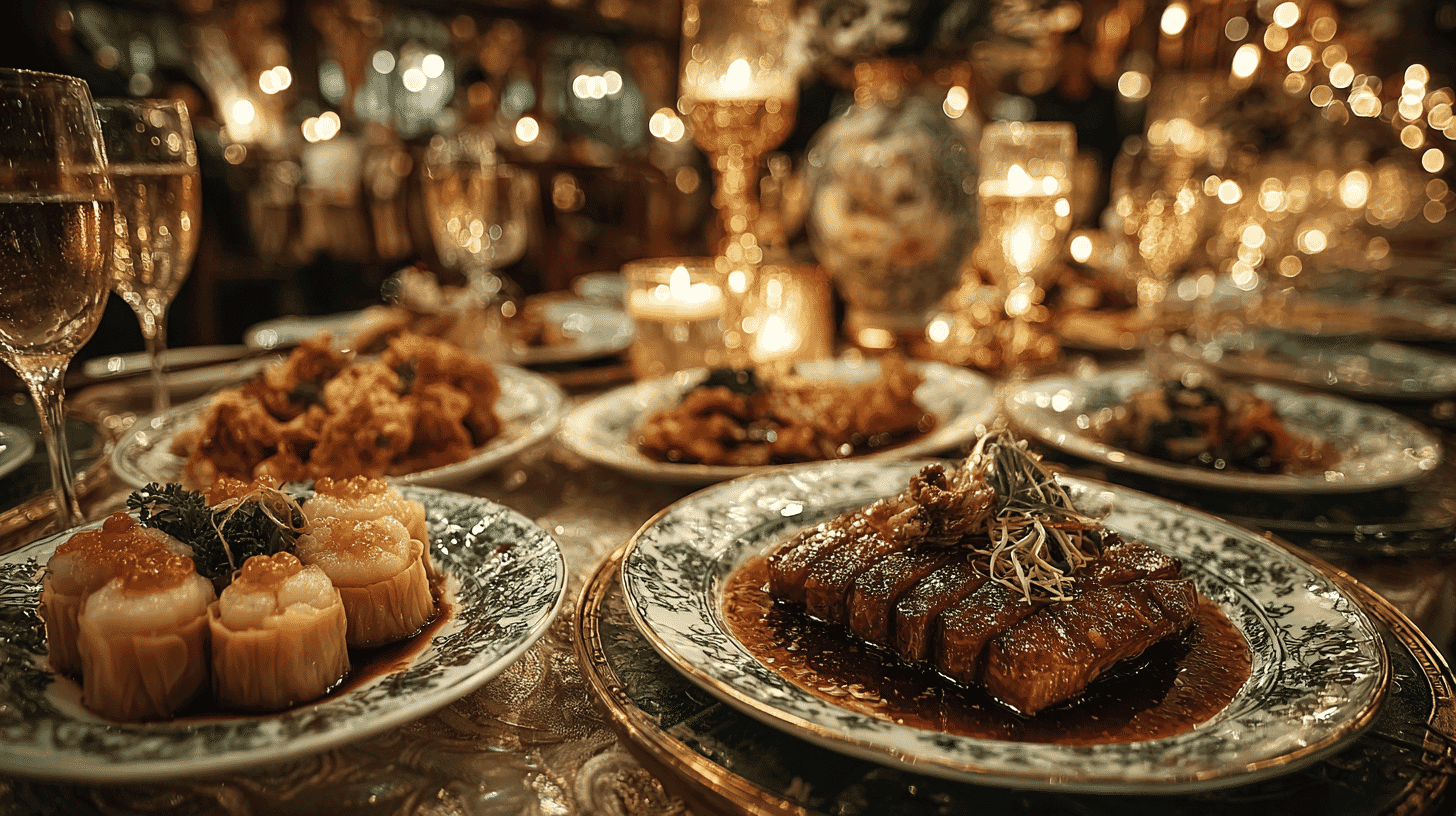
The "Academy Awards of food" dropped its 2026 list, and Asia's dining map has been redrawn. Hong Kong's The Chairman reclaimed the top spot after five years away, Bangkok led with nine entries, and Japan placed eight restaurants in the top 50. None of them cracked the top 10, a first in the award's 13-year history. Meanwhile regional cities like Kanazawa and Yamagata surfaced on the extended list. Here's who made the cut, what they serve, and what you'll pay.
The Ceremony: Hong Kong's First Time Hosting
The 2026 ceremony took place on March 25 at the Kerry Hotel, on the waterfront in Hung Hom, Hong Kong. It was the 14th edition and the first ever held in Hong Kong, a city long known for its food. Roughly 900 chefs and restaurant people filled the ballroom.
Asia's 50 Best Restaurants is the regional edition of The World's 50 Best Restaurants, organized by UK media company William Reed. Launched in 2013, it ranks the top dining establishments across Asia based on votes from over 350 industry professionals, food journalists, chefs, restaurateurs, and culinary experts from across the continent.
Unlike the Michelin Guide, which uses anonymous inspectors and an "absolute" rating system, this ranking is a peer-voted "relative" evaluation. Each voter casts 10 votes for restaurants they have personally visited in the past 18 months, and at least four must be outside their own country or territory. Results shift year to year as a result. Think of it less as a definitive "best" list and more as a snapshot of what excites Asia's culinary elite right now.
The Chairman Returns to the Throne
The host city had plenty to celebrate. The Chairman, a Cantonese restaurant in Central run by chef-owner Danny Yip, reclaimed the No.1 position it last held in 2021.
The Chairman is known for reviving forgotten luxury ingredients and traditional cooking techniques from southern China. Signature dishes include steamed fresh flowery crab with aged Shaoxing wine and stir-fried seasonal vegetables with house-made XO sauce. In 2021, it became the first Chinese restaurant ever to top this list. It has now done it twice.
At No.2, fellow Hong Kong restaurant Wing earned recognition for chef Vicky Cheng's approach to the eight great Chinese culinary traditions, reinterpreted through French techniques. Wing occupies the same building as The Chairman, the first time two restaurants at one address have taken the top two spots. Bangkok's Gaggan, last year's No.1 and known for its theatrical take on Indian cuisine, slid to No.3 but retained the Best Restaurant in Thailand award.
The 2026 list spans 17 cities, with eight new entries and four re-entries. Three cities appear for the first time: Kasauli (India), Penang (Malaysia), and Ubud (Bali).
| City | Restaurants in Top 50 |
|---|---|
| Bangkok | 9 |
| Tokyo | 7 |
| Hong Kong | 6 |
| Seoul | 6 |
| Singapore | 6 |
| Shanghai | 4 |
| Others | 12 |
Bangkok continues to lead with 9 entries, powered by the Gaggan empire (both Gaggan at No.3 and Gaggan at Louis Vuitton at No.8), plus standouts like Nusara (No.5), Sorn (No.12), and Sühring (No.18).
Seoul showed strength with Mingles (No.4) winning Best Restaurant in South Korea, and Onjium's chef Cho Eun-hee earning Asia's Best Female Chef.
Shanghai made a notable push with 4 restaurants, including Meet the Bund (No.6) as Best Restaurant in Mainland China, reflecting China's growing fine dining ambitions.
Japan's Eight in the Top 50
Japan placed eight restaurants in the top 50, down from 11 last year. The bigger story is where they landed: not one made the top 10, a first since the award began in 2013.
La Cime, No.13 (Best Restaurant in Japan)
Location: Osaka (Sakaisuji-Honmachi) Cuisine: French Price: Approximately $270–$330 per person Chef: Yusuke Takada
Chef Takada's distinctive French cuisine, deeply rooted in Japanese ingredients and sensibility, earned Japan's top honors. Slightly down from No.8 last year, but the Best Restaurant in Japan award confirms La Cime's status as Osaka's finest.
Sézanne, No.16
Location: Tokyo (Kyobashi, inside Four Seasons Hotel Marunouchi) Cuisine: French Price: Approximately $400–$530 per person
Tokyo's highest-ranked restaurant uses Japanese ingredients with French precision. A major transition has since taken place: chef Daniel Calvert, who elevated the restaurant to international fame, left on March 31. Steven Lancaster, who earned a Michelin star in his first year at Singapore's Poise, took over on April 1. Calvert is rumored to be opening his own Tokyo restaurant later this year.
Sazenka (茶禅華), No.21
Location: Tokyo (Hiroo) Cuisine: Chinese Price: Approximately $330–$400 per person
Sazenka's concept of "wakon kansai," literally "Japanese spirit, Chinese talent," blends Chinese culinary traditions with Japanese precision and ingredients. The restaurant made a significant leap from No.34 last year.
Maz, No.28
Location: Tokyo (Nagatacho) Cuisine: Innovative (Peruvian-Japanese fusion) Price: Approximately $270–$330 per person
This Peruvian tasting menu restaurant jumped from No.43 to No.28. Like Sézanne, Maz changed hands: head chef Santiago Fernández left at the end of March, replaced by Yuya Nakamura, who brings experience from Slovenia, Sweden, and Peru and runs his own restaurant, INA, in Nara.
Florilège, No.31
Location: Tokyo (Kamiyacho, Azabudai Hills) Cuisine: French Price: Approximately $130–$200 per person
Chef Hiroaki Kawate's restaurant has been a consistent presence on the list. His sister restaurant, Logy in Taipei, also made the list at No.22.
Myoujyaku (明寂), No.33
Location: Tokyo (Nishi-Azabu) Cuisine: Japanese Cuisine (Kaiseki) Price: Approximately $330–$400 per person
A significant climber from No.45 to No.33, Myoujyaku showcases the philosophy of drawing out the natural essence of ingredients through deceptively simple preparations. Chef Eiri Nakamura's cooking reflects a deeply Japanese aesthetic.
Crony, No.34
Location: Tokyo (Akabane-bashi) Cuisine: French Price: Approximately $130–$200 per person
A relative newcomer that has quickly established itself on the list. Crony offers an intimate dining experience with a Nordic-influenced interior and creative French cooking.
Narisawa, No.37
Location: Tokyo (Aoyama) Cuisine: Innovative Price: Approximately $530–$670 per person
Chef Yoshihiro Narisawa has been on this list since its inception in 2013 (when his restaurant topped the rankings). His concept of "satoyama cuisine," cooking inspired by the traditional Japanese system of mixed agriculture alongside natural landscapes, remains unique in the world.
The Extended List, and the Rise of the Regions
Look beyond the top 50 and Japan's depth becomes clear. Ten more Japanese restaurants appear on the 51–100 list, announced separately on March 12, bringing the country's total to 18, the highest of any nation. Only three of those ten are in Tokyo: Den (No.51), Sushi Shunji (No.63, a new entry) and Sushi Saito (No.72). The other seven are spread across the country.
Four Japanese restaurants were new to the extended list this year, and three of them came from outside the big cities. Kanazawa and Nishikawa both appear in the ranking for the first time in its history:
Kataori (片折), No.82, Kanazawa A kaiseki restaurant with an extraordinary Tabelog score of 4.71 (out of 5), Kataori showcases the seasonal bounty of Ishikawa Prefecture's mountains and sea. Dinner runs approximately $270–$330 per person.
Respiración, No.92, Kanazawa Spanish-innovative cuisine using Hokuriku region ingredients, priced at approximately $130–$200 per person. An example of how global techniques and local terroir can create something entirely new.
Dewaya (出羽屋), No.93, Nishikawa, Yamagata Perhaps the most fascinating entry: a traditional Japanese inn ("ryokan") in rural Yamagata that serves mountain cuisine of wild vegetables, river fish, and other ingredients foraged from the Dewa Sanzan mountain area. At approximately $100–$130 per person for dinner, it's among the most affordable restaurants on the entire 100 list. A countryside ryokan standing alongside Michelin-starred metropolitan restaurants says something about how the world now values terroir.
Three more regional entries held their places: Cenci in Kyoto (No.76), Villa Aida in Iwade, Wakayama (No.81), and L'evo in Nanto, Toyama (No.97).
A Changing of the Guard in Tokyo
The most significant storyline for Japan this year isn't the rankings. It's what happened at the end of March 2026.
Within days of each other, two of Tokyo's most celebrated chefs, Daniel Calvert of Sézanne and Santiago Fernández of Maz, left their restaurants. The coincidence marks a symbolic turning point for Tokyo's fine dining scene.
Calvert transformed Sézanne from a hotel restaurant into a globally recognized destination, while Fernández brought Peruvian culinary traditions to the heart of Tokyo's government district. Both restaurants now face the challenge of maintaining their identities under new leadership.
Will these transitions energize or destabilize Tokyo's position on next year's list? And what will Calvert's rumored solo project look like?
The Full 2026 Top 50 List
| Rank | Restaurant | City |
|---|---|---|
| 1 | The Chairman | Hong Kong |
| 2 | Wing | Hong Kong |
| 3 | Gaggan | Bangkok |
| 4 | Mingles | Seoul |
| 5 | Nusara | Bangkok |
| 6 | Meet the Bund | Shanghai |
| 7 | Chef Tam's Seasons | Macau |
| 8 | Gaggan at Louis Vuitton | Bangkok |
| 9 | Ling Long | Shanghai |
| 10 | Ru Yuan | Hangzhou |
| 11 | Fu He Hui | Shanghai |
| 12 | Sorn | Bangkok |
| 13 | La Cime | Osaka |
| 14 | Onjium | Seoul |
| 15 | Masque | Mumbai |
| 16 | Sézanne | Tokyo |
| 17 | Lamdre | Beijing |
| 18 | Sühring | Bangkok |
| 19 | Odette | Singapore |
| 20 | Seroja | Singapore |
| 21 | Sazenka | Tokyo |
| 22 | Logy | Taipei |
| 23 | Born | Singapore |
| 24 | Neighborhood | Hong Kong |
| 25 | Potong | Bangkok |
| 26 | Eatanic Garden | Seoul |
| 27 | Ms. Maria & Mr. Singh | Bangkok |
| 28 | Maz | Tokyo |
| 29 | 102 House | Shanghai |
| 30 | Naar | Kasauli |
| 31 | Florilège | Tokyo |
| 32 | Estro | Hong Kong |
| 33 | Myoujyaku | Tokyo |
| 34 | Crony | Tokyo |
| 35 | Caprice | Hong Kong |
| 36 | Le Du | Bangkok |
| 37 | Narisawa | Tokyo |
| 38 | Les Amis | Singapore |
| 39 | Au Jardin | Penang |
| 40 | Labyrinth | Singapore |
| 41 | Mosu | Seoul |
| 42 | August | Jakarta |
| 43 | Bium | Seoul |
| 44 | Locavore NXT | Ubud |
| 45 | Nae:Um | Singapore |
| 46 | Mono | Hong Kong |
| 47 | Wana Yook | Bangkok |
| 48 | La Bourriche 133 | Shanghai |
| 49 | 7th Door | Seoul |
| 50 | JL Studio | Taichung |
How to Book These Restaurants
Most of the ranked Japanese restaurants are notoriously difficult to book. Most accept reservations through their official websites or platforms like OMAKASE (an online booking service for fine dining in Japan). Sézanne takes reservations through the Four Seasons Hotel website. Sazenka primarily accepts phone reservations. Narisawa uses its own online booking system.
For international visitors, plan 1–2 months ahead for top 50 restaurants. The 51–100 restaurants, especially in regional cities, tend to be more accessible. Dewaya also operates as a ryokan, so you can book through major hotel booking platforms and enjoy both accommodation and dining.
Thinner at the Top, Wider at the Base
Japan moved in two directions at once. It vanished from the top 10 for the first time in 13 years and slipped from 11 top-50 entries to eight. Yet ten Japanese restaurants sit in the 51–100 range, and seven of those are outside Tokyo. Kanazawa and Nishikawa now have their names on the list for the first time.
The hierarchy keeps moving elsewhere too: Shanghai's four entries mark mainland China's steady climb.
What about your country? Does your city have restaurants that deserve a spot on this list? Have you eaten at any of the ranked establishments? We'd love to hear which restaurants in your corner of the world you think should be getting international attention. Share your thoughts!
References
- https://magazine.tabelog.com/articles/491148
- https://www.theworlds50best.com/asia/en/list/1-50
- https://www.theworlds50best.com/stories/News/asias-50-best-restaurants-2026-1-50-list.html
- https://www.timeout.com/asia/news/asias-50-best-restaurants-2026-are-out-and-hong-kong-just-took-the-top-two-spots-032626
- https://www.tatlerasia.com/dining/food/asias-50-best-restaurants-2026








Global Discussion
15 comments