Japan's Summer Icon Faces Another Price Adjustment

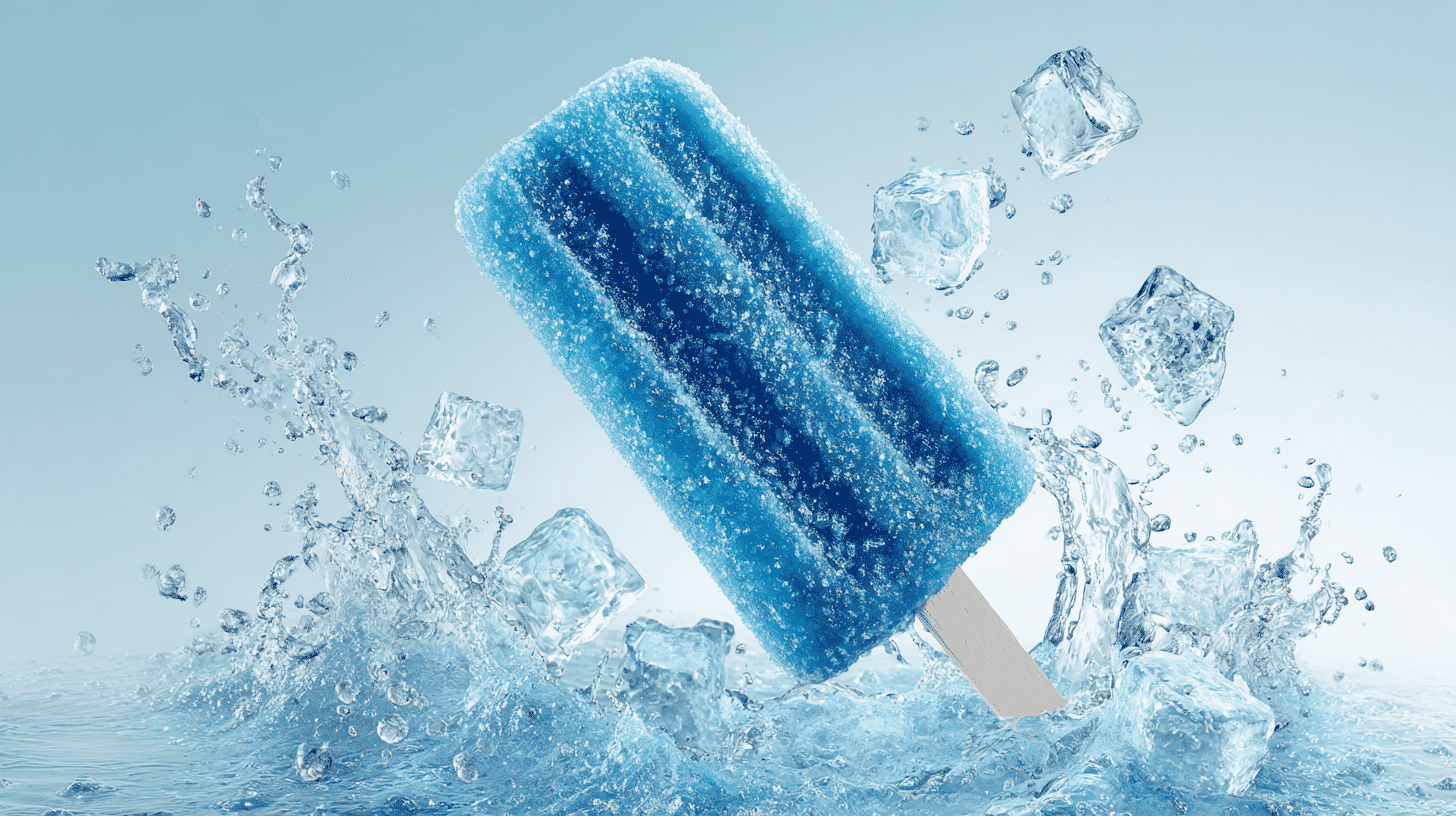
Akagi Nyugyo Co., Ltd. has announced a price revision for its flagship product "Garigari-kun," effective from shipments on March 1, 2026. The recommended retail price will increase from the current 80 yen (before tax) to 90 yen, representing a 12.5% increase.

This price adjustment marks the second increase in just two years, following the previous revision in 2024, and has sparked discussions among Japanese consumers. The price fluctuation of Garigari-kun, a beloved summer staple for generations, serves as a mirror reflecting Japan's economic conditions.

Multiple Factors Behind the Price Increase

Akagi Nyugyo's decision to implement this price revision stems from several converging factors affecting the business.

According to the company's announcement, the continuous rise in logistics costs has been a major driver. Driver shortages have led to increased labor costs, while fuel price volatility has pushed up distribution expenses significantly.

Raw material costs have also surged substantially. Sugar, dairy products, and fruit juice used for flavoring—essential ingredients for ice candy manufacturing—have all experienced price increases. Additionally, packaging materials including plastics and paper products have shown upward price trends.

Beyond these factors, rising labor costs at manufacturing facilities and energy expenses cannot be ignored. Escalating electricity and gas prices have particularly impacted the frozen food manufacturing industry.

Akagi Nyugyo commented that "we have decided to implement the price revision to continue providing products while maintaining quality."

The Price Evolution of Garigari-kun

Reviewing Garigari-kun's price history reveals the changing landscape of Japan's economy.

When first launched in 1981, Garigari-kun was priced at just 50 yen. It quickly became a hit as an affordable treat that children could easily buy with their pocket money.

For the next decade, the price remained unchanged, but in 1991, the first increase to 60 yen was implemented. This coincided with Japan's post-bubble economic adjustment period.

The next major price increase didn't occur until 2016—a remarkable 25 years of maintaining the 60 yen price point, a testament to corporate effort and efficiency. The price increased to 70 yen in 2016, then to 80 yen in 2024, and now to 90 yen in 2026, showing an acceleration in the pace of price increases in recent years.

Impact on Consumers and Future Outlook

Nearly 45 years since its launch, Garigari-kun's price will have increased by 1.8 times. However, considering the overall inflation rate and price increases of other food products during this period, this could be viewed as a relatively restrained price trajectory.

Even at the new 90 yen price point, the product remains affordable and accessible at convenience stores and supermarkets. However, the fact that it maintains the psychologically important "under 100 yen" price threshold will be interesting to observe in terms of its impact on future sales.

Looking at the ice cream industry as a whole, rising raw material and manufacturing costs are common challenges across the sector. This Garigari-kun price increase may influence other low-price-range ice cream products as well.

While this represents an increased burden for consumers, it can be understood as a difficult but necessary decision to maintain quality while continuing to provide a beloved product. This price revision may be a necessary step for Garigari-kun to remain a fixture of Japanese summers.

Summary

The Garigari-kun price increase extends beyond a simple product price change, symbolizing the challenges facing the entire Japanese economy. Companies and consumers alike must confront the reality of rising costs across logistics, raw materials, energy, and labor.

Nevertheless, Garigari-kun's popularity, sustained over 45 years, will likely remain unshaken by moderate price fluctuations. In the summer of 2026 and beyond, countless people will undoubtedly continue to beat the heat with a Garigari-kun in hand.

Reactions in Japan

Garigari-kun at 90 yen... Still cheaper than other ice cream products, and I think they're doing their best in this inflationary environment. I want to support them.

I agree 0
I disagree 0

Finally, Garigari-kun enters the 90 yen era. I remember when it was 50 yen in my childhood. Really feel the passage of time.

I agree 0
I disagree 0

Two consecutive years of price increases is tough. But considering raw material costs, it might be unavoidable. I hope they don't compromise on quality.

I agree 0
I disagree 0

I appreciate that they kept it under 100 yen at 90 yen. Psychologically, once it exceeds 100 yen, I'd hesitate to buy it.

I agree 0
I disagree 0

It's becoming harder for kids to buy with their allowance. Even traditional cheap sweets are getting expensive. I feel bad for children.

I agree 0
I disagree 0

I respect Akagi Nyugyo's corporate effort. While other companies are increasing prices of ice cream even more, Garigari-kun remains a friend to ordinary people.

I agree 0
I disagree 0

Considering the surge in logistics costs and electricity bills, 90 yen seems like a price where they're really trying hard. If anything, it was too cheap before.

I agree 0
I disagree 0

So it'll be 99 yen including tax at convenience stores. It's sad that we can't buy it with a single coin anymore, but that's the times we live in.

I agree 0
I disagree 0

Seeing the news about Garigari-kun's price increase made me really feel Japan's inflation. I hope wages rise too.

I agree 0
I disagree 0

Honestly, a 10 yen increase doesn't bother me that much. It's my favorite ice cream, so I'll keep buying it.

I agree 0
I disagree 0

If they're raising prices, I wish they'd make it bigger. It doesn't sit well with me when only the price goes up while the size stays the same.

I agree 0
I disagree 0

Garigari-kun price increase, huh. Well, raw materials and labor costs are rising, so companies are struggling too. It can't be helped.

I agree 0
I disagree 0

The summer staple ice cream at 90 yen. Premium ice creams are over 200 yen, so relatively speaking, it still feels like a good deal.

I agree 0
I disagree 0

Looking at Garigari-kun's price history, you can see the history of Japan's economy. We've really entered an inflationary era.

I agree 0
I disagree 0

Akagi Nyugyo, please don't change the taste even with the price increase. I love Garigari-kun's texture and soda flavor.

I agree 0
I disagree 0

For someone like me who buys in bulk and stocks the freezer, this is a chance to stock up before the price increase.

I agree 0
I disagree 0

Even at 90 yen, it remains the best value ice cream. It's a summer essential.

I agree 0
I disagree 0

The rush of price increases is straining household budgets. When even affordable products like Garigari-kun go up, it really affects daily life.

I agree 0
I disagree 0

The price increase is disappointing, but it's necessary for the company to continue. It would be worse if Garigari-kun disappeared.

I agree 0
I disagree 0

Thinking about it from 1981, it's only gone up 40 yen - isn't that actually amazing corporate effort? Other products have multiplied several times over.

I agree 0
I disagree 0

Voices from Around the World

Michael Chen

90 yen is about $0.60. In the US, a popsicle costs $2-3, so Japanese prices are incredibly cheap. Maintaining this price while preserving quality is impressive.

Sophie Dubois

In France, similar products cost over 1.5 euros. I think Japanese consumers are fortunate. It's interesting to see such reaction to a small price increase.

Kim Min-soo

This is popular in Korea too! The price increase is unfortunate, but it's still much cheaper than buying it in Korea. I'll definitely buy it when I visit Japan.

Carlos Rodriguez

Inflation is much more severe in Mexico. A 12.5% increase over two years is actually moderate by global standards.

Emma Wilson

Everything is getting more expensive in the UK. I'm envious that you can buy ice cream for 90 yen. Here it costs over £1.50.

Hans Mueller

Germany has similar energy cost issues. Companies' efforts to keep prices down while maintaining quality should be appreciated.

Li Wei

As a Chinese tourist, Garigari-kun is a must-buy at Japanese convenience stores. I'll continue buying it even at 90 yen.

Maria Santos

In Brazil, ice cream prices have more than doubled in recent years. Japan's price increase looks really small in comparison.

Ahmed Hassan

Import costs are high in the UAE. Products manufactured and sold in Japan at this price point demonstrate an efficient supply chain.

Anna Kowalski

Inflation is serious in Poland too. Companies honestly explaining the reasons for price increases is a good way to build trust with consumers.

Olivia Taylor

Prices in Australia are too high. I envy Japan's affordable products. Even with the increase, it's still very cheap.

Raj Patel

From an Indian perspective, maintaining a beloved product for 45 years is remarkable. A wonderful example of brand loyalty.

Isabella Rossi

Gelato in Italy costs 3-4 euros even for a small cup. Japanese ice cream culture and pricing is fascinating.

Daniel Larsson

All food is expensive in Sweden. The effort of Japanese companies to keep prices stable long-term is unthinkable in Northern Europe.

Fatima Al-Rahman

Imported ice cream is expensive in Saudi Arabia too. It's wonderful that Japanese domestic products can be offered at this price.

Nguyen Thi Mai

From Vietnam's perspective, the balance of quality control and price is excellent. This product could become popular in Southeast Asia.

Thomas Anderson

In Canada, rising logistics costs significantly impact product prices. Japan is facing the same challenges.

Juan Martinez

Summer ice cream demand is high in Spain, but so are prices. 90 yen is a competitive market price.

Yuki Tanaka

I'm Japanese living in Singapore. Similar products here cost over 2 dollars. It makes me realize again how affordable prices are in Japan.

Pieter van der Berg

The energy crisis hit manufacturing hard in the Netherlands. I can see that Japan's frozen food industry is facing the same challenges.