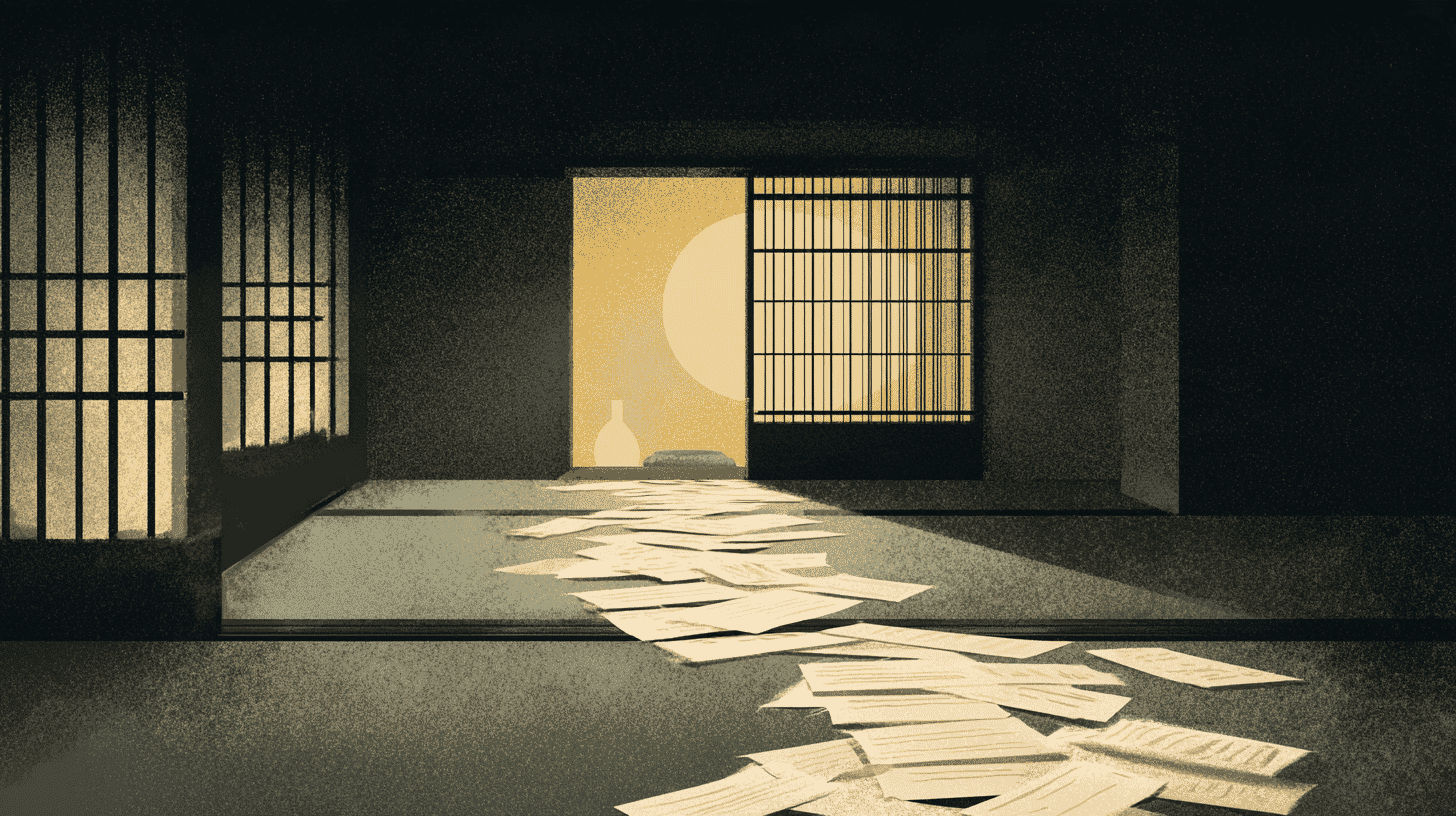
🏨 A hot-spring inn in northern Japan is asking travelers not to book it on Agoda, because Agoda is selling its rooms without a contract. Japan has been fighting this problem for a year and a half. Abroad, the same thing has been happening for years.
A confirmed booking, and no room
On September 22, 2026, a hot-spring ryokan in Yonezawa, Yamagata Prefecture, asked on social media that guests stop reserving it through Agoda or other overseas sites, J-CAST News reported on October 15, 2026. The inn said bookings never reached it, and those that did had the wrong room type, guest count or meals, at prices far from its own. Without reliable contact details, it feared it couldn't reach guests in an accident or a disaster. It said it wasn't trying to steer people to its own website, and that domestic sites such as Jalan and Rakuten Travel caused no such trouble.
In early October 2026, a traveler who had booked a hostel on Agoda said on social media that a sign at the property announced it had no contract with Agoda. The hostel explained that because its rooms were being resold, guests sometimes never received the door code. The traveler got in only because a staff member happened to come back.
On June 16, 2025, the major hotel chain Toyoko Inn had posted a warning about "some overseas booking sites (Agoda, etc.)." Rooms it gave to partner sites were being resold through other agents onto overseas platforms, with the same missing bookings, wrong dates and marked-up prices. It told affected guests to contact the booking site.
That same month, Yoshiharu Hoshino, head of Hoshino Resorts, wrote on social media that his rooms were being sold on Agoda without a contract and that guests kept arriving to find nothing reserved. Hoshino Resorts told J-CAST at the time that some properties saw up to about 300 such problems a year.
How a booking can exist on your phone but not at the front desk
Agoda sells rooms it contracts with hotels directly, plus rooms bought from other travel companies and middlemen. An inn might give a block of rooms to Travel Agency A, which passes some to Wholesaler B, which feeds them to Agoda. Each extra link is another place where a booking can be delayed, garbled or dropped.
Japan's Tourism Agency asked Agoda to fix this in March 2025. Agoda stopped selling inventory from some third-party suppliers on June 26, 2025. Over July and October 2025 it added AI monitoring, stricter supplier standards with heavier penalties, automatic blocking of improper prices and 24-hour Japanese-language support.
Some hotels have seen things improve. Hoshino Resorts signed a partnership with Agoda in November 2025, and in a July 2026 interview with the trade paper Kanko Keizai Shimbun, as reported by J-CAST, Hoshino said the direct contract had ended the major problems. But the suspension covered only some suppliers. Third-party routes remain, and properties without a contract, like the Yonezawa inn, are still exposed.
Taiwan and Vietnam: the same story, years earlier
Taiwan, 2017. On October 8, during the National Day holiday, a woman from Taichung arrived at an inn in Kaohsiung with an Agoda booking number, Taiwanese broadcaster TVBS reported. The front desk had no record of it. The inn said it had been full and had stopped selling rooms since late September, and didn't know why a booking site was still selling them. After 9 p.m., with nothing else available, the family rented a car and drove back to Taichung. Agoda later said the hotel was full, did not charge her, and offered a voucher worth 10% of the room rate. A deputy director of the Executive Yuan's Department of Consumer Protection in Taiwan told TVBS that Agoda needed to explain its booking process clearly.
Vietnam and wider Asia, 2019. Skift reported that homestay owners and hoteliers across Asia who had cut ties with Agoda said it kept listing their properties, and could still book them if they had a contract with Booking.com. The two are sister companies under Booking Holdings. Some suppliers privately nicknamed Agoda "Hotel California," after the line about checking out but never leaving. A 23-unit homesharing property in Ho Chi Minh City was leading a boycott.
Europe learned the lesson through a collapse
In Europe the problem is called wholesale rate leakage. Hotels sell discounted rooms to bedbanks, the wholesalers of the hotel world, for tour operators and offline travel agents. Hoteliers have long complained that some of that stock ends up on consumer booking sites without permission.
It came to a head in September 2019, when the booking site Amoma stopped taking bookings. Hoteliers had long suspected Amoma of repurposing rooms meant for tour operators and airline websites, Skift reported. When Amoma stopped paying, guests were turned away. According to the industry site Online Marketplaces, a Dutch tourist said the B&B Hotel at Disneyland Paris refused his Amoma booking because Amoma hadn't paid its bills. The big wholesaler Hotelbeds said it was cutting ties with booking sites that broke hotel distribution rules. Agoda, unlike Amoma, is still in business, but the room passes through the same kind of chain.
Korea: complaints pile up, and the courtroom is in Singapore
Korea Consumer Agency data, obtained by a lawmaker's office and reported by the Korea Economic Daily in August 2025, show relief applications against seven major platforms rose from 241 in 2021, when the pandemic had largely shut down travel, to 1,422 in 2024. In January–July 2025 alone there were 1,350. Over the four years and seven months covered, Agoda had the most cases at 2,190, ahead of Trip.com at 1,266.
These are not all phantom-room cases. The main recent complaints were inaccurate information, penalties for cancelling right after payment or on the day, and lowest-price guarantees that weren't honored. Getting redress is the harder part. The newspaper Herald Business reported in June 2026 that Agoda's global terms put key booking, cancellation and refund disputes under Singapore courts, and many Koreans simply give up. Korea's Fair Trade Commission made AliExpress and Temu fix similar overseas-court clauses in 2024, but as of June 2026 had not ruled on booking sites. Its earlier attempt to rein in Agoda failed: in February 2019 it ordered Agoda and Booking.com to change their no-refund terms, the companies sued, and in 2023 Korea's Supreme Court upheld the rulings that cancelled the order, legal newspaper Lawtimes reported.
What's different about Japan
The first difference is leverage. Agoda is registered in Japan as a Class 1 travel agency and operates under the Travel Agency Act, so the Tourism Agency can act on it directly. Britain's Competition and Markets Authority did secure commitments from Agoda and five other sites in February 2019, but those covered pressure selling, misleading discounts and hidden charges, not where a room came from.
The second is demand. According to Agoda and Hoshino Resorts, Japan is the most-searched destination on Agoda worldwide, and inbound accommodation searches rose 35% year on year in the first half of 2025. More demand plausibly gives middlemen more reason to push inventory into the chain.
Some of the anger in Japan is now aimed at the regulator. J-CAST noted social media users demanding an explanation, and others suggesting that ministries go easy on foreign companies. So far, the Tourism Agency has made a request, not issued an order.
If you're booking a room in Japan
Check the property's own website for warnings about overseas booking sites. At small inns and hostels with self check-in, confirm before you leave that the property has your booking and that you have the door code. Keep the booking site's support contact handy, since the property may send you back to it.
If you've ever turned up with a confirmed booking and no room, who in your country, if anyone, stepped in?
References
- https://www.j-cast.com/2026/10/15518464.html
- https://www.j-cast.com/2025/06/17505237.html
- https://www.travelvoice.jp/20250717-158089
- https://www.travelvoice.jp/20251010-158538
- https://hoshinoresorts.com/jp/information/h2r1b5u7pl/
- https://news.tvbs.com.tw/life/787553
- https://skift.com/2019/07/11/agoda-dubbed-hotel-california-in-asia-as-hotel-suppliers-say-they-can-never-leave/
- https://skift.com/2019/09/16/wholesaler-hotelbeds-cuts-ties-to-booking-sites-that-break-hotel-distribution-rules/
- https://www.onlinemarketplaces.com/articles/hotels-withhold-rooms-from-travelers-who-booked-via-amoma-com/
- https://www.hankyung.com/article/202508185008g
- https://www.heraldk.com/article/2026061718511177021
- https://www.lawtimes.co.kr/news/191504
- https://www.gov.uk/government/news/hotel-booking-sites-to-make-major-changes-after-cma-probe






Global Discussion
4 comments