🍣 In 2025, foreign visitors to Japan spent roughly ¥2.07 trillion (about $12.9 billion) just on food and drink. For a growing share of travelers, the meal is the trip. Sushi, ramen, and a slab of marbled wagyu off the grill aren't souvenirs anymore. They're the main event.
A record year, and food kept pace
Japan crossed a line in 2025. The country welcomed 42.68 million international visitors, the first time it has ever broken 40 million, up 15.8% from the year before. Their total spending reached ¥9.46 trillion (about $58.7 billion), another record, according to the Japan Tourism Agency.
Inside that figure, food and drink came to ¥2.0711 trillion (around $12.9 billion). That's 21.9% of all visitor spending, the third-largest category after accommodation (36.6%) and shopping (27.0%), and it grew 18.8% in a single year. More than one yen in five that tourists spend in Japan now goes to a restaurant, a counter, or a street stall.
The momentum hasn't slowed. In the first quarter of 2026, the food share climbed again to 22.9%, edging out the long-standing trend where shopping dominated. The old image of the foreign tourist hauling suitcases of cosmetics and rice cookers is fading. The new one is holding chopsticks.
Per traveler, food spending averaged about ¥50,000 (roughly $310) over a trip. It sounds modest until you multiply it across 42 million people. Surveys have repeatedly found "eating Japanese food" ranked as the single most anticipated part of a trip to Japan, ahead of shopping, sightseeing, and hot springs.
What 42 million people actually order
So what fills all those plates? The icons do a lot of the heavy lifting.
A 2023 survey by Norinchukin Bank of 1,200 people from the US, UK, France, China, and South Korea who had visited Japan found sushi was eaten by 68.3% of them, far ahead of tempura (47.2%) and steak or yakiniku (46.9%). Asked which dish was the single most delicious, sushi again topped the list at 19.4%, followed by steak/yakiniku (9.2%), sukiyaki (8.0%), and unagi, or grilled eel (7.4%).
The interesting wrinkles are in the differences. Among Chinese respondents, eel actually outranked sushi. And a striking 86.7% said the Japanese food they ate in Japan tasted different from the "Japanese food" back home, a gap that runs highest among Chinese (97%) and French (92.7%) visitors. That sense of "this is the real thing" is a large part of the pull. Asked what they'd eat on a return trip, sushi led again at 58.7%.
Ramen deserves its own mention. Western travelers in particular treat a long line outside a ramen shop not as a deterrent but as proof of quality, and the build-your-own logic of choosing noodle firmness, broth richness, and toppings fits neatly with how they like to eat. Regional variety helps too: miso ramen in Hokkaido, tonkotsu in Kyushu, shoyu in Tokyo. Then there's wagyu, a word now recognized worldwide, with Kobe, Matsusaka, and Omi beef pulling in higher-spending visitors who treat a yakiniku or teppanyaki dinner as a centerpiece of the trip.
The list has broadened, too. Onigiri, miso soup, gyoza, Japanese curry, even convenience-store food now show up on "most impressed" rankings, the everyday meals that let visitors feel they've touched ordinary Japanese life rather than just the luxury version.
The challenge nobody can plate around
There's a catch growing alongside the boom, and it's about who can eat what.
As Japan's visitor mix widens, so do its dietary needs. By one tally of Japan National Tourism Organization figures, compiled by food-labeling specialist Nobutaka Kikuchi, 34% of arrivals from Japan's top 16 source countries in 2025 came from places with meaningful vegetarian or Muslim populations. India, Taiwan, Indonesia, Malaysia, and several Western markets all bring travelers who, for reasons of religion, ethics, or health, can't or won't eat certain ingredients.
Japan has historically been slow here. Dashi, the fish-based stock at the foundation of countless "vegetable" dishes, quietly disqualifies a lot of menus for strict vegetarians. Pork fat and cooking alcohols like mirin run through dishes Muslim diners must avoid. The Japan Tourism Agency estimates that in 2025 vegetarian and vegan visitors numbered about 2.21 million, spending roughly ¥107.7 billion a year on food, while Muslim visitors numbered about 1.64 million and spent around ¥78.7 billion. Both bases keep growing.
Progress is real but uneven. At Expo 2025 in Osaka, organizers rolled out "FOODPICT" ingredient pictograms across the venue, simple icons showing whether a dish contains pork, alcohol, beef, and so on, and a major convenience-store chain has since started using similar labels on its own products. Restaurants offering vegan ramen made with soy milk, or halal-friendly versions of Hokkaido's grilled-lamb jingisukan, are multiplying in big cities. Still, when foreign visitors are asked what frustrated them, communication ranks second only to a shortage of trash cans, and the place that frustration most often surfaces is the restaurant.
How to actually eat your way through Japan
If you're planning a trip with your stomach in charge, a few things are worth knowing.
Go regional. The most memorable meals are often the ones tied to a place: Osaka's okonomiyaki and takoyaki, Hokkaido's seafood, Fukuoka's tonkotsu ramen, Hiroshima's oysters. Chasing a dish to its hometown also pulls you out of the Tokyo-Kyoto-Osaka crush and into quieter regions that are happy to see you.
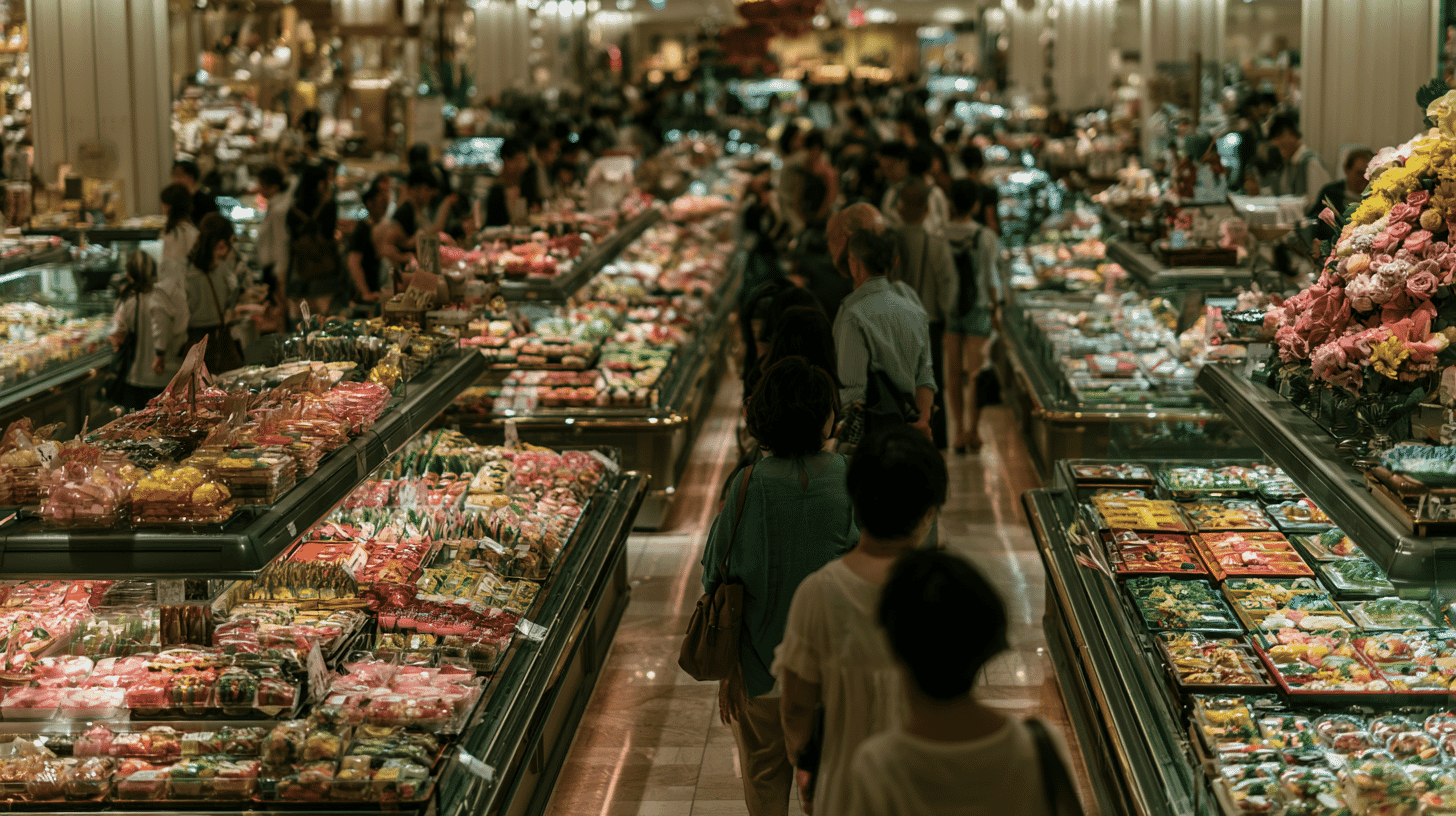
Make it hands-on. Sushi-rolling and ramen-making classes have boomed, and they buy you the story behind the food, not just the taste. Department-store food halls, the famous depachika in the basement, are a low-stakes way to graze through dozens of regional specialties in one stop.
A few practical notes. Top restaurants, especially sushi counters, often need reservations days ahead and may not have English menus, so booking through a hotel concierge or an app helps. Many small, excellent places still prefer cash. And if you have dietary restrictions, look for shops that post their policy openly; an increasing number do, precisely because they know you're coming.
Japan's restaurants spent decades perfecting dishes for a domestic audience. Now 42 million outsiders a year are showing up hungry, and the country is, slowly, learning to set more kinds of tables. What's the one dish you'd cross an ocean to eat, and would you build a whole trip around it?
Update: In the Japan Tourism Agency's preliminary figures for April-June 2026, released on 15 July 2026, inbound spending reached ¥2.5096 trillion, up 0.2% year on year and a record for any second quarter. The United States (¥384.8 billion) overtook China as the largest single market.







Global Discussion
4 comments