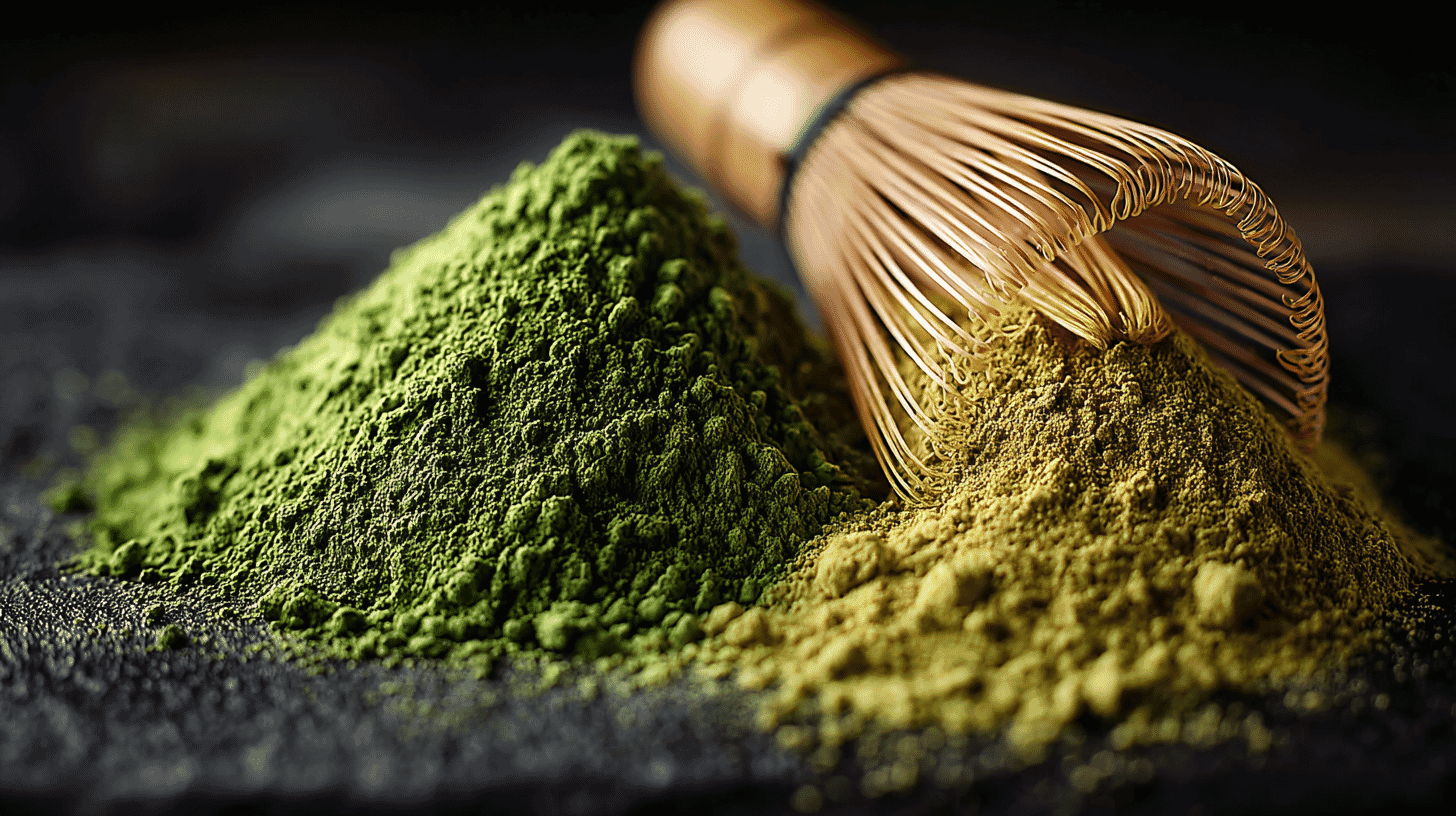
Is the "matcha" in your latte actually matcha? Japan's green tea exports nearly doubled to ¥72.1 billion ($450 million) in 2025. But inside the industry, a troubling phenomenon is gaining a name: "matcha laundering," the flood of low-grade powdered green tea sold worldwide under the prestige of Japan's matcha brand. Here's what's really going on behind the boom.
¥72.1 Billion: An Export Explosion That Defies Explanation
Japan's green tea exports hit ¥72.1 billion in 2025, a staggering 98% jump from the previous year. That's more than double the government's 2025 target of ¥31.2 billion, and over triple the ¥21.9 billion recorded as recently as 2022.
Over 80% of these exports are classified as "powdered green tea." The United States is the largest buyer, followed by the EU, Southeast Asia, and the Middle East. The global matcha latte craze, TikTok's #MatchaTok trend, and growing recognition of matcha as a superfood have fueled this explosive growth.
What Is "Matcha Laundering"?
Here's the critical distinction most overseas consumers miss: "powdered green tea" and "real matcha" are not the same thing.
Authentic matcha is made from tencha, tea leaves grown under shade covers for three to four weeks to boost chlorophyll and amino acid content, then steamed, dried without rolling, and stone-ground into an ultra-fine powder. Traditional stone mills produce only 30 to 40 grams per hour. The result is a vivid green powder with a rich umami flavor and smooth texture.
But the "powdered green tea" category in trade statistics also includes sencha and other tea leaves ground by industrial high-speed mills, products that differ significantly in color, flavor, and nutritional profile from genuine matcha. Overseas, however, these products often end up on shelves and in café menus labeled simply as "MATCHA."
Industry insiders call this "matcha laundering", lower-grade powdered teas free-riding on the premium brand value of authentic Japanese matcha.
The Numbers Don't Add Up
The scale of the problem becomes clear when you compare production and export figures.
According to Japan's Ministry of Agriculture, domestic tencha production reached a record 5,336 tons in 2024. Yet powdered green tea exports that same year totaled 8,717 tons, far exceeding Japan's tencha output.
Not all tencha is exported, some stays for domestic consumption, and the powdered category includes non-tencha products. But the gap strongly suggests that much of what leaves Japan labeled as matcha doesn't meet the traditional definition.
Tea Plantations Shrinking 29% in a Decade
While demand explodes, Japan's tea production base is steadily eroding.
Total tea plantation area has declined roughly 29% over the past decade. Tea farmers are aging rapidly, and in Shizuoka Prefecture, historically Japan's tea heartland, the number of farms has halved in ten years. About 40% of Japan's tea plants are over 30 years old, reducing yields and quality.
Uji, Kyoto, the spiritual home of matcha, saw its 2025 first-flush tencha output fall to 87% of the prior year. Average first-flush tencha prices in Kyoto skyrocketed from ¥5,500/kg ($35) in 2024 to ¥14,333/kg ($90) in 2025, a 265% increase. Legendary tea houses like Marukyu Koyamaen and Ippodo have imposed purchase limits for the first time in their centuries-long histories.
The "Fake Matcha" Threat Goes Global
The supply shortage and soaring prices have created a parallel problem abroad.
China produced an estimated 5,000 tons of matcha in 2025, accounting for roughly 60% of the world's supply. Chinese matcha sells at a fraction of Japanese prices, rapidly filling the gap left by Japan's inability to meet demand.
But quality concerns are real. A 2024 study in the journal Food Chemistry found lead, arsenic, and cadmium exceeding US safety limits in 12% of low-grade matcha samples. Adulterants like sugar and starch, undeclared allergens, and microbial contamination have also been reported.
Compounding the problem, "Uji matcha" has no trademark protection under Chinese law, allowing Chinese producers to sell their products under the prestigious Uji name with virtual impunity.
How Japan Is Responding
Japan's government and industry are beginning to fight back.
Agriculture Minister Suzuki visited matcha cafés to signal support for overseas expansion while emphasizing quality control. The government has set a 2030 tea export target of ¥81 billion and is funding tencha processing facilities and organic JAS certification.
Within the industry, calls are growing louder to formally distinguish "authentic matcha" from "powdered green tea." Labeling standards and traceability systems are under discussion, with some producers arguing that only stone-ground tencha powder should be called matcha.
As we reported earlier, Kagoshima's ¥2.6 billion ($16 million) factory and Ibaraki Prefecture's subsidies for new matcha entrants are part of the supply-side response.
A $7.8 Billion Market Built on Ambiguity?
Market forecasts project the global matcha market will grow from around $4.5 billion in 2025 to $7.8–8.1 billion by 2033, at annual growth rates of 7–10%.
But if that growth is built on blurred definitions and quality dilution, it raises an uncomfortable question for Japan's tea culture: Is the world's matcha boom actually helping, or slowly eroding, the very tradition that made matcha valuable in the first place?
Is the matcha you drink the real thing? How does your country protect the authenticity of traditional foods? We'd love to hear your perspective.
References
- https://www.nikkei.com/article/DGXZQOUA022WU0S6A200C2000000/
- https://inttea.com/why-japans-matcha-is-pricier-and-scarcer-than-ever-in-2025/
- https://www.foodsafetynews.com/2025/04/matcha-shortage-spurs-concern-about-unsafe-bargain-products-in-u-s/
- https://best-matcha.com/knowledge/industry-insights/beyond-japan-global-matcha-production-and-quality-differences
- https://www.japantimes.co.jp/life/2025/02/23/food-drink/matcha-shortage-global-solutions/






Global Discussion
15 comments