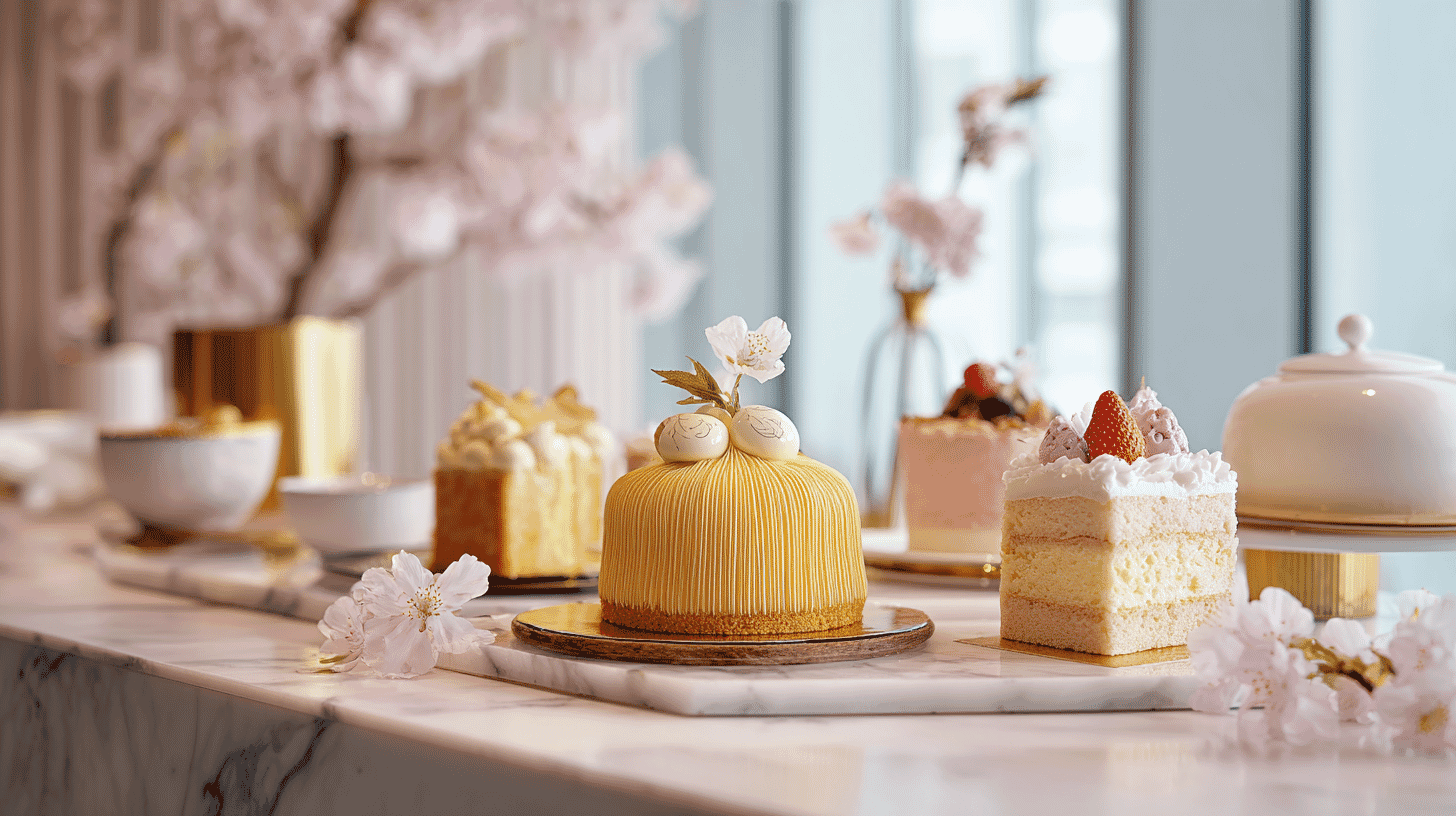
Mont Blanc is yellow; strawberry shortcake is light and fluffy. "French pastries" that even the French don't recognize have flourished in Japan, and now legendary Paris shops are borrowing Japanese techniques. Here's a look at the skill of Japanese pastry chefs, who won the pastry World Cup twice in a row, and the appeal of a "Japanese-style French pastry" that has evolved on its own.
Japanese Skill That Outshines the French Heartland
On January 24 and 25, 2025, the Coupe du Monde de la Pâtisserie was held in Lyon, France. At this 19th edition, Team Japan won again, following its 2023 victory. It was Japan's first back-to-back win.
Often called the World Cup of pastry, the competition was founded in 1989 by Gabriel Paillasson, holder of the M.O.F. (Meilleur Ouvrier de France) title, together with Valrhona, and is held in Lyon every two years. Eighteen countries came through continental qualifiers this time, and Japan finished ahead of runner-up France and third-place Malaysia.
The overall theme was "National Heritage." Team Japan worked motifs of a taiko drummer, koi carp and a spinning top (koma) into ice sculpture, chocolate work and sugar work. The team itself credits the win to the buffet table, the piece it had spent the longest preparing.
The roster is worth pausing on. Team leader Masanori Hata; Yuji Matoba, who earned his place on a fifth attempt; and Ryu Miyazaki, the oldest at 53. Miyazaki came to pastry after turning 30, entered the qualifiers a record eight times, and took the national spot after more than 16 years of trying.
The Yellow Mont Blanc, a "French Pastry" Born in Japan
Mont Blanc is a prime example of how Japanese confectionery evolved on its own. In France, many people hear "Mont Blanc" and think not of a cake but of a brand of cream pudding. The chestnut cake that is a staple in Japan is, surprisingly, a minor item in France.
In 1933, Chimao Sakota, founder of the Jiyugaoka confectionery "MONT-BLANC" in Tokyo, visited Chamonix in France and was struck by the beauty of Mont Blanc in the Alps, deciding to name his shop and signature product after it, going so far as to obtain permission from the mayor of Chamonix.
Rather than reproducing the French Mont Blanc (a meringue-based cold dessert) exactly, Sakota adapted it to Japanese tastes. He swapped the base for castella sponge and used candied chestnuts in syrup (kanroni), familiar to Japanese palates, instead of marrons glacés. Using a traditional Japanese confectionery tool called an "odamaki," he devised a technique for piping the cream into airy spirals. That is how the distinctive "yellow Mont Blanc" was born.
Later, when the Paris institution "Angelina" opened in Ginza in 1984 and introduced its brown chestnut-cream Mont Blanc, Japan developed a culture where both the yellow and the brown could be enjoyed.
Shortcake, an "Invention"
Japan's strawberry shortcake is another confection with no equal in the world. The combination of light, fluffy sponge, mild whipped cream, and fresh strawberries simply doesn't exist in Western traditions.
France has the "fraisier," but it is packed with a rich crème close to vanilla custard. Britain's "Victoria sponge" is a moister cake layered with buttercream and jam, a completely different texture from Japan's shortcake.
French residents in Japan often say, on tasting Japanese shortcake, that "it just tastes like cream" or "there aren't enough strawberries." Yet that very lightness matches the Japanese sensibility for enjoying seasonal fruit, and gave rise to the distinctive custom of eating shortcake at Christmas.
Convenience Store Sweets: The "Democratization of Quality"
Another hallmark of Japan's confectionery culture is the "democratization of quality." Sweets rivaling the cakes of famous Paris shops with long lines can be bought at a Japanese convenience store for a few hundred yen.
Pudding, cream puffs, éclairs, canelés. These French pastries are offered at astonishing quality in Japanese convenience stores. In 2024, a TV segment in which a popular Paris-based pastry chef judged convenience store sweets drew attention, and that itself testifies to the high level of Japanese sweets.
The "Reverse Import" to France
Most intriguing is that Japanese technique and sensibility have begun to influence France itself. At the Paris institution "Angelina," refinements made in Japan are said to have been adopted, with the piping tools even switched to Japanese-made ones.
Japanese pastry chefs who train in France and open shops back home also draw constant lines. Hidemasa "Mori" Yoshida, called "the most famous Japanese pastry chef in France," opened his own shop in Paris's 16th arrondissement in 2015 and, in November 2024, opened his first street-level shop in Nakano, Tokyo. At events in France, his popularity has drawn lines with waits of up to 180 minutes.
And in December 2024, at a Galette des Rois competition in Paris, Japanese pastry chef Shota Nakayama placed third among the local artisans who gathered there. Even in the realm of France's traditional pastries, Japanese skill is winning recognition.
The French Pastry Arriving Now: "Flan"
Since around 2025, the "flan pâtissier" has been turning up in Japan's sweets scene. This French everyday staple, custard baked on a pie or tart crust, draws lines at specialty shops in Paris.
Japan's first flan specialty shop, PAQUET MONTÉ, opened in the Yoyogi-Hachiman area of Tokyo. Gluten-free flan and Japanese-style versions with matcha and hojicha appeared almost immediately. What happened to the Mont Blanc appears to be happening again.
Why Is Japanese Confectionery Special?
Japanese pastry chefs earn worldwide recognition for more than technical skill. Attention to detail, a determination to keep making the same thing at the same quality, and a sensibility for drawing out the flavor of ingredients, all are an aesthetic inherited from the tradition of Japanese sweets.
Japan also has a culture that treasures the seasons. Cherry blossoms in spring, peaches in summer, chestnuts in autumn, strawberries in winter. Confections that make use of seasonal ingredients are an expression that fuses French tradition with Japanese sensibility. Tokyo is also a "capital of food," with more Michelin-starred restaurants than any other city in the world. Behind this is a Japanese willingness to voraciously absorb food cultures from abroad and evolve them in its own way.
In Japan, French pastry has drifted a long way from the original. How have sweets from abroad changed where you live?
References
- https://francepatisserieweek.com/
- https://www.cdmp-japan.jp/
- https://chocolatejournal.fun/archives/coup2025.html
- https://www.ufu-sweets.jp/patisserie/coup2025/
- https://hanako.tokyo/food/463906/
- https://www.patissient.com/magazine/1868/
- https://www.euronews.com/culture/2025/01/26/japan-defends-pastry-world-cup-title-as-home-favourites-france-fall-short-again





Global Discussion
15 comments