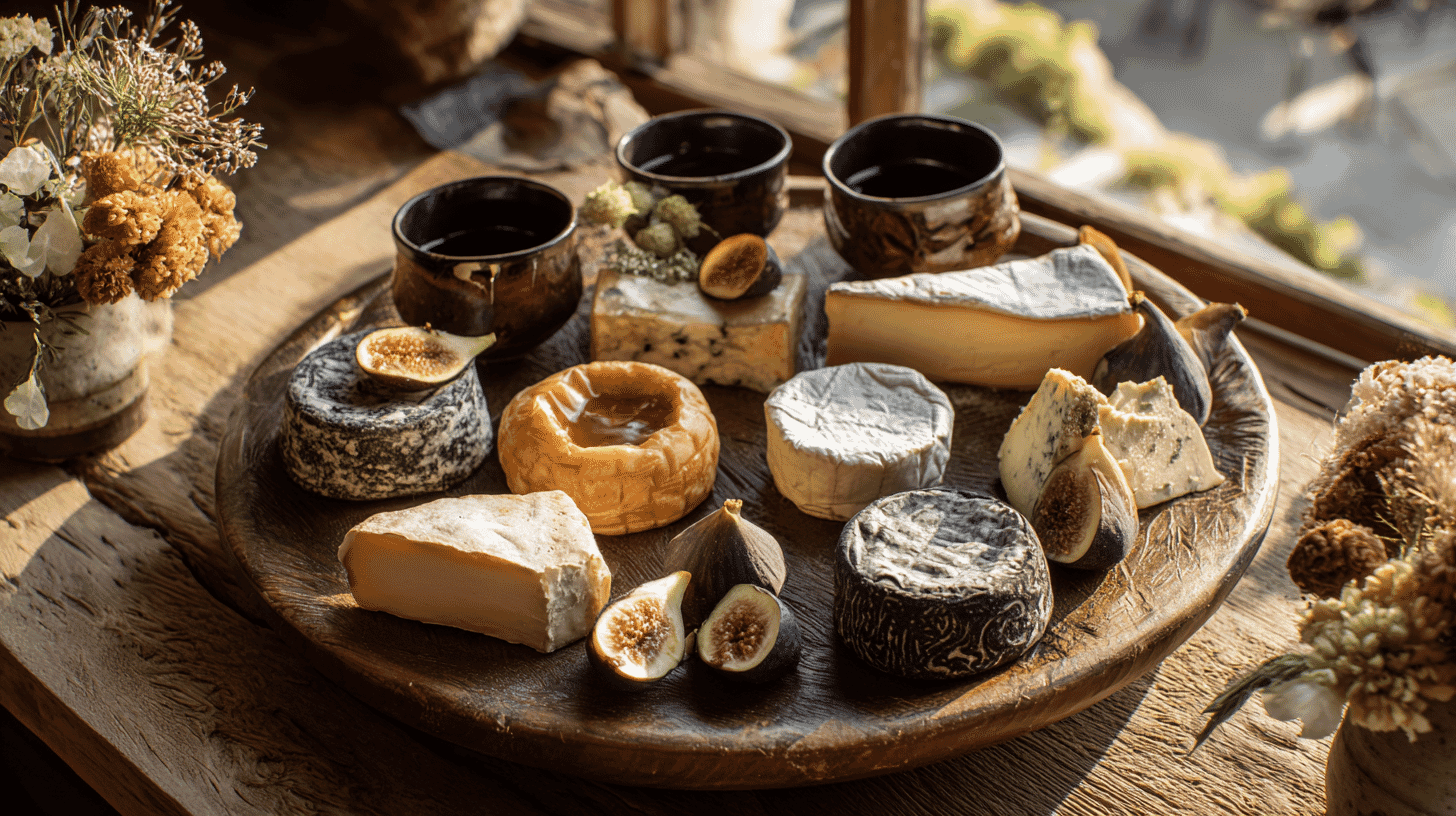
"Japan makes cheese?" That era of surprise is officially over. At the 2025 ALL JAPAN Natural Cheese Contest, a record 284 entries poured in from 121 workshops across the country. The grand prize went to a raclette from Shiga Prefecture, aged in the same cellar as funazushi, Japan's ancient fermented sushi. As the weak yen sends imported cheese prices soaring, Japan's terroir-driven "wa no cheese" is turning heads worldwide.
Record-Breaking 284 Entries at Japan's Premier Cheese Contest
The ALL JAPAN Natural Cheese Contest, held biennially, is the country's most prestigious showcase for domestic cheese. The 15th edition took place on October 17, 2025, at the Tokyo Prince Hotel, drawing 284 entries from 121 workshops nationwide, both all-time highs, up significantly from the previous edition's 109 workshops and 248 entries.
Eighty-six workshops set up tasting booths at the venue, offering attendees direct access to sample cheeses paired with wine and sake. The atmosphere was electric: one visitor reportedly exclaimed upon entering, "Is this heaven?"
Shigeru Terada, secretary-general of the Central Dairy Council (the event organizer), noted that Japanese cheesemakers are absorbing European techniques while tailoring flavors to Japanese palates. "What's interesting," he said, "is that these Japanese-style cheeses are also placing well at international competitions. I believe the 'delicacy' unique to Japan is being highly valued."
Grand Prize: A Raclette Aged Alongside Fermented Sushi
The Minister of Agriculture, Forestry and Fisheries Award (Grand Prize) went to Yamada Ranch "Casa Bianca" in Koka City, Shiga Prefecture, for their raclette. While raclette is traditionally a Swiss and French cheese, meant to be heated and scraped onto potatoes, Yamada Ranch's version is gentle enough to enjoy raw, sliced thin.
The secret lies in the aging cellar it shares with funazushi, a traditional Shiga delicacy where fish is fermented with cooked rice through lactic acid fermentation. Bacteria from the funazushi rice naturally migrate to the cheese during aging, adding layers of umami. Michiko Yamada, the ranch's third daughter, explains: "We age another cheese using the rice from our funazushi in the same cellar. Those bacteria likely attach to the raclette too, adding that extra umami."
The cheese is a labor of love between an 87-year-old father and his daughter. French chef Patrick Passion, one of the judges, praised it highly. The ranch's advantage is clear: fresh milk goes directly from the barn to the adjacent workshop, preserving the milk's natural flavor and aroma with minimal processing.
From 106 to 347: Japan's Cheese Workshop Explosion
Japan's cheese workshops have more than tripled in under two decades, from 106 in 2006 to 347 in 2024. While Hokkaido accounts for roughly 40% of workshops, artisan producers have sprung up across Kanto, Chubu, Kinki, and Kyushu.
According to the Ministry of Agriculture, Japan produced approximately 45,372 tons of natural cheese in fiscal 2024. Domestic cheese still represents only about 14% of total cheese consumption, but production of natural cheese for direct consumption (as opposed to processed cheese ingredients) has been steadily growing.
One distinctive characteristic of Japanese workshops is variety: unlike many European producers that specialize in a single style, Japanese cheesemakers often produce fresh, bloomy rind, washed rind, blue, hard, and goat cheese all under one roof. Many incorporate uniquely Japanese ingredients, miso-marinated cheese, sake lees-washed varieties, black beer cheddar, and more, creating a fusion of European cheesemaking tradition and Japanese culinary culture.
The Weak Yen Tailwind: Why Imported Cheese Is Getting Expensive
Japan depends on imports for over 80% of its cheese consumption. More than 85% of the natural cheese used as processed cheese ingredients comes from abroad, approximately 40% from Australia and 30% from Europe.
The prolonged weakness of the yen has disrupted this structure significantly. The retail price of processed cheese (per 100g) jumped from ¥175 in December 2021 to ¥256 by March 2025, a roughly 37% increase compared to pre-pandemic levels. Rising feed costs, higher shipping rates, and the yen's depreciation against the dollar and euro have created a triple squeeze on import costs, with no relief in sight.
This environment has naturally boosted interest in domestic alternatives. A representative from a major dairy manufacturer noted that domestic cheese price increases have been more gradual than imports, offering consumers greater price stability. For shoppers, locally produced cheese from a familiar farm also carries an added sense of trust and traceability.
Japan's Ultra-Soft Water: The Secret Behind Delicate Flavor
Why is Japanese cheese consistently described as "mild and delicate"? The answer may lie in water.
Japan's water is exceptionally soft compared to Europe, harboring microbial diversity estimated at tens of times greater than that found in hard water environments. This rich microbiome drives complex flavor development during aging, producing cheeses with less sharpness but remarkable depth of umami. Even when using nearly identical ingredients and techniques as European producers, the fundamental difference in water and indigenous microorganisms creates a distinctly "Japanese" character.
Japan's four distinct seasons also play a role. On pasture-based farms, spring and summer milk from grass-fed cows carries a fresh, vibrant flavor, while winter milk from hay-fed cows is richer and more concentrated. Japanese cheesemakers embrace these seasonal variations not as flaws to be corrected, but as expressions of terroir to be celebrated.
World Recognition: Japan's Rise at the World Cheese Awards
Japanese cheese is no longer just a domestic curiosity. At the World Cheese Awards 2025, held in Bern, Switzerland, 5,244 cheeses from 46 countries competed. Japan sent 48 entries from 40 workshops, and an impressive 22 received awards.
The standouts were Yōsawa Goat Cheese from Yōsawa Goat Farm in Tokyo and "Yukiko" from "Chiizu no Monogatari" in Hiroshima Prefecture. Both earned the top-tier Super Gold medal, and Yōsawa Goat Cheese was selected for the championship final round of the top 14 cheeses worldwide.
International judges praised the consistently high technical skill and exceptionally stable hygiene and quality management of Japanese entries. The perception has shifted from "Japan makes cheese too?" to "Japan reliably produces excellent cheese."
A Regional Tour of Japan's Cheese Culture
Hokkaido's Tokachi: The Dairy Kingdom's Cheese Road
Tokachi, Japan's largest cheese-producing region, hosts over 15 workshops across its vast plains. The cool climate, expansive pasturelands, and latitude similar to parts of Europe create ideal conditions.
A standout innovation is raclette washed with local moor hot spring water (mōru onsen-sui), alkaline mineral water drawn from ancient peat layers beneath Tokachi River. This promotes Brevibacterium linens activity, imparting rich, distinctive flavor. Local cheesemakers have declared it's time to "graduate from imitating Europe and create cheese that's truly Tokachi."
Tochigi's Nasu: Bridging Producers and Consumers
The Nasu Highlands, just 90 minutes from Tokyo, are home to growing numbers of workshops using rich Jersey cow milk from pasture-raised herds. The proximity to the capital means consumers can easily visit farms, participate in cheesemaking workshops, and develop a genuine connection with the products they enjoy.
Shiga's Koka: Where Fermentation Cultures Collide
Shiga Prefecture's grand prix win has spotlighted a region steeped in Japan's ancient fermentation heritage. The collision of Western cheesemaking with Japan's centuries-old funazushi tradition creates flavors impossible to replicate anywhere else.
Hiroshima and Shimane: Emerging Forces from Western Japan
Hiroshima's "Chiizu no Monogatari" catapulted to international fame with its Super Gold at the World Cheese Awards. Shimane Prefecture's Kisuki Dairy also earned a Silver medal for its "Natural Snacker," proving that world-class quality is emerging far beyond Hokkaido.
What Lies Ahead for Japanese Cheese
Japan's cheese culture is still young. But 347 workshops are daily refining their craft, each in conversation with their local water, climate, microbiome, and food traditions. This spirit of "creation in progress", distinct from Europe's centuries-old appellations, holds its own unique appeal.
Turning the headwinds of a weak yen into opportunity, Japanese artisan cheese is challenging the world with its characteristic delicacy and creativity. The revolution is only just beginning.
In Japan, cheesemakers are incorporating local fermentation bacteria, washing cheese with hot spring water, and drawing on regional food traditions to create something entirely new. Does your country have unique cheeses or dairy products that fuse with local food culture?



Global Discussion
16 comments