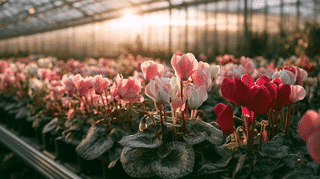
Japanese researchers have read the genome of the potted cyclamen's wild ancestor: 1.48 billion base pairs, 83% of them repeats. Breeding scent back into the flower once took Saitama 21 years.
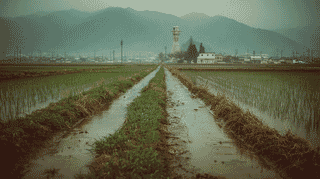
Extinct in Japan's wild in 1971, the Oriental stork now numbers 728, and only 49 were released. Most hatched in the wild, fed by low-pesticide paddies that cost farmers work and yield. Now they nest on power poles.
Japan's gene-edited GABA tomato opened its field. It wasn't the first gene-edited food sold (US soybean oil, 2019), but the first CRISPR food shoppers could buy. How Japan's rules compare with the EU's.
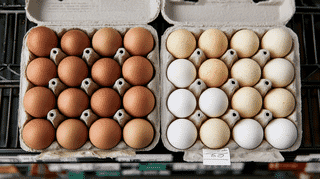
A Japanese team tracked 563 metabolites and 107 tasters to show how hen housing changes egg flavour, in a country where 96.6 percent of laying hens are still caged and cage-free eggs cost about twice as much.
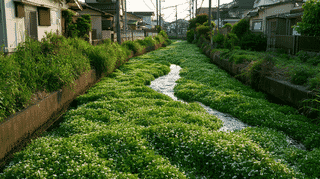
In spring 2026 a meter-tall mat of watercress smothered a suburban river in Matsuyama. Japan calls it a priority-control invasive species, yet farms ship 362 tons a year. How New Zealand, Australia and the US see it.
Kewpie sets up an Indian sales company in September 2026. In the US, egg yolk is what legally makes mayonnaise mayonnaise. In India, egg is what earns the non-vegetarian mark. Same ingredient, opposite verdicts.
Japan's calorie-based food self-sufficiency fell to a record-low 37% in fiscal 2025 while the production-value measure rose to 66%. A 48% rise in rice prices moved both. By production value, Japan ranks above the US.
Takasaki pays 300 yen per beetle. Kawashima paid 100 yen and closed two and a half months early after handing out 7 million yen for 70,000 insects. Taiwan ran almost the same scheme, and cancelled it.
Japan's food exports hit 897.7 billion yen (about $5.7 billion) in the first half of 2026, a record. Green tea rose 83.5% and yellowtail 69.0%, but the yen was 5.5% weaker, so about half the growth was currency.
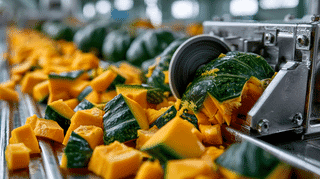
The only machine on Earth that cuts pumpkins into deliberately irregular 'rangiri' pieces. How Hokkaido's Synthemec cracked the paradox, then brought its parts in-house to win on precision and lead time, against an industry built for uniform cuts.
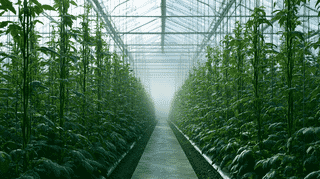
Kyushu Electric has grown and cured Japan-made vanilla beans in a Fukuoka greenhouse, branding them Carol Vanilla. With a pollination gun and an automated curing machine, the utility is taking on the world's second most expensive spice, and Japan's 90%-plus import dependence.
Researchers at the Institute of Science Tokyo have created a surface electrene: a crystal whose outermost layer is a sheet of loose electrons, with a work function lower than cesium. It survives open air because nitrogen caps it, then leaves as ammonia. Here is what it means for green fertilizer, and how it compares with the electrochemical routes pursued in China, Europe and the US.
Japan has rewritten its seed law to add ten years to breeders' rights and let officials block exports even before a variety is registered. We unpack the bill enacted on July 17, 2026, the suspected leak of Ehime's premium citrus to China, and why the 2020 version left a hole that fruit pirates walked right through.
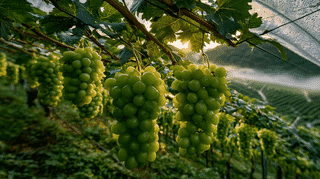
Japan estimates the leak of its Shine Muscat grape to China and South Korea costs about $120 million a year. We unpack how a missed registration deadline, a strawberry precedent and a too-late seed law left one of Japan's best fruits unprotected abroad.
Say you can hear plants and people back away slowly. Turns out it's real: researchers at Japan's Institute of Science Tokyo built a transparent 70-nanometer carbon-nanotube electrode that reads a crop's bioelectric stress signals for up to 10 months, even in the rain.
A Tohoku University team grew rice to the heading stage in soil mimicking the Moon's surface, using fertilizer made from nothing but air and electricity via plasma. The unlikely inspiration? Gundam's beam saber. As NASA pushes toward a lunar base, it could become foundational tech for growing food in space.
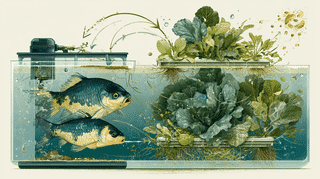
Aquaponics rarely pays as a standalone farm. So how does Aomori's closed-school project plan to make money? By monetizing the cafe, tours, education and welfare work around the tank, backed by public funds.
Yokkaichi City handed its reservoir grass-cutting to nine goats, dropping annual costs from $5,000 to $3,100. Meet the hungriest grounds crew in Japan and the comeback of goat grazing.
Japan's food exports hit a record 1.7 trillion yen in 2025, a 13th straight high, while its calorie-based self-sufficiency stays at 38%. Why both are true: wagyu, green tea, the 27% feed rate and the 64% production-value figure, explained for global readers.
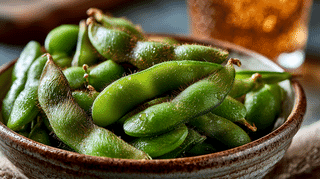
Why is Japan's prized dadachamame edamame so flavorful? Yamagata University traced it to tof11, a broken soybean gene whose accidental failure boosts umami and ripens the beans in summer.