Ibaraki has become the first prefecture in Japan to pay residents a cash reward for reporting illegal foreign employment. Inside the design, the governor's defense, the backlash from lawyers, and the farming-economy contradiction underneath it all.
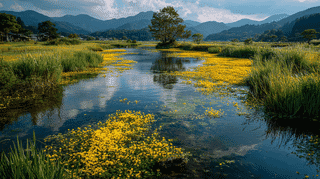
A paddy field in central Japan was swallowed by bright yellow flowers. Water primrose, a South American invader, regrows from the tiniest stem fragment. We look at why farmers cannot kill it, how the same plant is wrecking waterways in France, Britain and the US, and why eradication may be impossible.
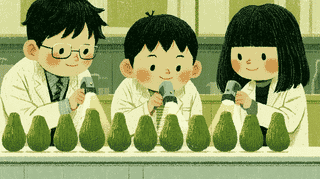
Akita Prefectural University students nicknamed the 'Avocado Squad' published a method that predicts avocado ripeness from skin reflectance and storage temperature, with no slicing required. The work is patent pending and the team is seeking commercial partners.
With matcha scarce and prices soaring, an unglamorous Japanese herb called yomogi (mugwort) is being talked up as the next matcha. One Osaka supplier shipped a record 754 tons in 2025 and expanded cultivation 1.5x, while mugwort-steam salons grew 1.8x in three years. A trading-company veteran turned mugwort farmer is now branding the weed.
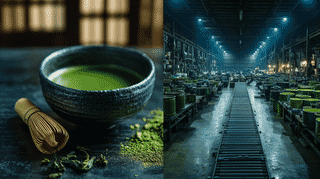
Global matcha production has roughly doubled in just five years. Japan can no longer meet world demand alone, and Chinese matcha is rapidly filling the gap. Should matcha be defended as Japanese cultural heritage, or embraced as a global beverage? We explore the strategic crossroads facing Japan's matcha industry.
On April 23, PM Sanae Takaichi met five foodtech CEOs at the PM's Office: Oishii Farm, PlantX, FRD Japan, Regional Fish, and Toko Tekko. Why these five? This article decodes how each company's technology answers one of the world's four shared food crises, climate-driven farmland collapse, ocean depletion, population growth, and shrinking farmer populations, and the strategic logic behind Japan choosing to win in specific categories rather than competing across the board.
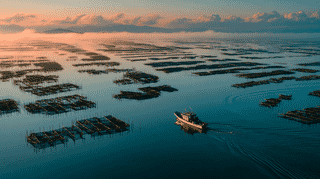
Once dismissed overseas as resembling 'black paper,' nori is now riding the global onigiri boom into kitchens worldwide. A 3-Michelin-star Italian chef uses nori pesto on cuttlefish, and the global market is projected to grow from $3.8B in 2025 to $6.4B by 2034. From the famous 2010 Nature paper behind the 'only the Japanese can digest nori' claim, to Japan being overtaken by Korea in production volume, here's how Japanese seaweed conquered the world.
Japan's MAFF and U.S. Wheat Associates held the first meeting under their Memorandum of Cooperation on April 22 to stabilize wheat supply. With only 15% self-sufficiency and 40% of imports from the US, this article unpacks the food diplomacy at stake amid climate and logistics risks.
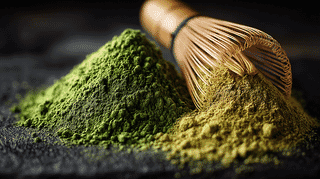
On April 22, 2026, the world's first global matcha industry body launched in Tokyo. Led by 28-year-old tea master Ryo Iwamoto, the International Matcha Association (IMA) brings together the CEO of the Specialty Coffee Association, UC Davis tea scholars, and Future Food Institute to tackle counterfeiting and the absence of international standards in a $4.4 billion global market.
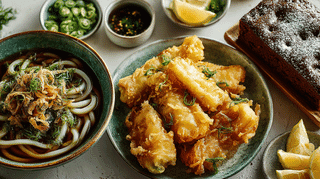
Otafuku Holdings subsidiary Nakagawa has completed a new tenkasu (tempura crumb) factory in Omura, Nagasaki, boosting output from 4,200 to 6,300 tons annually, a 1.5x jump aimed at Europe and beyond. A deep dive into what tenkasu is, how it powers okonomiyaki and udon culture, the rise of tempura crumbs in sushi rolls overseas, and how it compares to Britain's beloved chip-shop 'scraps'.
Food tech is one of 17 pillars in Japan's new national growth strategy under the Takaichi administration, with a 30% global market share target by 2040. Beyond the obvious giants like Maruha Nichiro, Nissin, and Kikkoman, this deep dive spotlights 5 lesser-known but high-potential players: Regional Fish (gene-edited seafood), FRD Japan (closed-loop salmon), Chitose Bio Evolution (algae unicorn), UMITRON (aquaculture AI), and Oishii Farm (NY strawberry factory).
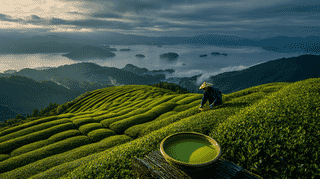
The global matcha boom has reached even Kagawa, Japan's smallest prefecture famous for udon noodles. With a $31,000 research budget, Kagawa is exploring tencha production as green tea exports hit $450 million. Here's why the matcha gold rush now spans the entire country.
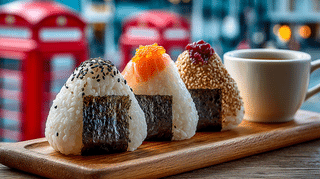
JR East, Japan's largest railway group, opened onigiri shop TOKYO ONIGIRI in London's Leicester Square in December 2025. Behind this unusual move, a railway company entering overseas food retail, lies the government's GOHAN Project strategy to boost Japanese rice exports. From Onigiri Summit 2026 to convenience store packaging innovations, we explore how the humble rice ball could become Japan's next global food hit after sushi and ramen.
Japan's green tea exports doubled to ¥72.1 billion in 2025, yet domestic matcha production can't keep up. As tea plantations shrink 29% in a decade and low-grade powdered tea floods global markets, the industry warns of 'matcha laundering.' Is the matcha in your latte the real thing?
ADEKA's plant-based food brand Deli-Plants is launching trial exports of egg alternatives to North America. With bird flu causing global egg shortages and price spikes, Japan's fermentation, emulsification, and soy processing expertise is attracting international attention. We report on Japan-born food tech including Fuji Oil's plant-based dashi.
Japan's food exports hit a record $11.3 billion, but what systems make that possible? From 20 miso makers uniting at FOODEX to a $13 billion inbound food tourism pipeline, from onigiri startups promoting rice in Vietnam to a Toyosu-based platform targeting 100 cities worldwide, this is the story of the infrastructure behind Japan's food globalization.
As global matcha demand explodes, Kagoshima is building a $17M mega-factory, Ibaraki is subsidizing new entrants, and Shizuoka is pivoting from sencha. Inside Japan's matcha production arms race.
Japan's agriculture ministry hosted ambassadors from 60 countries to showcase cutting-edge food technology including vertical plant factories and land-based aquaculture. With food tech designated as one of 17 national growth strategy sectors under the Takaichi administration, Japan targets 30% global market share by 2040. Covers key startups like PlantX, full-cycle aquaculture, and alternative protein trends.
Behind the global matcha craze, Japan's domestic tea prices are surging to unprecedented levels. The cheapest tea grade now costs more than premium first-harvest leaves. With tea farms shrinking and overseas demand exploding, Japan's centuries-old tea culture faces its biggest challenge yet.
Agro Ludens started mass-producing CoMeat, a rice-derived mycoprotein made with koji fermentation, at its Nasu plant in Tochigi in April 2026. It uses processing-grade rice, not table rice, and Japan's agriculture ministry approved mycoprotein as a new-market rice use in March. Plus: Japan's swing from rice shortage to rice glut, Beyond Meat down 99%, and why JR East is now farming.