The cheapest tea in Japan now costs more than the most premium grade. Behind the world's appetite for matcha, the price ladder in Japan's domestic tea market has turned upside down. Bottled teas are getting more expensive and small tea businesses are closing. Here is how the global matcha boom is reshaping Japan's tea industry from the inside.
The Great Reversal: When the Cheapest Tea Becomes the Most Expensive
Japanese tea follows a strict hierarchy. Ichiban-cha, the first harvest picked in spring, commands the highest prices. Prices then descend through the second and third harvests, with akifuyu bancha, autumn-winter coarse tea, traditionally the cheapest grade and the everyday leaf behind mass-market bottled drinks.
That hierarchy has collapsed.
According to the Kagoshima Prefecture Tea Industry Council, the average tea price in 2025 was ¥1,648 (about $11) per kilogram, roughly double the previous year. At the Shizuoka tea market the average was ¥1,919 (about $13), up around 2.2 times. Autumn-winter bancha is the outlier: ¥2,431 (about $16) per kilogram in Kagoshima, 5.8 times the previous year's level, and ¥2,097 (about $14) in Shizuoka, up roughly 6.4 times. First-harvest prices rose far more modestly, which is how the cheapest grade ended up above the premium one.
This is not a market anomaly. It is a signal that the structure of Japan's tea industry is shifting.
The Global Matcha Explosion, By the Numbers
The driving force behind this upheaval is the explosive growth of worldwide matcha demand.
The numbers show the momentum. Japan's green tea exports hit a record ¥36.4 billion (roughly $240 million) in 2024, up 25% year-on-year. Then, according to Ministry of Finance trade statistics, 2025 exports reached a record 12,612 tons by volume, with value roughly doubling to around ¥72 billion. The vast majority is powdered green tea, primarily matcha, and the United States is the top destination. The global matcha market itself was valued at roughly $4.17 billion in 2025 and is projected to reach $6.35 billion by 2034.
Social media has been the accelerator. Matcha was once one flavour among many on a café menu; overseas influencers turned the matcha latte into a global fixture. Health-conscious consumers now dust the powder over drinks and food. From London to Dubai to Tel Aviv, matcha cafés keep opening.
Rising global coffee bean prices added momentum, as cafés worldwide reached for matcha as the alternative headline item.
Why the Cheapest Leaf Is Surging
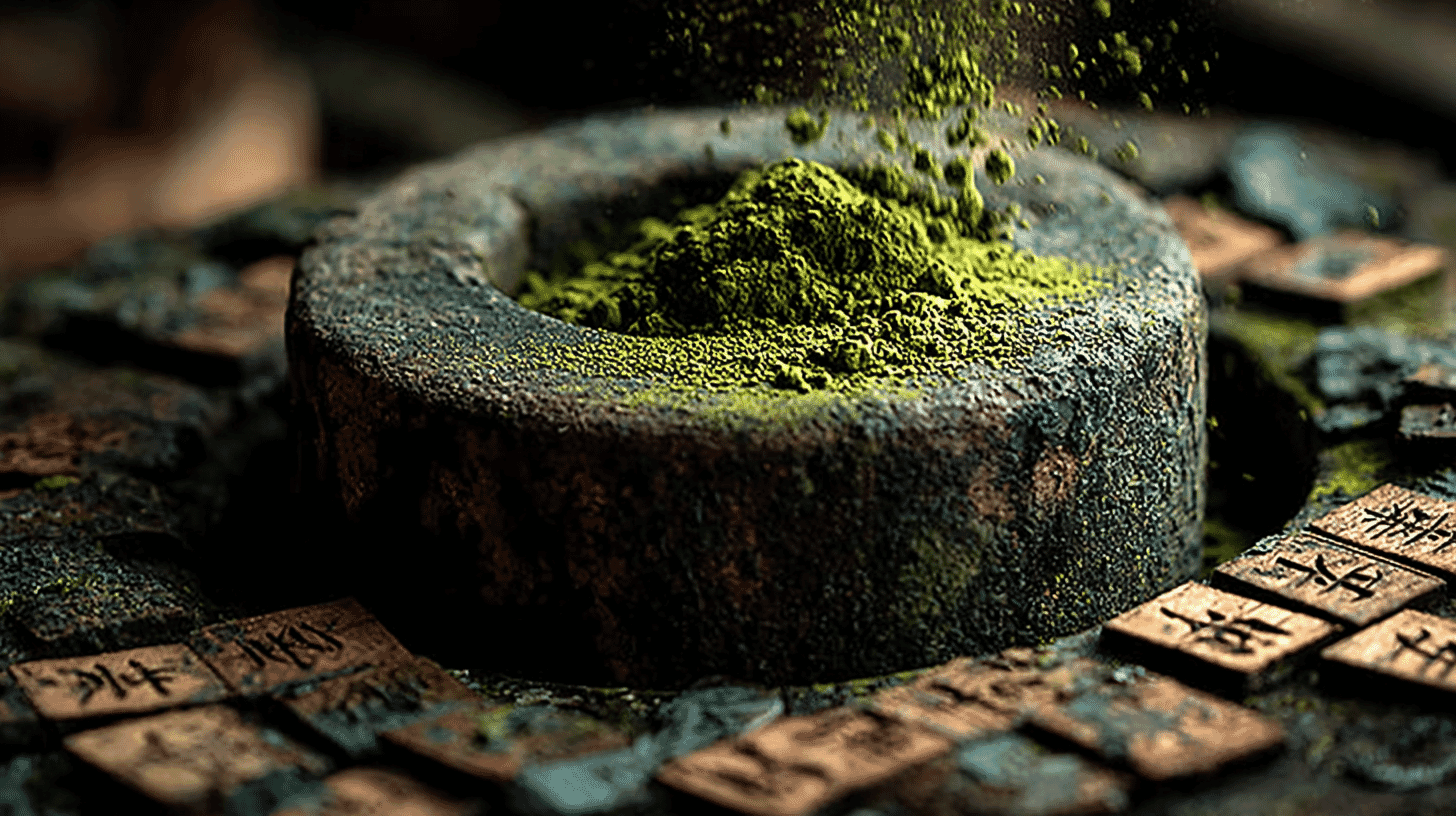
Matcha is made from "tencha," a specialty tea leaf grown under shade, steamed without rolling, dried, and then stone-ground into powder. Tencha accounts for only about 6% of Japan's total crude tea production, making it inherently scarce.
As global matcha demand drives tencha prices skyward, tea farmers who previously grew sencha (standard green tea) are switching to the more profitable tencha production. This reduces the supply of leaves available for sencha, bancha, and other everyday teas, pushing their prices upward. Adding to the pressure, the weak yen makes exports more lucrative than domestic sales, accelerating the outflow of tea leaves to overseas markets.
This chain reaction has reached bancha, the most basic grade of Japanese tea. In Kyoto's prestigious Uji region, tencha auction prices have climbed steeply, and historic tea houses like Marukyu Koyamaen and Ippodo Tea have imposed purchase limits and raised prices.
High prices are also reshaping sourcing. Ministry of Finance data show imports of foreign tea leaves reached 4,610 tons in 2025, about 1.5 times the prior year and the highest in five years. Domestic leaf has become expensive enough that buyers are switching.
Your Bottled Green Tea Just Got More Expensive
Bancha and second-harvest leaves are the primary ingredients in the bottled green teas sold at every convenience store and supermarket in Japan. The soaring leaf prices are hitting Japanese consumers directly.
On March 1, 2026, industry giant ITO EN raised prices on 71 bottled green tea products, including its flagship "Oi Ocha" brand, plus 26 loose-leaf products. The 600ml bottle went from ¥200 to ¥220 before tax (about $1.30 to $1.45), a roughly 10% increase in suggested retail price. The same day, Coca-Cola Bottlers Japan raised prices across all 22 products in its "Ayataka" line. The 650ml bottle went from ¥200 to ¥220, and the 2-litre from ¥411 to ¥441 (about $2.70 to $2.90). Both companies had announced the increases back in December 2025.
ITO EN's president acknowledged that offers for matcha are now flowing directly from around the world to individual farmers, bypassing traditional middlemen. As farmers shift to tencha production, the supply of leaves for bottled tea shrinks, a structural shift that goes beyond temporary price fluctuation.
Shrinking Farms, Aging Farmers
The supply side is where the weight sits. Ministry of Agriculture, Forestry and Fisheries statistics published in February 2026 show tea plantation area still contracting in 2025 while yield rose above the previous year, driven by heavier picking of second-harvest and especially autumn-winter bancha. Fewer farmers, steady yield through better technique. But growth concentrated in bancha is itself a sign of structural change.
The drop in farming households is steep. From 53,687 in 2000, the number halved by 2010 and fell below a quarter of the 2000 level by 2020. Aging and a shortage of successors keep eroding the production base.
There is a paradox here. Even as the matcha boom drives tea demand to new heights, smaller tea processors are folding. Credit research firm Teikoku Databank counted 11 bankruptcies and closures in tea processing in the first seven months of 2025 alone, already past the previous full year and on a record pace. Small operators cannot absorb raw material costs moving this fast.
For farmers who endured years of depressed prices, the surge is what they waited for. The question is whether it becomes sustainable income or a bubble that passes.
Where to Experience Real Japanese Tea Culture
For travelers visiting Japan, experiencing genuine tea culture firsthand has never been more meaningful. Here are some of the best destinations:
Uji, Kyoto: the historic home of matcha With over 800 years of tea history, Uji offers immersive experiences at "Chazuna" (Uji Tea and History Park), where visitors can try matcha grinding and tea ceremony workshops. The city also runs free guided walking tours through Edo-era tea merchant houses and tea gardens, ending at the UNESCO World Heritage sites of Byodo-in Temple and Ujigami Shrine.
Shizuoka: Japan's tea country Home to roughly 40% of Japan's tea gardens, Shizuoka offers extraordinary variety. The Fujinokuni Tea Museum on the Makinohara Plateau combines tea picking, matcha grinding, and tea ceremony in one location. "Chanoma" (Tea Room) provides private terraces set amid stunning tea field panoramas with views of Mount Fuji. In Kakegawa, visitors can join guided tours through tea fields that practice "Chagusaba," a traditional farming method recognized as a Globally Important Agricultural Heritage System.
Other notable regions Yame in Fukuoka Prefecture is one of Japan's top three gyokuro (shade-grown premium tea) producing areas. Kagoshima Prefecture in southern Kyushu has grown to rival Shizuoka in production volume and is known for organic tea cultivation in its warm climate.
Between Global Demand and Local Survival
The worldwide matcha boom is both an enormous opportunity and a threat to Japanese tea culture. As production shifts toward tencha, the supply of everyday sencha and hojicha thins, bottled tea prices rise, and smaller tea businesses fold. Global success and domestic hollowing out are arriving together.
ITO EN has stressed the need to reaffirm the value of Japanese tea, not merely as a commodity but as cultural heritage worth protecting. Industry observers also point to diversifying global demand beyond matcha. Hojicha, sencha, and wakocha (Japanese black tea) each have their own appeal, and spreading international interest across them could help rebalance the industry.
The high prices are holding into 2026. The Kagoshima tea market's April average was 1.7 times the previous year and roughly 2.5 times the level two years ago. That is money farmers waited decades for. Whether it rebuilds the production base or simply passes through is the question Japanese tea now sits on.
Has your country experienced something similar, a traditional food or drink suddenly swept up in global demand? Has the boom helped your local producers, or created new problems? We'd love to hear your perspective.








Global Discussion
14 comments