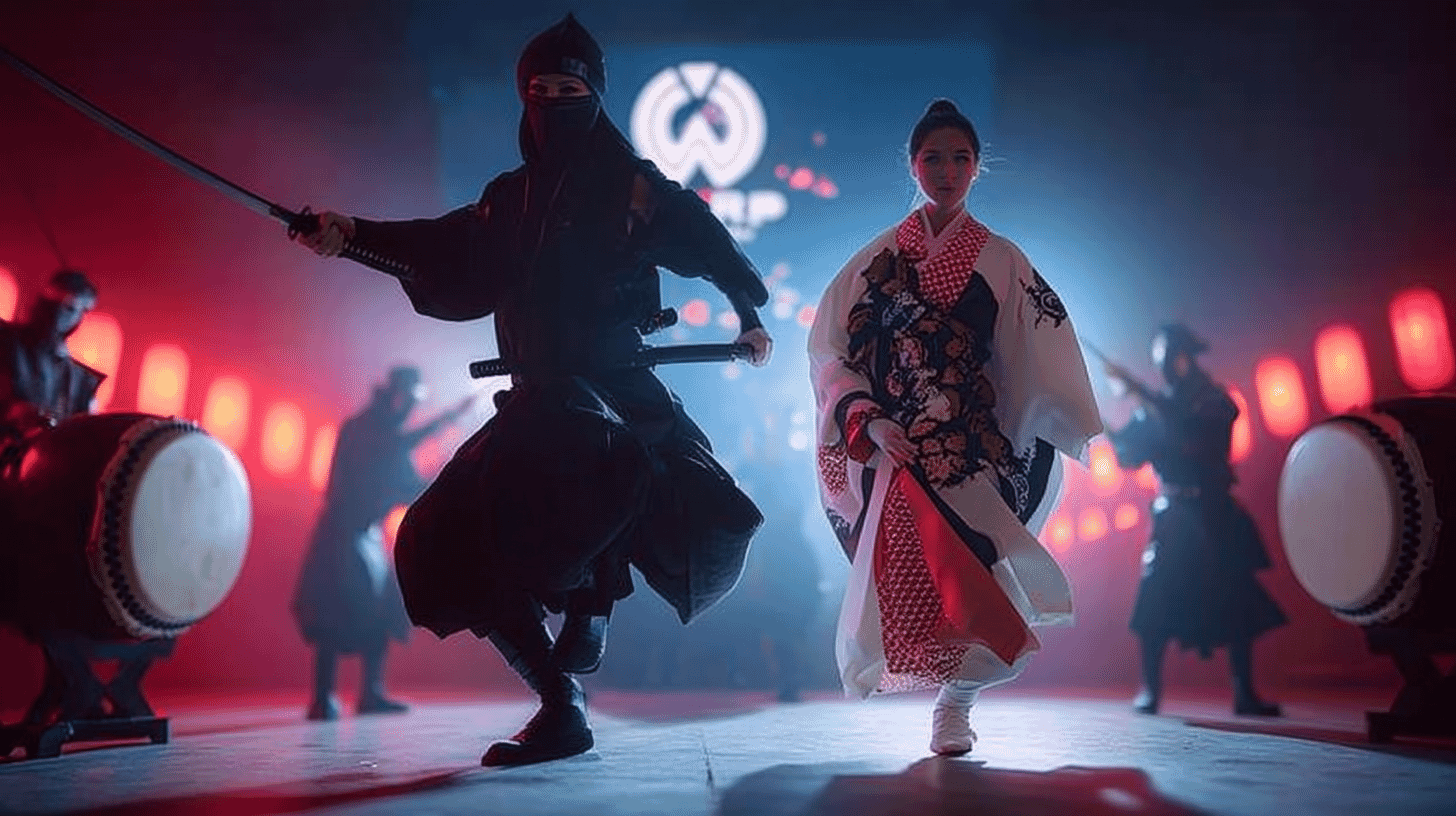
Ninja+Kabuki Tokyo is a non-verbal entertainment show in Shinjuku's Kabukicho district. It opened in August 2024 and passed 25,000 cumulative visitors in about a year and a half. Roughly 99 percent of the audience are inbound travelers, mainly from Western countries, Australia, Canada, Hong Kong, and Taiwan. It sits on the front line of Japan's inbound tourism.
Direction comes from Denjiro Tanaka, a kabuki hayashikata. The hayashikata is the musical section of a kabuki stage, playing flute, drums, and bells to build the atmosphere of a scene. Tanaka performed at the Tokyo 2020 Olympics opening ceremony and works fluently across traditional performing arts and contemporary stage.
Maruhan East Japan Company is the organizer, the Japan Ninja Council handles overall production, and TryHard Japan runs the operation. The balance between the authenticity of ninja culture and pure entertainment has been well received: as of February 25, 2026, the show held a 4.8 average on Google Reviews from 2,315 reviews and 4.7 on Tripadvisor from 485.
What Changed in the March 2026 Renewal
A Deeper Story Rooted in Ninja Spirituality
The heart of the renewal is that ninja are no longer just action characters. They are rendered as figures who emerged from Japanese history. Where did ninja come from, and what did they actually do? The new structure answers that through video, physical performance, and music working as one.
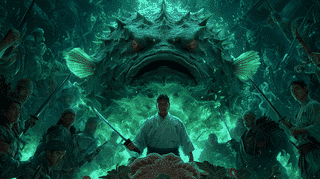
The new plot follows two rival ninja. A goddess descends from the heavens to entrust Dragon, a white ninja, with a sword that will bring peace. Tiger, the black ninja and his fated nemesis, steals it. Devastated, Dragon falls in love with an oiran, the highest rank of courtesan in Edo-period pleasure quarters, who turns out to be the goddess in human form. Duty, love, and a destined confrontation, built so that anyone can follow it without a word of dialogue.
The Non-Verbal Strength, Reinforced
The show still depends on no language at all. Regardless of nationality or age, audiences feel it through the performers' bodies, the resonance of taiko drums, and the video and lighting. In an intimate space of about 100 seats, performers race between the rows, and the immersion has only deepened.
From Buying Things to Experiencing Culture
According to the Japan Tourism Agency's confirmed figures, inbound travel spending in 2025 reached 9.4549 trillion yen (about $61 billion), up 16.4 percent, a record. Visitor numbers hit 42.68 million, topping 40 million for the first time. As the market grows, demand is moving from shopping toward authentic cultural experience. The proof is in the breakdown: accommodation spending drove the 2025 increase, up 26.7 percent, while shopping rose only 6.4 percent. This renewal answers that shift.
What to Expect at the Show
The show runs about 80 minutes. Here is roughly how it goes.
A forceful taiko opening changes the air in the room. The low end goes straight through you and drops you somewhere other than daily life.
The ninja swordplay that follows is synchronized precisely with lighting and sound. The seats are close enough that you hear blades connecting and performers breathing.
The oiran section holds you with elegant movement grounded in Japanese classical dance and emotional expression that needs no words. Oiran were the highest-ranking courtesans of Edo-period pleasure quarters, known for both refinement and beauty.
At the climax, ninja form kuji-in hand signs and the room goes silent. Afterward, guests can go up on stage to strike poses with the performers, and there is time for photos.
Tickets and Pricing
Booking through the official site is the safest route.
The standard price is 6,500 yen (about $42) per adult. The official site's best rate guarantee brings it down to 6,000 yen (about $39). Children under six are free.
Seasonal discounts appear periodically. In spring 2026, an early booking campaign offered a flat 5,000 yen (about $32) for March through May visits, sold during February only. Check the official site for current offers.
Tickets are also available through travel platforms including Klook, Rakuten Travel Experiences, GetYourGuide, Viator, TKTS, and Asoview. Comparing prices across platforms is worth the minute it takes.
Official booking site: https://ninja-kabukitokyo.com/
How to Get There
Venue: WARP SHINJUKU (Ninja+Kabuki Tokyo) Address: B1F, Daini Toa Kaikan, 1-21-1 Kabukicho, Shinjuku-ku, Tokyo
Access is easy. About a 6-minute walk from JR Shinjuku Station's East Exit, or 3 minutes from Seibu-Shinjuku Station. It sits in the heart of Kabukicho, right by Kabukicho Tower. Use the GiGo game arcade entrance as a landmark; traditional lanterns hang at the show's entrance.
There are two performances a day. The first runs 15:00 to 16:20, the second 18:00 to 19:20. Doors open 20 minutes before. Seating is first come, first served, so arriving early helps if you want a good spot. Performance dates vary, so check the official schedule before you go.
A Hub for Exploring the Neighborhood
Ninja+Kabuki Tokyo is starting to function as more than a single show. It anchors Shinjuku's nighttime economy and cultural tourism circuit. Mutual referrals and joint programs with the nearby SAMURAI MUSEUM TOKYO and Samurai Restaurant are shaping a Shinjuku route built around samurai and ninja culture.
Ninja and kabuki: two icons of Japanese culture, experienced without a language barrier. For roughly $40, this show puts serious traditional performance within reach, and it can be a highlight of a Tokyo trip.
Does your country have immersive shows or cultural experiences designed to share local traditions with foreign visitors? If there's something you'd call unmissable, we'd love to hear about it.



Global Discussion
15 comments