🔥 What if the dress on the runway could save your life in a fire? A Kyoto University professor just showcased fashion made from the same heat-resistant fabric firefighters use — right in the heart of New York Fashion Week. Welcome to Japan's newest innovation: disaster-prevention fashion.

A Groundbreaking Fusion of Art, Science, and Survival

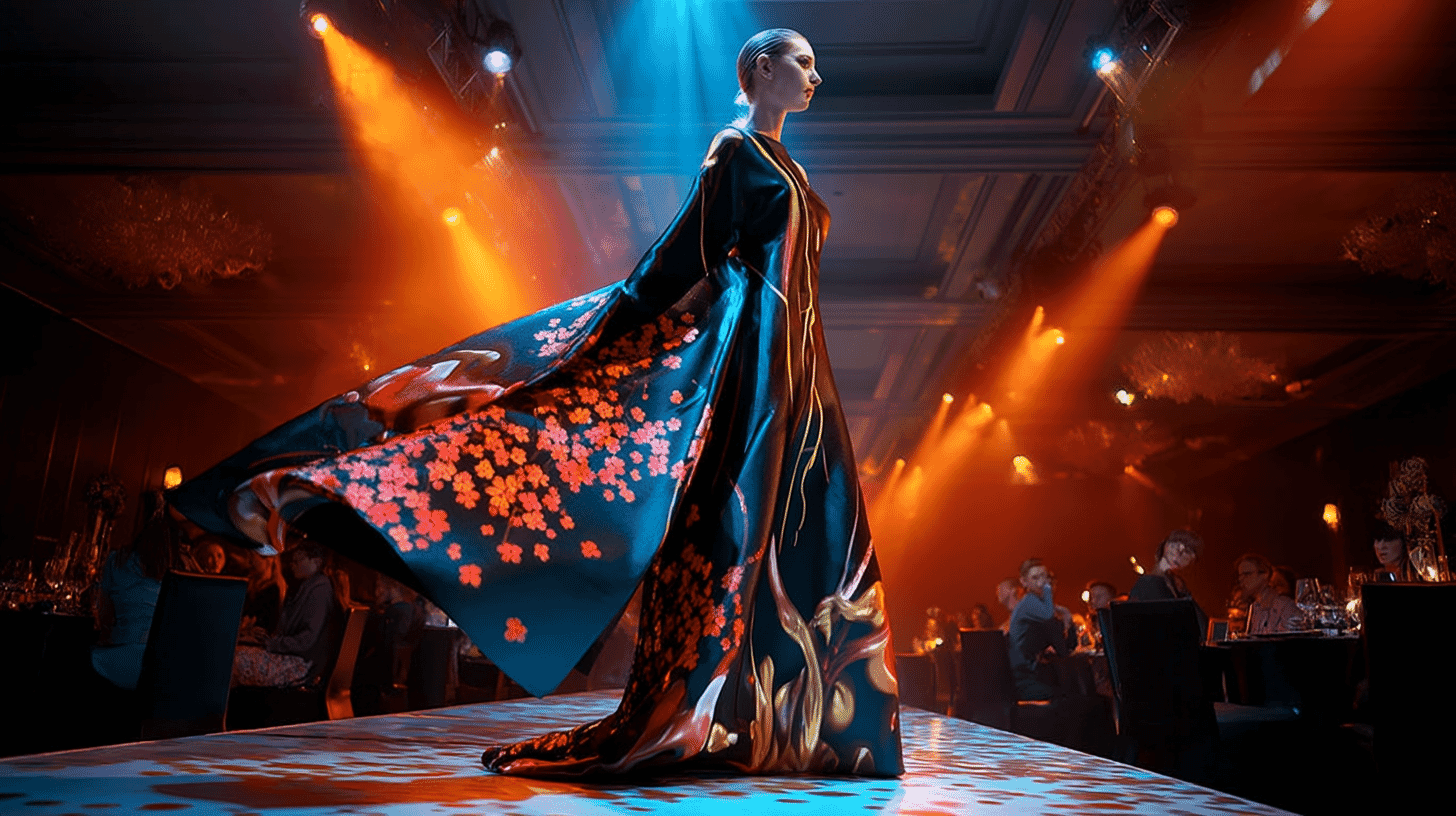
On February 9, 2026, Japan Society in New York hosted one of the most unconventional fashion shows in recent memory. Organized by Naoko Tosa, a project-specific professor at Kyoto University's Disaster Prevention Research Institute, the show was titled "Sound of Ikebana — Four Seasons Fashion Show." It seamlessly wove together media art, contemporary dance, and fashion into an immersive performance inspired by Japan's four seasons.

The show was divided into four acts: Spring — The Brilliance of Life, featuring cherry blossom and iris motifs; Summer — Prayers to Ancestors, evoking the atmosphere of Kyoto's famous Gion Festival; Autumn — Celebration of Harvest; and Winter — Memories of Battle. It was this final act that captured the most attention — and for good reason.

Fire-Resistant Fabric Meets High Fashion

The "Winter" segment drew from The Tale of the Heike, a classic Japanese war epic, depicting the tragic death of the young warrior Atsumori. But it also introduced a striking modern theme: humanity's ongoing "battle with nature."

Models walked the stage wearing garments crafted from specialized heat-resistant fabric — the same type of material used by firefighters during active firefighting operations. At first glance, these pieces looked like ordinary high-fashion items. But beneath the surface, they carried genuine protective capabilities.

Professor Tosa explained her vision: "If we can make everyday clothing from fire-resistant fabric that also looks stylish, ordinary people wearing them might be saved in an emergency. There are lives that could be protected just by making protective clothing part of daily life."

This idea is deeply rooted in Japan's reality. Known as a "saigai taikoku" (disaster superpower), Japan experiences earthquakes, typhoons, floods, and fires with a frequency that few other nations face. This constant exposure has driven innovations in disaster preparedness — and now, that expertise is being woven into the fabric of everyday fashion.

What Is "Sound of Ikebana"?

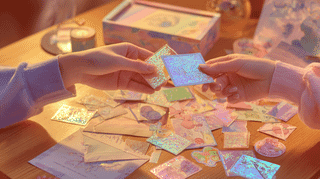
The foundation of Professor Tosa's fashion line is her acclaimed media art series, "Sound of Ikebana." The concept is mesmerizing: colored paints and viscous liquids are exposed to sound vibrations and captured by a high-speed camera filming at 2,000 frames per second. The resulting images reveal fleeting moments of beauty hidden within natural phenomena — shapes and colors that the human eye could never perceive in real time.

The name references ikebana, the centuries-old Japanese art of flower arrangement. Just as ikebana finds beauty in the asymmetry and impermanence of natural forms, Sound of Ikebana discovers art in the invisible dynamics of fluid motion.

These stunning patterns are then printed onto textiles using digital textile printing technology, developed through a collaborative research project between Tosa's lab at Kyoto University and Seiko Epson Corporation. The resulting garments — kimono, dresses, suits, and more — are designed to be gender-neutral and age-inclusive.

The Artist-Professor Behind the Innovation

Naoko Tosa is no ordinary academic. Born in 1961 in Fukuoka City, she holds a Ph.D. in Engineering from the University of Tokyo and has built a career that bridges the art world and scientific research in ways few others have managed.

Her international debut came in 1985 when her video work "An Expression" was selected for exhibition at the Museum of Modern Art (MoMA) in New York and was subsequently acquired by the museum. She later spent time as a Fellow Artist at MIT's Center for Advanced Visual Studies (now Art, Culture and Technology), before joining Kyoto University in 2005.

Her accolades are remarkable: she served as a Japanese Cultural Envoy appointed by Japan's Agency for Cultural Affairs in 2016, visiting 10 cities across 8 countries, and in 2017, her Sound of Ikebana was displayed across more than 60 billboards in New York's Times Square for an entire month.

Tosa has participated in New York Fashion Week since 2023, and this year's Japan Society event represented a significant evolution — transforming the runway into a full-fledged multidisciplinary performance.

Why the World Should Pay Attention

One attendee at the show captured the excitement: "So cool! It's stunning to look at, and it protects your body too? Amazing. I want to wear it myself."

Japan has been quietly building momentum in the disaster-prevention fashion space. Urban Research, a major Japanese fashion retailer, launched "BOSAI FASHION LABO" — a collaborative project that held a design competition for disaster-preparedness clothing. Other companies have developed items like slash-resistant bags and protective umbrellas that double as everyday accessories.

Professor Tosa's work represents perhaps the most ambitious expression of this trend, combining academic research, cutting-edge art, and high fashion to create something entirely new.

"I want to take disaster-prevention fashion beyond Japan and bring it to the world," she stated.

The concept of "wearing your disaster preparedness" is a uniquely Japanese innovation born from decades of living with natural disasters. For communities around the world that face their own climate and disaster risks — from wildfire-prone California to flood-prone Southeast Asia — this approach could offer a new model for integrating safety into daily life.

In Japan, the fusion of disaster preparedness and fashion is gaining real momentum. Does your country have any "stylish emergency gear" or "everyday items with hidden protective features"? We'd love to hear about it!

References

Reactions in Japan

This is so great. I wish they'd make evacuation jackets for kids too. If they look uncool, kids refuse to wear them. I'm seriously waiting for stylish disaster gear.

I agree 0
I disagree 0

Fire-resistant materials are standard in architecture, but applying them to fashion is a fascinating concept. The key to widespread adoption will be how much they can reduce the material costs.

I agree 0
I disagree 0

Doing a show like this at Japan Society in NY is just plain cool. Japanese fashion tends to get attention only for anime-related stuff, so I hope this tech-forward angle gets more recognition 🔥

I agree 0
I disagree 0

Honestly, I wonder about the comfort of heat-resistant clothing. Even if it looks good, if it's heavy or stuffy, daily wear would be tough. I want more info on that aspect.

I agree 0
I disagree 0

Firefighting gear truly saves lives, but redesigning it for civilians requires enormous technical skill. As long as they're genuinely ensuring protective performance and not just marketing, this is an excellent initiative.

I agree 0
I disagree 0

In the end, showcasing in NY is meaningless if you can't buy it in Japan. I hope this doesn't just end as a performance piece for the Expo.

I agree 0
I disagree 0

I saw Professor Tosa's Sound of Ikebana on Times Square before and it was breathtaking. The fact that those visuals can now become clothing really shows how far technology has come. Epson's digital printing tech is incredible.

I agree 0
I disagree 0

Isn't it wild that a professor from my university is doing a fashion show in NY? The Disaster Prevention Research Institute sounds so serious, but they produce work like this too.

I agree 0
I disagree 0

As an outdoor enthusiast, fire-resistant clothing catches my attention. Sparks from campfires always burn holes in my clothes, so heat-resistant everyday wear would genuinely have demand.

I agree 0
I disagree 0

Presenting 'functional clothing' within a fashion context in NY is strategically smart. But if Parisian or Milanese maisons start doing the same, it could get lost. Japan needs to establish 'disaster fashion = Japan' branding now.

I agree 0
I disagree 0

Having experienced the Noto Peninsula earthquake, I had to flee with just the clothes on my back. If everyday clothes doubled as disaster gear, the sense of security would be completely different. Depending on the price, I'd support this.

I agree 0
I disagree 0

Heat-resistant materials are usually aramid fiber-based, and those are notoriously difficult to dye. As an engineer, I'm curious how well the digital printing achieves color vibrancy on these fabrics.

I agree 0
I disagree 0

I love that a Kanze-school Noh performer was part of the show. There's apparently a section inspired by Atsumori from The Tale of the Heike — the fusion of traditional performing arts and fashion feels really fresh.

I agree 0
I disagree 0

I always wonder — don't projects like this just create buzz at the announcement and then fizzle out? It only matters when it's commercialized at an accessible price. Researchers promoting themselves doesn't save anyone.

I agree 0
I disagree 0

I'm a nurse. Hospital fires actually happen more often than people think, and evacuating patients is incredibly difficult. Imagining if hospital uniforms themselves were fire-resistant... that's when you see the value of this research.

I agree 0
I disagree 0

I went to Japan Society! For $45 admission you got Noh, dance, and a fashion show — honestly an incredible deal. My American friends were blown away, and I felt so proud as a Japanese person.

I agree 0
I disagree 0

Voices from Around the World

Rachel Nguyen

Living in LA with wildfire season every year, I'd seriously buy stylish heat-resistant clothing. Japan always seems to be ahead when it comes to disaster preparedness.

Oliver Whitfield

Brilliant concept, but can fashion garments actually maintain firefighter-grade heat resistance? Claiming 'disaster prevention' without standards or certification feels risky to me.

Priya Sharma

India faces flooding every monsoon season, but I've never thought about disaster-prevention fashion. The idea of clothes protecting you is novel. India's textile industry could adapt this approach.

Marcus Weber

Germany's fashion industry focuses on sustainability, but I haven't seen it merged with disaster preparedness. Even countries without earthquakes like ours face growing floods and storms from climate change. This field will become globally necessary.

Sofia Andersson

In Scandinavia we already have a strong culture of functional wear, so this trend would be naturally embraced. Also, a $45 show ticket is cheap — it'd cost more than double in Stockholm.

Jean-Philippe Moreau

If a Parisian maison did this, it'd cause a sensation. But the fact that a Japanese university professor is behind it actually makes it more credible. Fashion born from genuine research, not commercialism, carries real conviction.

Yoon Soo-jin

After the Sewol ferry disaster, Korea's disaster awareness grew, but the fashion industry hasn't ventured there yet. Japan excels at translating concepts into real products.

Ahmed Al-Rashidi

The Middle East battles extreme heat. If heat-resistant fashion technology could be applied to clothing for workers in scorching environments, it would be revolutionary. I have high hopes for Japanese engineering.

Maria Gonzalez

Earthquakes are a major threat in Mexico too. But emergency gear always has such dull designs. Japan proposing it as fashion has the power to transform disaster preparedness into something positive.

Emily Zhang

I live in NY and attended the show. Honestly, the four seasons presentation was so beautiful that it took me a while to fully grasp the disaster-prevention aspect. As art, it was overwhelming.

Tomáš Novák

In Czechia, the 2021 tornado damage is still fresh in our memory. If regular clothing could protect you during evacuation, it's basically 'wearable insurance.' There's demand in Europe for sure.

Aisha Mwangi

Such discussions aren't common in Kenya yet, but urban fires are a serious problem. I just hope high-performance fabric clothing doesn't remain a luxury for developed nations. Developing countries need accessible pricing too.

Lucas Ferreira

As someone who experienced the devastating floods in southern Brazil, I see potential in 'wearable disaster preparedness.' But water resistance is a higher priority for us. Can Japan create flood-preparedness fashion too?

Hannah Park

As a fashion school student, I know how hard it is to balance tech materials with traditional aesthetics, so I truly respect this. I almost want to make it my thesis topic.

Dmitri Volkov

Russia has well-developed functional clothing for extreme cold, but design was always secondary. Japan's approach embodies the concept of 'functional beauty' and I find it fascinating.