
🌼 One of Japan's biggest power companies just harvested something you would never expect from an electric utility: vanilla. On July 14, Kyushu Electric Power announced it has successfully grown and cured its own vanilla beans in a greenhouse in Fukuoka, using smart-farming technology developed in-house. Vanilla is widely considered the world's second most expensive spice after saffron, and Japan imports more than 90% of what it consumes. So why is the company that keeps the lights on in southern Japan growing orchids?
A brand called Carol Vanilla
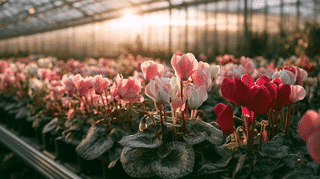
Kyushu Electric, known locally as Kyuden, launched its vanilla project in 2024 through KYUDEN i-PROJECT, the company's internal program for incubating new businesses. Since December 2024, it has been running trial cultivation in a greenhouse somewhere in Fukuoka Prefecture. The exact location is undisclosed, and the scale is modest: about 1,000 square meters, a quarter of an acre.
The first small harvest came between December 2025 and January 2026, according to Yomiuri Shimbun. The company then took those green pods through curing, the slow fermentation-and-drying process that turns odorless green vanilla into the fragrant black beans pastry chefs pay dearly for. With finished black beans in hand, Kyuden says it will now verify quality with flavor analysis and expert evaluations, study the market, and design a business model.
The planned brand name is Carol Vanilla. The company says it comes from Christmas carols, with an image of high-quality Japanese vanilla one day flavoring stollen, the traditional Christmas cake. Test sales to pastry shops, food wholesalers and flavor manufacturers are planned from fiscal 2027.
One thing worth keeping straight: this is a proof of concept, not mass production. The trial runs through November 2027, and what exists today is a small harvest from a single greenhouse.
Why vanilla costs more than you think
Vanilla is the seed pod of a climbing orchid native to Mexico. Outside its home range, the insects that pollinate it in the wild don't exist, so every single flower has to be pollinated by hand. And the flower doesn't make it easy: according to Kyuden, each one opens just once a year, and only for a short window in the morning. Miss the window and there is no pod.
Even after harvest, the work isn't done. Green vanilla pods have almost no aroma. They gain their flavor through curing, a weeks-to-months sequence of scalding, sweating, drying and resting that traditionally demands skilled hands.
All of that labor is concentrated in one place. Madagascar grows around 80% of the world's vanilla, which makes the global supply hostage to the island's weather. When Cyclone Enawo hit Madagascar in March 2017, it destroyed an estimated 30% of that year's crop. By 2018 the price had climbed past $600 per kilogram, and press reports at the time noted that vanilla was briefly worth more by weight than silver. Prices have since fallen back sharply as supply recovered, but that whiplash between spikes and crashes is exactly what makes food and fragrance companies nervous about depending on natural vanilla.
Japan sits at the end of that fragile chain. More than 90% of the vanilla consumed in the country is imported, and Ministry of Finance trade statistics put the 2025 import price at about 14,000 yen per kilogram, roughly $89 at recent exchange rates of around 157 yen to the dollar.
Where the pollination gun comes in
Kyuden's pitch is that the two hardest parts of vanilla production, pollination and curing, can be de-skilled with engineering.
For pollination, the company developed what it calls a pollination gun: a handheld, gun-shaped device that lets workers with no special training pollinate the flowers during that brief morning window. For curing, it built a machine that mechanizes the process, so that consistent quality no longer depends on a veteran's intuition. Both sit inside a greenhouse whose temperature and environment are automatically controlled, drawing on several of the company's patented technologies.
None of this is exotic science. It is the same instinct Japanese manufacturers have applied to factories for decades, now pointed at a crop that has resisted automation for generations: take a process that depends on rare human skill, break it down, and build a tool that makes the skill unnecessary.
Why a power company is in the greenhouse business
The stranger question is not how, but why. The short answer is that Japanese utilities no longer live in a world of guaranteed customers. Japan fully liberalized its retail electricity market in April 2016, opening household power sales to competition. Since then, the big regional utilities have been hunting for revenue that doesn't depend on selling kilowatt-hours.
Kyuden has been more adventurous than most. Its non-power ventures already include a drone services arm and Mirai Salmon, a land-based salmon farm built on the grounds of its Buzen power station. The company frames the vanilla project as part of its group management vision for 2035, which pairs a "carbon minus" challenge, going beyond carbon neutrality, with what it calls value creation rooted in the local region. A high-value crop grown in Kyushu, sold under a Kyushu brand, fits that story neatly.
It also fits a broader pattern we've covered before: Kyushu's power sector is changing fast, with semiconductor plants and data centers driving electricity demand even as the utility looks beyond electricity for growth.
A small greenhouse against a global problem
Let's be honest about scale. A 1,000-square-meter greenhouse will not move Japan's import statistics. But the significance isn't in this harvest. It is in the demonstration that vanilla, a crop whose economics rest on abundant low-cost hand labor in the tropics, can be grown by non-specialists in a temperate country with the right hardware. If the model proves out, the same playbook could apply to other high-value, labor-intensive crops.
For a country that imports most of its calories, that is a useful kind of insurance to start building.
Japan is starting to grow its own vanilla in a greenhouse run by a power company. How about where you live: does your country grow its own spices, or does everything arrive by ship?





Global Discussion
4 comments